
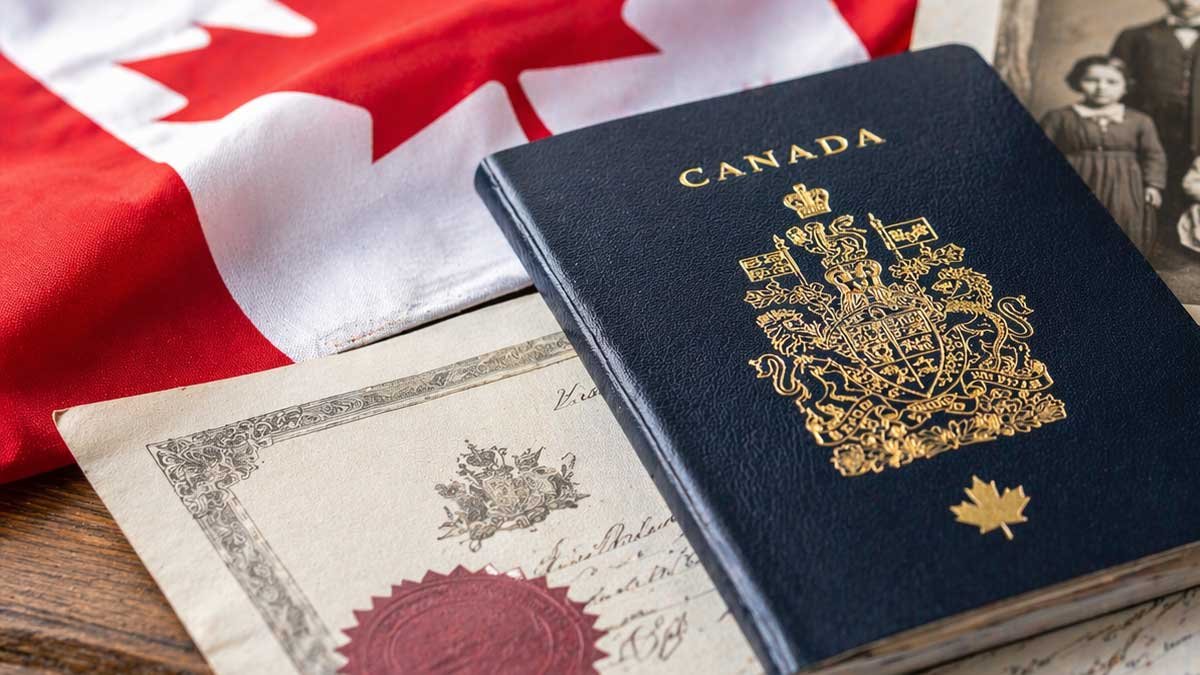

A major shift in Canadian citizenship law is reshaping how people—especially Americans—can claim Canadian nationality. Since late 2025, thousands have discovered they may already be Canadian citizens through ancestry, and many are moving quickly to secure official proof. What makes this development even more striking is how fast some applications are being processed in 2026, in contrast to official timelines.
This guide explains the latest processing trends, eligibility rules, required documents, and the broader impact of the new legislation.
Real Processing Timelines in 2026
Official estimates from Immigration, Refugees and Citizenship Canada suggest that citizenship certificate applications take around 10 months. However, real-world cases show that well-prepared applications—especially under the new rules—are being finalized much faster.
In one widely shared case, an applicant completed the entire process from submission to receiving a Canadian passport in roughly three months. The citizenship certificate itself was issued in under two months.
This rapid turnaround is largely due to the nature of citizenship by descent. Applicants are not applying for new citizenship; they are requesting proof of a status they already hold. As a result, there are no language tests, interviews, or ceremonies required.
What Changed with Bill C-3
The transformation stems from Bill C-3, which became law on December 15, 2025. This legislation removed long-standing restrictions on citizenship by descent.
Previously, citizenship could only pass down one generation outside Canada. That meant individuals born abroad to Canadian-born parents qualified, but further generations did not.
Bill C-3 eliminated this limit for individuals born before its implementation date. Now, anyone who can demonstrate a direct lineage to a Canadian-born or naturalized ancestor may qualify, regardless of how many generations back that connection goes.
The law also applies retroactively, meaning eligible individuals are considered to have been Canadian citizens since birth.
Why Americans Are Driving the Surge
The largest group applying under these new rules is from the United States. Historical migration patterns explain why.
Between the 19th and early 20th centuries, large numbers of Canadians moved to the US, particularly to New England and industrial regions. Today, millions of Americans have Canadian ancestry, often without realizing it.
Recent reports indicate a dramatic increase in requests for Canadian birth records and archival documents, with some provinces experiencing thousands of percent growth in demand.
Online communities and forums have also played a major role, helping applicants trace family history and share timelines.
Who Is Eligible for Citizenship by Descent
Eligibility depends primarily on your date of birth and your ability to prove a direct family connection to a Canadian ancestor.
Individuals Born Before December 15, 2025
If you were born before this date, you may qualify without any generational limit. As long as you can demonstrate an unbroken chain of descent to a Canadian citizen, you are considered a citizen automatically.
Individuals Born After December 15, 2025
For those born after the law took effect, a new requirement applies. A Canadian parent must have lived in Canada for at least 1,095 days before the child’s birth. This is known as the substantial connection requirement.
How to Apply for Citizenship by Descent
The process involves applying for a citizenship certificate, which serves as proof of your status.
Applicants must:
- Collect all required documents linking each generation
- Complete the official application form
- Pay the processing fee of 75 Canadian dollars
- Submit the application online or by mail
Once approved, applicants can use their certificate to apply for a Canadian passport.
Documents Required for Application
A successful application depends heavily on documentation. You will typically need:
- Long-form birth certificates for each generation
- Marriage certificates to verify name changes
- Proof of your ancestor’s Canadian birth or naturalization
- Identification documents for the applicant
For older cases, especially those involving ancestors born before 1947, additional records such as census data or historical documents may be required.
Benefits of Canadian Citizenship by Descent
Becoming a Canadian citizen offers several advantages:
- Full rights to live and work anywhere in Canada
- Access to public healthcare once residency is established
- A Canadian passport with visa-free travel to over 180 countries
- Eligibility for domestic tuition rates at Canadian universities
- Ability to sponsor family members for immigration
These benefits make citizenship by descent an attractive option for many applicants.
Tax Considerations for Dual Citizens
While Canada allows dual citizenship, applicants must consider tax implications, particularly if they are US citizens.
The United States taxes based on citizenship rather than residence. This means dual citizens may need to file tax returns in both countries. However, tax treaties and credits are available to prevent double taxation.
Professional advice is recommended to navigate cross-border tax obligations.
Concerns and Debate Around Bill C-3
Despite the opportunities created by Bill C-3, some critics have raised concerns about its long-term effects.
Issues being discussed include the potential for millions of new citizens with limited ties to Canada, the impact on public services, and questions about political participation.
Supporters, however, argue that the law corrects historical injustices and restores citizenship rights that were unfairly denied.
Tips to Speed Up Your Application
Applicants aiming for faster processing should focus on accuracy and completeness.
Submitting all required documents at once, ensuring clarity in records, and avoiding inconsistencies can significantly reduce delays. Missing information often leads to returned applications and extended timelines.
Many successful applicants emphasize that preparation is the most important factor in achieving quick approval.
Conclusion
Canadian citizenship by descent has entered a new era in 2026. With the removal of generational limits, millions of individuals—particularly in the United States—now have a pathway to claim citizenship based on ancestry.
While official processing times remain lengthy, real-world cases show that well-prepared applications can move much faster. The combination of affordability, accessibility, and significant benefits makes this one of the most compelling citizenship opportunities available today.
As demand continues to grow, those considering applying should act early, gather documentation carefully, and take advantage of the current framework while it remains unchanged.
Frequently Asked Questions (FAQs)
How long does the process take in 2026?
Official estimates suggest around 10 months, but many applicants report approvals within three to five months for straightforward cases.
Does this affect my US citizenship?
No, both countries allow dual citizenship, so your US status remains unchanged.
Is there a generational limit?
No limit applies to those born before December 15, 2025. Future generations must meet additional residency requirements.
Should I apply online or by mail?
Simple cases can be submitted online, while complex multi-generation applications are often better suited for paper submission.
- → Need a Passport Fast? How to Expedite Your U.S. Passport Renewal Step-by-Step
- → Want a $60K+ Salary Without a 4-Year Degree? 15 Certificates You Can Finish in Under a Year
- → Planning a Trip to Europe? 6 Essential Entry Rules to Avoid Denial at the Border
- → Heading to Border Control? Key Immigration Questions You Must Be Ready to Answer
- → Planning a European Trip? What Starkville’s Indian Community Should Know About Schengen Visas
- → 11 Countries Offering Funded Ph.D. Programs for International Students
- → U.S. Dollar Reaches Two-Week High Driven by Middle East Tensions and Fed Policy Outlook
What if my ancestor was born before 1947?
You may need additional documentation to prove their residency in Canada, but eligibility is still possible.
