
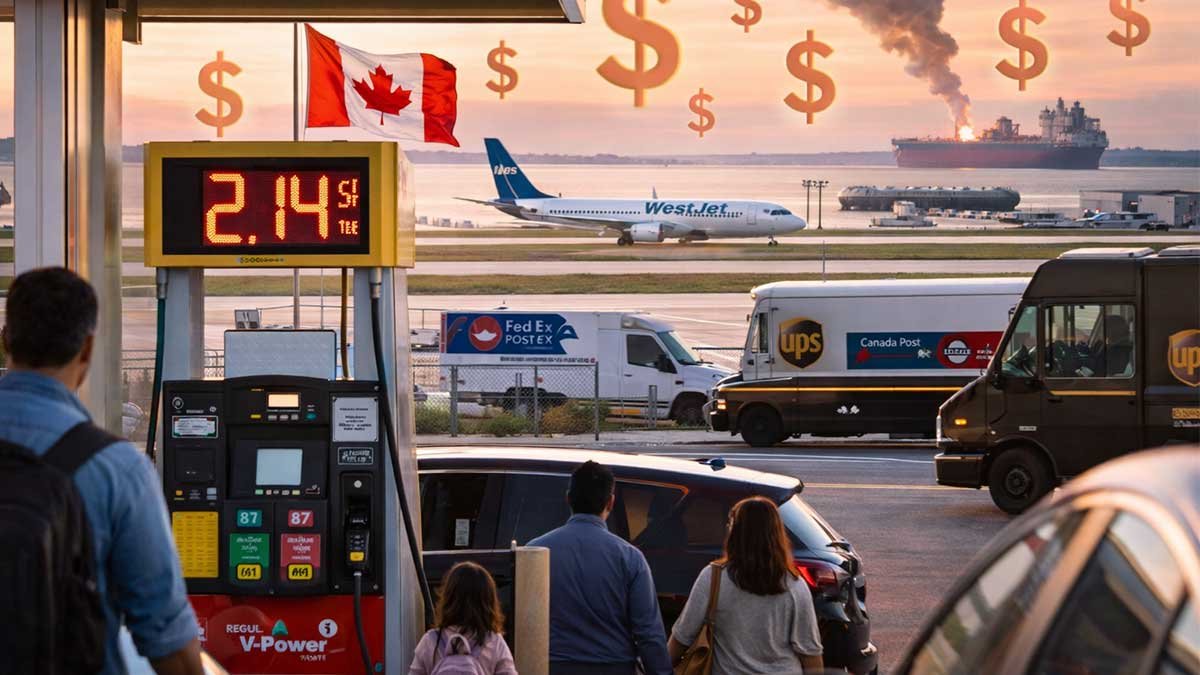

Consumers across Canada are facing a sharp rise in everyday expenses as new fuel surcharges are rolled out across airlines, shipping services, and retail logistics. The sudden spike in costs is closely tied to a major global energy disruption linked to escalating geopolitical tensions involving the United States, Israel, and Iran.
As oil supply chains are disrupted and fuel prices surge, businesses are rapidly passing on higher operating costs to consumers. From travel bookings to online shopping deliveries, the financial impact is being felt nationwide.
What Triggered the Sudden Rise in Fuel Surcharges
The primary driver behind the surge in fuel-related costs is the disruption of global oil supplies following Iran’s effective blockade of the Strait of Hormuz in early March 2026. This narrow shipping route is one of the most critical energy corridors in the world, responsible for transporting roughly 20 percent of global crude oil.
With supply severely restricted, oil prices have climbed sharply, pushing up the cost of diesel, jet fuel, and transportation logistics worldwide. This has forced companies across multiple industries to introduce temporary surcharges or increase prices to offset rising fuel expenses.
- → Need a Passport Fast? How to Expedite Your U.S. Passport Renewal Step-by-Step
- → Want a $60K+ Salary Without a 4-Year Degree? 15 Certificates You Can Finish in Under a Year
- → Planning a Trip to Europe? 6 Essential Entry Rules to Avoid Denial at the Border
- → Heading to Border Control? Key Immigration Questions You Must Be Ready to Answer
- → Planning a European Trip? What Starkville’s Indian Community Should Know About Schengen Visas
- → 11 Countries Offering Funded Ph.D. Programs for International Students
- → U.S. Dollar Reaches Two-Week High Driven by Middle East Tensions and Fed Policy Outlook
New Fuel Surcharges Introduced in April 2026
Several major companies have introduced new surcharges in April, directly impacting Canadian consumers.
Airlines are among the most affected sectors. WestJet has added a fixed surcharge on companion voucher bookings, while Air Canada Vacations has introduced additional fees on vacation packages to sun destinations. Similarly, Flair Airlines has implemented variable surcharges on all flight bookings, depending on route and distance.
In the e-commerce sector, Amazon has introduced a 3.5 percent surcharge on fulfillment services used by third-party sellers. Although this charge applies to sellers, it is widely expected to lead to higher product prices for consumers.
These new surcharges are part of a broader trend, with companies adjusting pricing structures to cope with volatile fuel costs.
Existing Fuel Surcharges Continue to Rise
In addition to newly introduced fees, existing surcharges from shipping and courier companies have increased significantly.
Canada Post has raised its domestic fuel surcharge to around 39 percent, while international shipping rates also remain elevated. Private carriers such as FedEx and UPS have implemented weekly adjustments, with rates exceeding 40 percent in some cases.
Purolator has also increased its surcharge to over 34 percent, reflecting rising diesel prices.
These surcharges are typically recalculated frequently, meaning costs can fluctuate week to week depending on fuel market conditions.
Fuel Price Trends Across Canada
Fuel prices have risen sharply across all provinces, with some regions experiencing record highs. In several areas, gasoline prices have exceeded two dollars per litre, particularly in coastal provinces such as British Columbia and Newfoundland and Labrador.
The national average has climbed significantly compared to early March 2026, reflecting a rapid increase in global oil prices. This rise is being felt not only at the pump but also across supply chains, affecting the cost of goods and services.
Impact on Households and Businesses
The ripple effects of higher fuel costs are widespread. Transportation is a fundamental component of nearly every industry, meaning increased fuel prices inevitably lead to higher costs for consumers.
For households, this translates into more expensive groceries, higher delivery fees, and increased travel costs. For businesses, especially small and medium enterprises, the situation is more complex. Many are forced to decide whether to absorb the additional costs or pass them on to customers.
Retailers, e-commerce sellers, and logistics providers are particularly affected, as shipping costs represent a significant portion of their operating expenses.
Airlines Face Mounting Cost Pressures
The aviation industry is especially vulnerable to fuel price volatility. Jet fuel is one of the largest operating expenses for airlines, and recent price increases have significantly impacted profitability.
Carriers such as Air Canada have adjusted ticket prices rather than introducing separate surcharges in some cases. Industry estimates suggest that international fares could rise by up to 200 dollars, while domestic routes may see increases of 50 to 100 dollars.
These changes are expected to continue as long as fuel prices remain elevated.
Services That Have Avoided Fuel Surcharges
Despite the widespread adoption of surcharges, some companies have chosen alternative approaches.
Rail operator VIA Rail has not introduced fuel surcharges, offering some relief for travelers. Ride-sharing platforms and delivery services have also avoided direct surcharges for customers, instead providing incentives or support programs for drivers.
While these measures help mitigate the impact, they may not be sustainable if fuel prices remain high for an extended period.
What to Expect in the Coming Months
Experts warn that fuel surcharges may remain in place or even increase further if the geopolitical situation continues. Even if the conflict de-escalates, damage to energy infrastructure could keep supply constrained for months.
Global energy markets typically take time to stabilize after major disruptions, meaning elevated costs could persist through the summer of 2026 and beyond.
Consumers should prepare for continued price volatility and adjust their budgets accordingly.
Practical Tips to Manage Rising Costs
To reduce the financial impact of rising fuel surcharges, consumers can take several practical steps.
Booking travel early can help lock in lower fares before additional increases take effect. Consolidating online orders can reduce the number of shipments and associated fees. Comparing shipping carriers can also help identify lower-cost options.
Using loyalty programs strategically may offset some travel expenses, although many programs now include surcharges. Staying informed about changing rates is essential, as many companies update fees regularly.
Conclusion
The surge in fuel surcharges across Canada highlights how global events can quickly translate into local financial pressure. The disruption of oil supplies has triggered a chain reaction affecting transportation, logistics, and consumer pricing.
As businesses continue to adjust to higher fuel costs, Canadians are likely to face sustained increases in everyday expenses. While some of these surcharges are described as temporary, their duration will depend largely on how quickly global energy markets stabilize.
In the meantime, staying informed and making strategic spending decisions will be key to managing the impact of rising costs.
Frequently Asked Questions (FAQs)
Why are fuel surcharges increasing in Canada
Fuel surcharges are rising due to a major disruption in global oil supplies, which has significantly increased fuel costs for transportation and logistics.
Will online shopping become more expensive
Yes, many sellers are expected to pass on increased fulfillment and shipping costs to consumers through higher prices.
How long will these surcharges last
The duration depends on global energy market conditions. They may remain in place for several months even after the situation improves.
Which sectors are most affected
Airlines, shipping companies, and e-commerce businesses are experiencing the most significant impact from rising fuel costs.
Can consumers avoid these extra charges
While surcharges cannot always be avoided, comparing services, consolidating purchases, and booking early can help reduce overall costs.
