
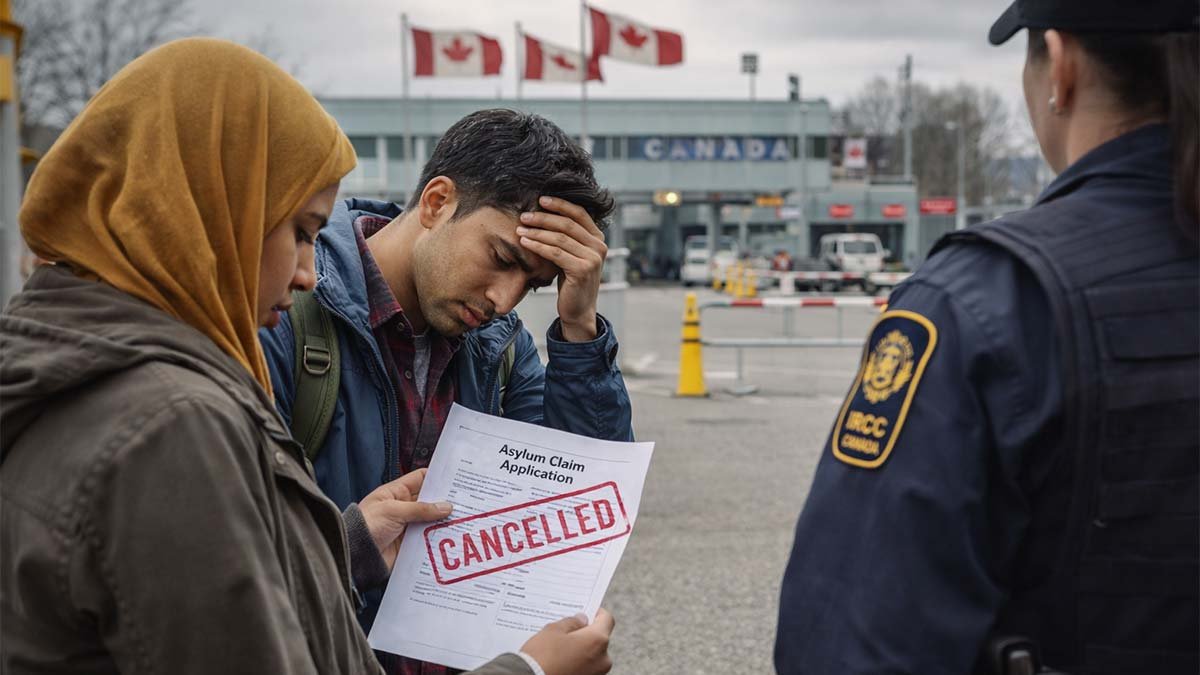

Canada has introduced a major shift in its immigration system with the implementation of Bill C-12, officially known as the Strengthening Canada’s Immigration System and Borders Act. The law received Royal Assent on March 26, 2026, and its impact was almost immediate.
Within just a few days, immigration authorities began issuing procedural fairness letters to asylum seekers, signaling potential ineligibility under the new rules. This rapid enforcement marks one of the fastest rollouts of immigration legislation in Canadian history.
What Bill C-12 Changes for Asylum Seekers
The new law introduces stricter eligibility requirements that significantly limit who can access Canada’s refugee determination system. These rules apply to asylum claims submitted on or after June 3, 2025.
The One-Year Rule
Individuals who entered Canada after June 24, 2020 and filed an asylum claim more than one year after their arrival are no longer eligible for referral to the Immigration and Refugee Board. This applies even if they left and re-entered Canada later.
The 14-Day Rule
Those who crossed into Canada between official border points along the U.S.-Canada land border must file their asylum claim within 14 days. Claims submitted after this period will not be referred to the refugee board.
These changes mean that many applicants will no longer receive a traditional refugee hearing and instead face alternative processes.
Immediate Enforcement and Unprecedented Speed
One of the most striking aspects of this law is how quickly it has been enforced. Reports show that procedural fairness letters were sent out as early as March 28 and 29, just two to three days after the law was approved.
This suggests that immigration authorities had already prepared systems, documentation, and internal processes in advance, allowing them to act immediately once the legislation came into force.
Who Is Most Affected by the New Rules
The individuals most impacted include:
- International students who applied for asylum after their permits expired
- Temporary foreign workers and visitors who delayed filing claims
- Individuals who overstayed their visas and later sought refugee protection
The one-year rule particularly affects those who remained in Canada for extended periods before applying for asylum, even if their circumstances changed later.
Understanding Procedural Fairness Letters
A procedural fairness letter is not a final refusal but a warning. It informs applicants that their case may be deemed ineligible and gives them a limited opportunity to respond.
What the Letter Includes
The letter outlines the reason for ineligibility, often referencing entry dates and claim submission timelines. Applicants are typically given between 7 and 30 days to provide evidence or explanations.
Failure to respond adequately can lead to a formal refusal of the asylum claim.
Legal Options Available to Affected Applicants
Despite the stricter rules, several legal pathways remain available.
Responding to the Procedural Fairness Letter
This is the first and most critical step. Applicants must submit evidence correcting any errors or explaining delays, such as medical issues or new risks in their home country.
Pre-Removal Risk Assessment (PRRA)
Individuals who are deemed ineligible may still apply for a PRRA, which evaluates the risk they would face if returned to their country. Although approval rates are historically low, it remains a possible route to protection.
Humanitarian and Compassionate Applications
Applicants can request permanent residence based on hardship, including their level of establishment in Canada and risks in their home country. However, processing times can be lengthy.
Judicial Review
Applicants have the right to challenge decisions in Federal Court. This must be done within strict deadlines—15 days for those inside Canada.
Transitioning to Temporary Status
Some individuals may qualify for alternative visas, such as work permits or study permits, allowing them to remain in Canada legally.
Deferral of Removal
In certain cases, removal can be delayed if there are ongoing legal proceedings that could affect the outcome.
The Scale of Impact: Key Statistics
The numbers associated with this policy change are significant:
- → UK Visa Fees Set to Increase Significantly from April 8, 2026
- → The New Wage-Based H-1B Lottery for FY 2027: What It Means for HR Compliance
- → South Korea Expands Long-Term Multiple-Entry Visa Access for Chinese Travelers in 2026
- → Three CRA Benefit Payments Coming to Ontario Residents in April 2026
- → Express Entry Draw on March 30, 2026: 356 Candidates Receive Invitations for Permanent Residence
- → Bringing Your Family to New Zealand on a Work Visa: Complete 2026 Guide
- → H-1B Visa Changes in 2026: New $100,000 Fee and Updated Rules Explained
- Approximately 19,000 asylum claims may become ineligible under the one-year rule
- Up to 9,000 existing cases could be retroactively affected
- Around 37% of claims filed between June and October 2025 may not meet the new criteria
- Over 20,000 asylum claims were filed by international students in 2024 alone
These figures highlight the wide-reaching consequences of the new law.
Concerns Raised by Experts and Organizations
The response from legal experts and human rights groups has been strong. Critics argue that the new rules could limit access to fair hearings and disproportionately affect vulnerable individuals.
Organizations have also raised concerns about the retroactive nature of the law and its potential to push some individuals into undocumented status. International bodies have warned that the changes may weaken refugee protection standards.
Legal challenges, including potential constitutional arguments, are expected to emerge in the coming months.
Impact on Work Permits
A critical consequence of the new law is its effect on work authorization.
Work permits linked to asylum claims that are deemed ineligible will be cancelled within 90 days of the law taking effect. This creates urgent pressure for affected individuals to secure alternative legal status or risk losing their right to work.
Employers in sectors that rely heavily on these workers may also face disruptions and workforce shortages.
Conclusion
The introduction of Bill C-12 marks a turning point in Canada’s asylum system. By imposing strict timelines and eligibility rules, the government aims to streamline the process, but the immediate and large-scale impact is undeniable.
For affected individuals, understanding their rights and acting quickly is essential. Whether responding to procedural fairness letters, exploring legal remedies, or transitioning to another immigration pathway, timely action can make a significant difference.
As legal challenges unfold and the policy continues to evolve, staying informed will be crucial for anyone navigating Canada’s immigration system in 2026.
FAQs
What is Bill C-12
It is a new Canadian law that introduces stricter eligibility rules for asylum seekers.
What is the one-year rule
It prevents individuals from applying for asylum if they file more than one year after entering Canada.
Can I still apply for protection if my claim is ineligible
Yes, options like PRRA or humanitarian applications may still be available.
How long do I have to respond to a procedural fairness letter
Typically between 7 and 30 days.
Will my work permit be affected
Yes, work permits linked to ineligible claims may be cancelled within 90 days.
