
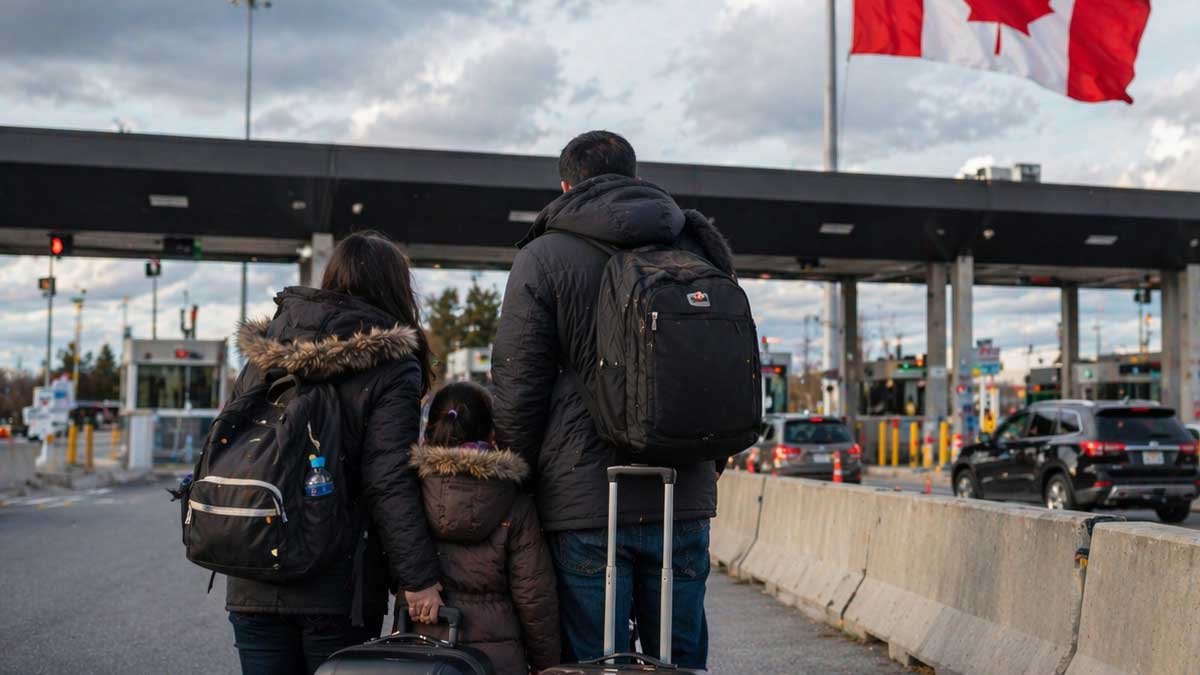

Canada has introduced sweeping changes to its asylum system in 2026, fundamentally altering how refugee claims are assessed and who qualifies for a full hearing. These changes, implemented through new legislation, have already begun to affect tens of thousands of individuals across the country.
Within days of the law coming into force, authorities began notifying claimants that their cases may no longer proceed under the traditional refugee determination process, creating widespread uncertainty and concern.
What the New Law Introduces
The legislation, formally known as the Strengthening Canada’s Immigration System and Borders Act, introduces two major restrictions that directly affect access to the refugee system.
- → Need a Passport Fast? How to Expedite Your U.S. Passport Renewal Step-by-Step
- → Want a $60K+ Salary Without a 4-Year Degree? 15 Certificates You Can Finish in Under a Year
- → Planning a Trip to Europe? 6 Essential Entry Rules to Avoid Denial at the Border
- → Heading to Border Control? Key Immigration Questions You Must Be Ready to Answer
- → Planning a European Trip? What Starkville’s Indian Community Should Know About Schengen Visas
- → 11 Countries Offering Funded Ph.D. Programs for International Students
- → U.S. Dollar Reaches Two-Week High Driven by Middle East Tensions and Fed Policy Outlook
The first rule limits eligibility based on timing. Individuals who apply for asylum more than one year after their initial entry into Canada may no longer qualify for a full hearing before the Immigration and Refugee Board.
The second rule targets those who cross the Canada–United States land border outside official entry points. If such individuals delay filing a claim for more than 14 days after arrival, they may also be denied access to a formal hearing.
These provisions apply to claims submitted on or after June 3, 2025, and in some cases extend retroactively to earlier entry dates.
Immediate Impact on Claimants
Following the law’s implementation in March 2026, immigration authorities began issuing procedural fairness letters to affected individuals.
Approximately 30,000 claimants have been identified as potentially impacted. These letters inform recipients that their claims may not proceed to a full hearing and outline the next steps they must take.
Officials have emphasized that these letters are not removal orders. Instead, they provide an opportunity for individuals to respond with additional information before a final decision is made.
However, the tone and instructions within the letters have caused concern among legal professionals and claimants alike.
What the Letters Mean for Individuals
The content of these notices varies depending on the situation.
Some claimants are given a limited window, typically 21 days, to submit further evidence explaining why their case should still be considered eligible.
Others, particularly those affected by the border crossing rule, are advised to leave the country voluntarily and confirm their departure with authorities. These instructions also warn of potential removal orders if no action is taken.
While alternative options are mentioned, the lack of detailed guidance has led to confusion about available legal pathways.
Who Is Most Affected
The new rules apply to a wide range of individuals, including:
- Temporary residents such as students, workers, and visitors who later seek asylum
- Individuals who entered Canada irregularly and delayed filing their claim
- People who have been living in Canada for an extended period before applying for protection
Because the rules apply retroactively in some cases, even those who entered Canada years earlier may now find themselves affected.
The Role of Pre-Removal Risk Assessment (PRRA)
For those deemed ineligible for a full hearing, the primary alternative is a Pre-Removal Risk Assessment.
This process evaluates whether an individual would face danger if returned to their home country. Unlike a traditional hearing, it is conducted through written submissions rather than in-person testimony.
While the government describes this as a safeguard, legal experts have raised concerns about its effectiveness. Approval rates are significantly lower compared to full hearings, and the absence of oral testimony limits an applicant’s ability to present their case fully.
Concerns Raised by Legal Experts
Immigration lawyers across Canada have expressed serious concerns about the new system.
One major issue is the difference in outcomes between full hearings and paper-based assessments. Refugee hearings allow claimants to explain their situation directly, answer questions, and provide context. The alternative process relies heavily on documentation, which may not fully capture the risks involved.
There are also concerns about individuals leaving Canada prematurely due to misunderstandings about the letters they receive. Legal experts stress that these notices are not immediate removal orders and that claimants still have rights and options.
Countries with Removal Restrictions
Another critical factor is that Canada maintains restrictions on deportations to certain countries due to safety concerns.
These include regions experiencing conflict or instability. Individuals from such countries may not be removed immediately, even if their claim is denied.
However, leaving Canada voluntarily could expose them to risks elsewhere, particularly if they enter another country with stricter immigration enforcement.
Steps Affected Individuals Should Take
Those who receive a notice related to these changes should act carefully and seek guidance.
It is important not to leave Canada without fully understanding the situation. Legal advice is strongly recommended to assess available options and prepare a response within the required timeframe.
Gathering supporting documents, including evidence of personal risk and country conditions, can strengthen a case during review.
Understanding the alternative assessment process is also essential, as it may still provide a pathway to protection.
What Lies Ahead for Canada’s Asylum System
The introduction of these rules is expected to lead to legal challenges and policy debates in the coming months.
Many experts anticipate an increase in court cases as individuals contest decisions related to eligibility. There are also broader concerns about how these changes align with Canada’s international obligations toward refugees.
At the same time, the government has indicated that further updates to the asylum system may follow, suggesting that the current changes are part of a larger reform strategy.
Conclusion
Canada’s asylum system is undergoing a significant transformation in 2026, with new rules that limit access to traditional refugee hearings and place greater emphasis on alternative assessment processes.
While the government aims to streamline the system and manage growing backlogs, the immediate impact on claimants has been substantial. Thousands now face uncertainty about their legal status and future in Canada.
Understanding these changes, seeking timely legal support, and responding carefully to official communications will be critical for those affected. As the situation evolves, both legal and policy developments are likely to shape the future of refugee protection in Canada.
Frequently Asked Questions (FAQs)
Are these letters the same as deportation orders?
No, they are not removal orders. They are notices informing claimants that their eligibility is under review and giving them a chance to respond.
Can affected individuals still apply for other immigration pathways?
Yes, options such as humanitarian and compassionate applications may still be available, depending on individual circumstances.
Will work permits be affected?
Work permits linked to refugee claims may be impacted if a claim is found ineligible, potentially affecting employment status.
Can decisions be challenged?
Yes, individuals may seek judicial review through the Federal Court if they believe a decision is unfair or incorrect.
Do these rules apply to all asylum claims?
They apply to claims made on or after June 3, 2025, with some provisions affecting earlier entrants depending on timing.
