
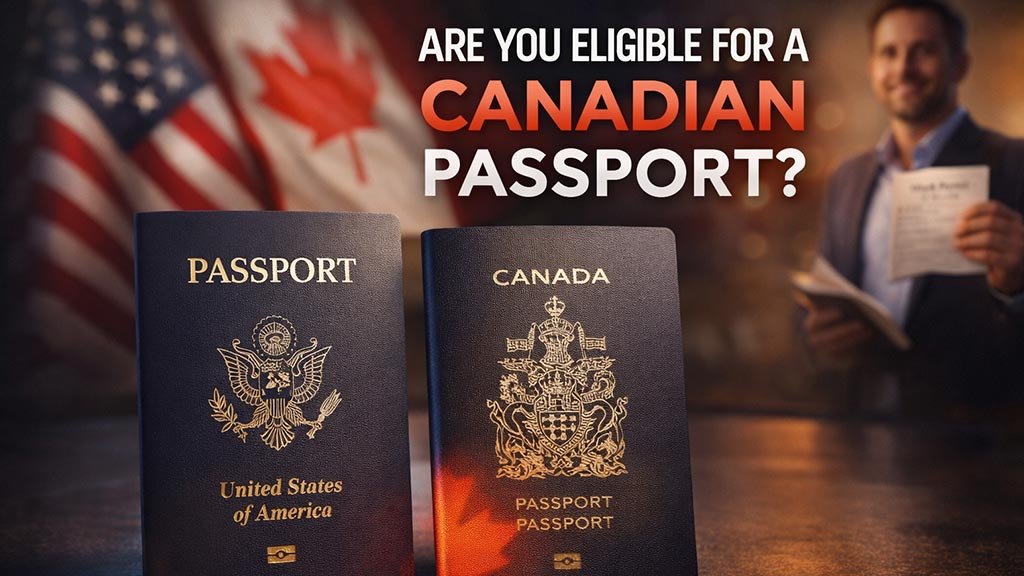

Overview
A landmark change in Canadian citizenship legislation has opened the door for millions of Americans to claim dual citizenship with Canada — and with it, the ability to obtain a Canadian passport. If you have Canadian roots, you may already qualify without even knowing it.
Who Is Eligible?
Under Canada’s newly enacted citizenship by descent law, any individual with Canadian ancestry is automatically eligible for Canadian citizenship, regardless of their birthplace. Crucially, it does not matter whether your parents or grandparents ever lived in Canada or held Canadian passports.
The eligibility criteria are straightforward:
- You must have been born before December 15, 2025
- You must be able to trace your lineage to a Canadian ancestor
- The law applies equally to individuals born biologically and those adopted as children
A Significant Opportunity for Americans — Especially in New England
This legislation carries particular significance for residents of the United States, where a large population carries Canadian heritage. New England alone is home to an estimated three million eligible Americans, many of whom descend from waves of Canadian migrants who relocated between 1870 and 1930.
Benefits of Canadian Dual Citizenship
Americans who successfully obtain Canadian citizenship stand to gain a wide range of advantages:
Right to Live and Work in Canada
Dual citizens gain the full rights and privileges of Canadian citizenship, including the unrestricted right to enter, live, and permanently settle in Canada should they choose to do so.
Enhanced Global Mobility
A Canadian passport is widely regarded as offering broader international mobility compared to a US passport, making travel easier across numerous countries.
No Additional Tax Burden
One of the most appealing aspects of Canadian citizenship for Americans is its tax neutrality. Unlike the United States, which taxes its citizens based on citizenship regardless of where they reside, Canada’s tax system is residency-based.
This means that if you obtain Canadian citizenship but continue living in the US without acquiring Canadian property or businesses, you will have no Canadian tax obligations and no requirement to file a Canadian tax return.
Should you eventually choose to relocate to Canada, the US-Canada Tax Treaty offers protection against double taxation, allowing taxpayers with obligations in both countries to offset taxes paid in one nation against those owed in the other.
How to Apply for Canadian Citizenship
To begin the process, applicants must apply for proof of Canadian citizenship by submitting documentation that establishes their ancestral connection to Canada. Acceptable evidence typically includes:
- Birth certificates
- Baptismal records
- Other lineage-related documents
Note: As of the time of writing, the processing time for proof of citizenship applications is approximately 11 months.
Once proof of citizenship is granted, applicants may then proceed to apply for a Canadian passport.
The Legal Background: Bill C-3 and the End of the First-Generation Limit
What Was the First-Generation Limit (FGL)?
Prior to this new legislation, Canadian citizenship by descent was restricted to just one generation born outside Canada — a rule known as the First-Generation Limit (FGL), which had been part of Canada’s Citizenship Act since 2009.
Why Was It Struck Down?
In December 2023, the Ontario Superior Court of Justice ruled the FGL unconstitutional, prompting the federal government to act.
What Did Bill C-3 Change?
In response, the government introduced Bill C-3 — “An Act to Amend the Citizenship Act”, which came into force on December 15, 2025. The bill:
- Eliminated the FGL for all individuals born before December 15, 2025
- Introduced a new exception for children born on or after that date, provided the Canadian parent meets a substantial connection to Canada test — defined as having lived in Canada for at least three years prior to the child’s birth or adoption
What About Birthright Citizenship?
It’s worth noting that citizenship by descent only applies to those born outside Canada. Children born on Canadian soil or in Canadian airspace — with limited exceptions such as children of foreign diplomats — are automatically Canadian citizens by birthright.
Conclusion
Bill C-3 represents a transformative shift in Canadian immigration and citizenship policy, effectively unlocking Canadian citizenship for potentially millions of Americans with ancestral ties to Canada. The removal of the First-Generation Limit means that heritage, not just birthplace, now plays a central role in determining citizenship eligibility. With no tax implications for those who remain US residents, and the added benefit of enhanced global travel, pursuing Canadian dual citizenship is a compelling option worth exploring for eligible Americans. If you believe you may qualify, consulting with an immigration professional is a recommended first step.
Frequently Asked Questions (FAQs)
Q1: Do I need to have been born in Canada to claim Canadian citizenship? No. Citizenship by descent applies specifically to individuals born outside Canada who can prove a lineage connection to a Canadian ancestor.
Q2: Does obtaining Canadian citizenship mean I have to pay Canadian taxes? Not unless you become a Canadian resident. Canada taxes based on residency, so living in the US means no Canadian tax obligations.
- → Need a Passport Fast? How to Expedite Your U.S. Passport Renewal Step-by-Step
- → Want a $60K+ Salary Without a 4-Year Degree? 15 Certificates You Can Finish in Under a Year
- → Planning a Trip to Europe? 6 Essential Entry Rules to Avoid Denial at the Border
- → Heading to Border Control? Key Immigration Questions You Must Be Ready to Answer
- → Planning a European Trip? What Starkville’s Indian Community Should Know About Schengen Visas
- → 11 Countries Offering Funded Ph.D. Programs for International Students
- → U.S. Dollar Reaches Two-Week High Driven by Middle East Tensions and Fed Policy Outlook
Q3: What documents do I need to apply? You’ll generally need a chain of documents proving your ancestry, such as birth certificates and baptismal records linking you to a Canadian ancestor.
Q4: How long does the application take? Current processing times for proof of citizenship applications stand at approximately 11 months.
Q5: What is the substantial connection test for children born after December 15, 2025? The Canadian parent must have resided in Canada for a minimum of three years before the child’s birth or adoption.
Q6: Can adopted children also apply? Yes. The citizenship by descent provision applies equally to children born biologically and those who were adopted.
