
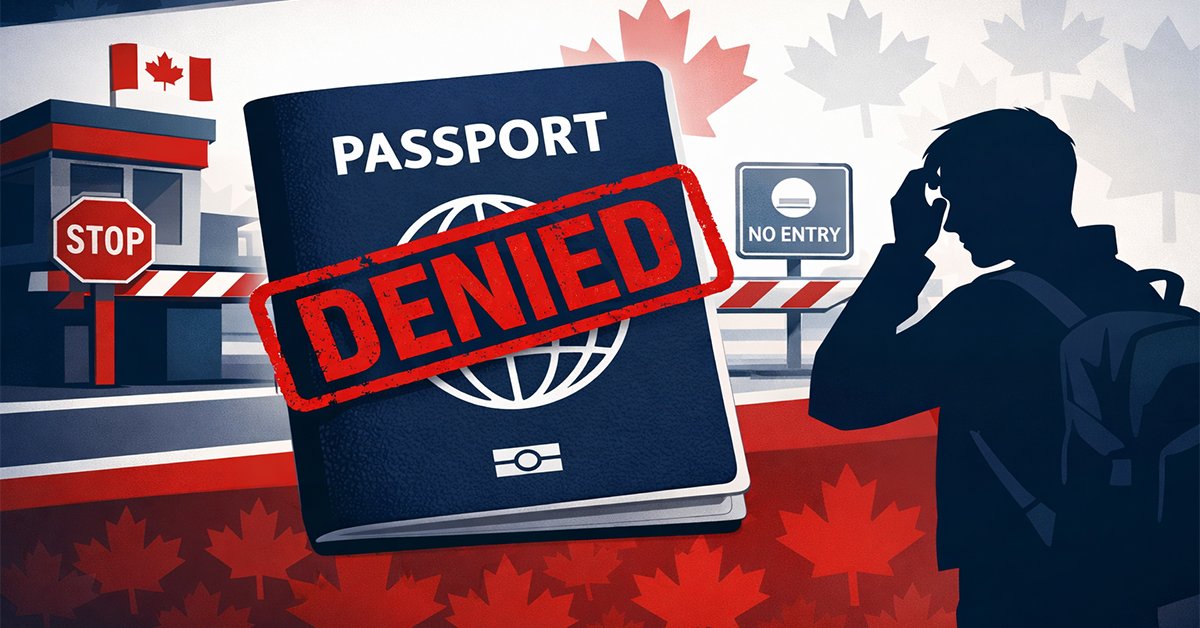

Picture this: You’ve booked your flight, packed your bags, and driven hours to the Canadian border, only to be turned away because of a shoplifting charge from college. It happens more often than you think.
Canada takes border security seriously, and their criminal inadmissibility rules catch many travelers by surprise. That speeding ticket that turned into a court summons? That bar fight from your twenties? Even animal cruelty charges you’ve long forgotten about—all of these could mean the difference between a warm family reunion and an embarrassing rejection at customs.
If you’re planning a trip north of the border, here’s everything you need to know about criminal inadmissibility and how to protect your travel plans.
What Does Criminal Inadmissibility Actually Mean?
Criminal inadmissibility means Canada has the legal right to deny you entry based on your criminal record. Here’s the catch: they don’t use your country’s definition of what’s “serious”—they use theirs.
How Canada Reviews Your Record
Canadian border officials look at two key factors when assessing your record:
The offense must be a crime in both countries. If something you did wasn’t illegal where it happened, Canada won’t hold it against you. But if it was a crime there and has an equivalent under Canadian law, you could face problems.
Timing matters as much as severity. You don’t need a conviction to be deemed inadmissible. Simply being charged with an offense—or even admitting you committed one—can be enough. Pending charges can also cause issues at the border.
Understanding Canada’s Criminal Categories
Canada divides offenses into three tiers based on potential punishment under Canadian law:
Summary Offenses – These are the least serious, similar to misdemeanors in the United States. Think minor theft or causing a disturbance.
Indictable Offenses – More serious crimes comparable to felonies, like fraud over a certain amount or assault causing bodily harm.
Hybrid Offenses – Here’s where it gets tricky. These can be prosecuted either way, but immigration officials always treat them as indictable offenses—the more serious category.
The “Minor” Offenses That Can Keep You Out
A single minor summary offense typically won’t make you inadmissible. However, you cross the line with any of these situations:
- One major non-serious offense
- Two separate summary offenses
- A single hybrid offense (automatically treated as serious)
Let’s look at specific examples that surprise most travelers:
Theft and Financial Crimes Under $5,000
Using someone else’s credit card without permission, shoplifting from a retail store, pocketing money from your employer’s till—these might seem relatively minor, but Canada groups them together as potential entry barriers. The dollar amount matters: keep it under $5,000 Canadian, and it’s still a non-serious offense. Go over, and you’re looking at serious criminality.
Property Damage and Vandalism
Keyed someone’s car during an argument? Spray painted graffiti as a teenager? Broke a window in anger? These fall under “mischief under $5,000” and count against you. The damage doesn’t need to be extensive—even small acts of property destruction matter.
- → Need a Passport Fast? How to Expedite Your U.S. Passport Renewal Step-by-Step
- → Want a $60K+ Salary Without a 4-Year Degree? 15 Certificates You Can Finish in Under a Year
- → Planning a Trip to Europe? 6 Essential Entry Rules to Avoid Denial at the Border
- → Heading to Border Control? Key Immigration Questions You Must Be Ready to Answer
- → Planning a European Trip? What Starkville’s Indian Community Should Know About Schengen Visas
- → 11 Countries Offering Funded Ph.D. Programs for International Students
- → U.S. Dollar Reaches Two-Week High Driven by Middle East Tensions and Fed Policy Outlook
Nighttime Trespassing
This specific violation confuses many people. Loitering or prowling near someone’s home between 9 PM and 6 AM without a lawful reason qualifies as trespassing at night. This doesn’t include walking through someone’s yard during the day, but the nighttime version is taken more seriously.
Public Indecency
Committing indecent acts in public spaces—including public nudity, sexual acts in view of others, or similar behavior—can result in inadmissibility. These charges often stem from incidents people would rather forget, but they remain on records for years.
Missing Court Dates
You received a summons or appearance notice and didn’t show up. Even if the underlying charge was minor, failing to appear is itself a separate offense that Canada considers when evaluating your entry.
Disorderly Conduct
Fighting in public, shouting obscenities outside a bar, causing a drunken scene in a public place—these disturbance charges might result in a small fine in your home country, but they count toward inadmissibility in Canada.
Animal-Related Offenses
Willfully causing unnecessary suffering to an animal, neglecting an animal in your care, or involvement in animal fighting rings all factor into admissibility decisions. Canada takes animal welfare seriously, and these violations stay on your record.
Threats and Intimidation
You don’t need to physically harm someone to face consequences. Uttering threats—whether to cause bodily harm, damage property, or hurt someone’s pet—qualifies as a criminal offense that affects border entry.
Unauthorized Vehicle Use
Taking a car, boat, or other vehicle without the owner’s permission, even if you planned to return it, counts as joyriding. Being a passenger who knew the vehicle was taken without consent can also create problems.
Three Ways to Overcome Criminal Inadmissibility
Don’t panic if you have something on your record. Canada offers several pathways to overcome inadmissibility, though timing and eligibility vary.
Option 1: Deemed Rehabilitation (The Automatic Route)
This is the most convenient option because no formal application is required. After enough time passes and you’ve completed all aspects of your sentence—including jail time, probation, community service, and fines—you automatically become admissible again.
Requirements:
- Five years must pass for summary offenses
- Ten years must pass for indictable offenses
- You only have summary offenses on your record
- Your offense qualifies as non-serious criminality
The clock starts when you finish everything related to your sentence, not when the offense occurred. Many travelers mistakenly count from their conviction date and show up at the border too early.
Before traveling, verify your deemed rehabilitation status at a Canadian embassy, high commission, or consulate. Getting this confirmation ahead of time prevents border surprises.
Option 2: Temporary Resident Permit (For Urgent Travel)
Need to enter Canada before you qualify for deemed rehabilitation? A Temporary Resident Permit might be your answer, but it’s not guaranteed.
What You Need:
- A compelling reason to enter Canada that outweighs any risk you pose
- Valid examples include attending a family funeral, critical business meetings, or similar urgent matters
- Officers have full discretion to approve or deny your application
Timeline Considerations:
- US citizens and permanent residents can apply at the port of entry
- Other nationalities must apply in advance (taking 3-6 months on average)
- Port of entry applications are decided on the spot
Important Details:
- Application fee: $246.25 Canadian
- Permits are temporary and must be respected
- You must leave Canada when it expires
- Extensions may be possible but aren’t guaranteed
Option 3: Criminal Rehabilitation (The Permanent Solution)
This formal application permanently removes your inadmissibility. Once approved, your offense no longer affects your ability to visit Canada.
Important Notes:
- Processing takes 12+ months
- Not viable for last-minute holiday travel
- Best pursued well in advance if you’re a regular Canada visitor
Planning Your Border Crossing
The worst time to discover you’re inadmissible is at the border with your family waiting in the car. Take these steps before you travel:
Research Your Specific Situation
Pull your criminal record from your home country and examine each offense carefully. Look up the equivalent crime under Canadian law at the time you committed it. Canadian criminal law evolves, so the current version might differ from what applied when your offense occurred.
Seek Professional Assessment
Immigration lawyers specialize in criminal inadmissibility cases. They can evaluate your specific record against Canadian law, calculate your deemed rehabilitation date accurately, and advise whether a TRP or criminal rehabilitation application makes sense for your situation.
Many people believe they’re clear to enter when they’re actually not, or vice versa. Professional assessment eliminates guesswork.
Gather Documentation
If you’re relying on deemed rehabilitation, bring proof:
- Official court records showing your conviction or charge
- Documentation of sentence completion
- Proof of fine payment
- Probation completion certificates
Border officers may not request these documents, but having them available demonstrates preparation and honesty.
Consider Timing
The holiday season means busier border crossings, longer wait times, and potentially less patience for complicated cases. If your situation requires explanation or documentation review, you might want to arrive during off-peak hours.
Common Mistakes That Make Things Worse
Lying or Omitting Information
Border officers ask direct questions about criminal history. Lying or “forgetting” to mention an offense causes bigger problems than the offense itself. Canadian and US authorities share criminal databases, and officers can access your history.
Assuming Old Charges Don’t Matter
Some travelers think charges from 20 or 30 years ago won’t appear or won’t matter. Age doesn’t erase criminal records unless you’ve been formally rehabilitated. That college indiscretion can still cause problems decades later.
Traveling Without Verification
“I think I’m okay” isn’t good enough. Get official confirmation of your deemed rehabilitation status or secure your TRP before traveling. The middle of a border crossing isn’t the time to find out you were wrong.
Not Accounting for All Sentence Components
The deemed rehabilitation clock doesn’t start on your sentencing date or release date. It starts when you complete every single requirement—last probation check-in, final fine payment, final community service hour. Many people miscalculate because they forgot about a small fine or probation extension.
What Happens If You’re Denied Entry?
Being turned away at the border is embarrassing, inconvenient, and potentially expensive. You’ll need to return home immediately, and any prepaid accommodations, event tickets, or other reservations may be forfeited.
The denial also creates a record in Canada’s immigration system. Future border crossings may involve additional scrutiny, even after you become admissible through deemed rehabilitation or criminal rehabilitation.
Some travelers face secondary inspection—a detailed interview and background check conducted away from the primary inspection line. This process can take hours and includes questions about your criminal history, current lifestyle, employment, and travel plans.
Making Informed Decisions About Canada Travel
Criminal inadmissibility rules exist to protect public safety, and Canada enforces them consistently. The good news is that understanding these rules and planning accordingly can prevent most border problems.
Whether you’re visiting family for the holidays, conducting business in Toronto, or exploring the Canadian Rockies, take time to review your admissibility before you travel. A small investment in research or legal consultation now prevents major headaches at the border later.
For travelers with past offenses, Canada’s rehabilitation pathways offer a clear route back to admissibility. You may need to wait for deemed rehabilitation to apply, invest in a criminal rehabilitation application, or secure a TRP for urgent travel, but options exist for nearly every situation.
The key is honesty, preparation, and respect for Canada’s immigration laws. Border officers appreciate travelers who understand the rules, prepare appropriate documentation, and answer questions truthfully. This approach creates the smoothest possible border experience, even with a complicated criminal history.
Frequently Asked Questions
Q: Will a DUI prevent me from entering Canada? Yes. Impaired driving is considered serious criminality in Canada, as it carries a potential 10-year prison sentence under Canadian law. You’ll need criminal rehabilitation or a TRP to enter.
Q: Can I enter Canada with pending charges? Pending charges can result in inadmissibility, even without a conviction. Border officers assess each situation individually based on the nature of the charges.
Q: Do pardons or expungements from my home country matter? Sometimes, but not always. Canada evaluates whether your pardon or expungement would be recognized under Canadian law. Consult an immigration lawyer for your specific situation.
Q: What if I was arrested but never charged? Arrests without charges or convictions typically don’t affect admissibility. However, if you admitted to committing an offense during the arrest, that admission could still cause problems.
Q: How far back does Canada check criminal records? Canada can access your complete criminal history regardless of how old it is. Age alone doesn’t make an offense irrelevant unless you’ve been formally rehabilitated.
