

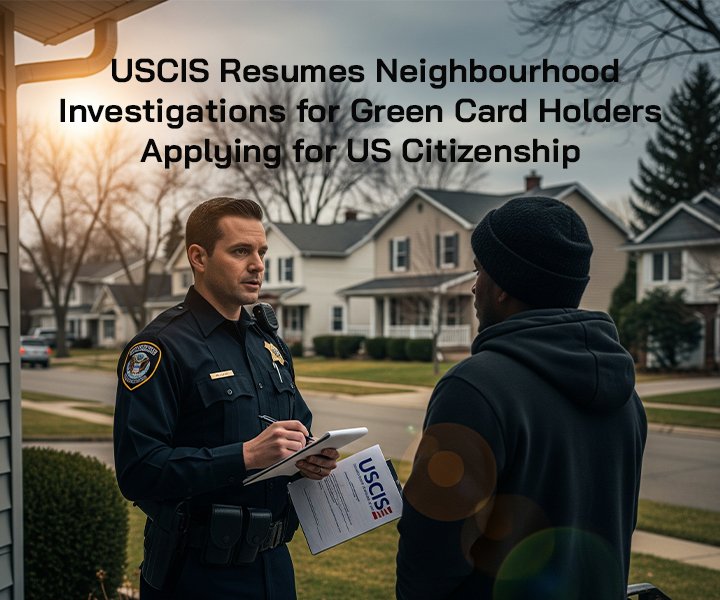
If you’re a green card holder in the United States planning to apply for US citizenship, there’s some big immigration news you need to be aware of. The United States Citizenship and Immigration Services (USCIS) has officially announced that it will resume neighbourhood investigations for foreign nationals applying for naturalization.
This means that lawful permanent residents—also known as green card holders—may now be required to go through a more traditional background check process, which goes far beyond the standard biometric and FBI criminal history checks that have been relied on for the past few decades.
In simple terms, the USCIS will no longer automatically waive these investigations and may once again ask for testimonial letters from neighbours, employers, co-workers, and business associates to verify applicants’ moral character, credibility, and eligibility for US citizenship.
This significant policy shift was made clear in a Policy Memorandum dated August 22, aligning with Section 335(a) of the Immigration and Nationality Act (INA), which directs USCIS to fully investigate the qualifications of foreigners applying for naturalization.
So, what does this mean for green card holders looking to become US citizens? Let’s break down what has changed, why it’s important, and how applicants should prepare.
What are “Neighbourhood Investigations”?
Neighbourhood investigations are essentially personal background checks conducted by USCIS to gather information about an applicant’s “good moral character”—a key requirement for US naturalization.
Here’s what it usually involves:
- USCIS may verify your employment history by reaching out to your past or current employers.
- USCIS may request letters from neighbours, colleagues, or community members who can vouch for your character, lifestyle, and credibility.
- The investigation could cover the past five years of your residence and employment in the United States.
- If USCIS officers feel additional information is needed, they may conduct in-person checks or interviews within your community.
Essentially, it’s not just paperwork anymore—your personal and community reputation could play a role in securing your citizenship.
The Historical Background
To understand this change, it helps to know a little about the history of US immigration procedures.
- 1802 to 1981: Previously, anyone applying for US citizenship had to present two witnesses who could personally testify to their good moral character and eligibility.
- 1981: Congress eliminated the witness requirement, believing that neighbourhood investigations would be more effective in determining an applicant’s suitability.
- 1991 onward: The Immigration and Naturalization Service (INS), USCIS’s predecessor, gradually stopped neighbourhood investigations, shifting toward more standardized checks such as FBI biometrics and criminal databases.
- 2025 Policy Change: USCIS is now reversing decades of practice by reinstating these investigations in order to strengthen the naturalization process.
This move underscores USCIS’s effort to ensure that foreign nationals meet all statutory requirements before being granted US citizenship.
Why USCIS is Resuming Neighbourhood Investigations
According to USCIS, the decision to end the general waiver of these investigations has been made for several reasons:
- Ensuring Good Moral Character – One of the criteria for naturalization is showing good moral character. While fingerprints and background checks reveal criminal records, they don’t always provide a full picture of a person’s behavior, honesty, or reputation.
- Preventing Fraud – USCIS wants to make it more difficult for individuals to hide misconduct by tightening the review process.
- Aligning with Immigration Law – Section 335(a) of the Immigration and Nationality Act already empowers USCIS to conduct such investigations. By resuming them, USCIS is strictly enforcing existing laws rather than leaving them dormant.
- Enhanced Scrutiny in Immigration – Earlier in August, USCIS had already revised rules for family-based green card petitions (especially marriage-based), putting greater emphasis on relationship authenticity. This new measure is part of a broader tightening of immigration integrity checks.
What Green Card Holders Need to Submit
If you’re planning to apply for US citizenship, you should be prepared for additional documentation and testimonial evidence.
Here’s what USCIS may request:
- Letters from Neighbours: Individuals who live near you and can confirm your residence, community involvement, and personal conduct.
- Employer References: Letters from your supervisor or HR department confirming your employment history and workplace behavior.
- Co-Worker Testimonials: Statements from colleagues about your professionalism, reliability, and moral standing.
- Business Associate Letters: For entrepreneurs or self-employed individuals, these letters could demonstrate your integrity in financial and contractual dealings.
👉 Pro Tip for Applicants: Submitting these documents proactively along with your N-400 Application for Naturalization can help USCIS determine whether a neighbourhood investigation is necessary in your case. Without such proactive submissions, USCIS may issue a Request for Evidence (RFE) or directly initiate a full-scale investigation.
What Happens If You Refuse to Provide Evidence?
If an applicant fails or refuses to provide testimonial evidence when asked, USCIS may consider that a red flag and proceed with a broader neighbourhood investigation.
This can potentially delay your naturalization process and may even affect your eligibility determination. In short, being uncooperative or withholding information could complicate your journey to citizenship.
Impact on Green Card Holders Seeking Citizenship
This policy change is a big deal for the nearly 9 million lawful permanent residents in the US who are eligible to apply for citizenship.
Here’s how it will likely affect applicants:
- Longer Processing Times: Since investigations can be time-consuming, naturalization approvals may take longer than before.
- More Paperwork: You’ll need to collect and submit additional testimonial or character-related documents.
- Greater Scrutiny: Individuals with questionable employment records, unstable addresses, or weak community ties may face deeper investigations.
- Increased Burden of Proof: The onus is now more on applicants to demonstrate they meet statutory requirements than just relying on clean criminal records.
Difference Between Past and Current Procedures
Previously:
- USCIS relied primarily on fingerprint checks and FBI background checks.
- Neighbourhood investigations were generally waived unless a red flag arose.
Now:
- USCIS is reintroducing personal investigation as a default tool.
- Applicants may need to prove their good moral character through community testimony.
- Waivers for such investigations will only be granted on a case-by-case basis after reviewing provided evidence.
Concerns and Reactions
Some immigration advocates and experts have expressed concerns about this change:
- Privacy Concerns: Applicants may feel uncomfortable having their neighbours or co-workers contacted by USCIS.
- Subjectivity of “Good Moral Character”: Unlike criminal records, testimonial letters can sometimes be subjective and may lead to inconsistent adjudications.
- Delays in Processing: Naturalization already takes several months. Adding neighbourhood investigations could lengthen wait times further.
- Possible Discrimination Risks: There are fears that community investigations could open doors to bias or discrimination against immigrants.
On the other hand, supporters of the change argue that it will strengthen the naturalization process by preventing fraud and ensuring only deserving individuals gain citizenship.
Preparing for Neighbourhood Investigations: A Guide for Applicants
If you are planning to apply for US citizenship soon, here are some practical steps you can take to prepare:
- Start Building Your Documentation Early – Collect pay stubs, tax records, and employment history going back at least 5 years.
- Request Testimonial Letters in Advance – Speak to neighbours, colleagues, and employers who know you well and ask them for signed letters testifying to your good character.
- Stay Transparent – Be upfront in your application. Discrepancies between your form and what investigators discover can harm your case.
- Establish Community Ties – Participation in local organizations, volunteering, or community events strengthens your credibility.
- Work With an Immigration Attorney if Unsure – Immigration lawyers can guide you in preparing supporting evidence and minimizing chances of delay.
Looking Ahead: What This Means for Immigration Policy
The resumption of neighbourhood investigations reflects a broader shift in US immigration policies toward tighter enforcement and scrutiny. Over the past few years, USCIS has:
- Increased checks on family-based petitions
- Tightened rules around asylum claims
- Placed more scrutiny on employment-based visas
By reinstating a practice abandoned decades ago, USCIS is effectively signaling that community reputation and moral character matter just as much as a clean criminal record in the citizenship process.
Final Thoughts
For millions of green card holders aspiring to become American citizens, the road to naturalization has just become more detailed and demanding. The return of neighbourhood investigations means USCIS will now take a much closer look at applicants’ personal lives, professional history, and community involvement before granting citizenship.
While this may sound daunting, being prepared with the right documentation and maintaining strong community ties can help you navigate this new requirement smoothly.
If you’re considering applying for US citizenship soon, it’s best to stay informed, gather testimonial letters early, and ensure transparency in your application. This proactive approach will not only speed up your approval but also give you peace of mind during the process.
The American Dream is still within reach—but it now comes with a renewed emphasis on proving both your legal eligibility and your character as a future US citizen.