
Meta Description
From September 2, 2025, most U.S. visa applicants—including H-1B workers and F-1 students—must attend in-person interviews. The updated rules significantly limit the Visa Interview Waiver (Dropbox) program. Learn who qualifies, who doesn’t, and what this means for your U.S. travel or study plans.
Introduction: Big Changes for U.S. Visa Applicants in 2025
Getting a U.S. visa has always involved a detailed and sometimes stressful process, but recent years gave applicants some relief. Thanks to the Visa Interview Waiver Program, often known as the Dropbox system, certain applicants could renew visas without appearing at a U.S. embassy or consulate in person. This saved time, reduced backlogs, and made things easier for both consulates and travelers.
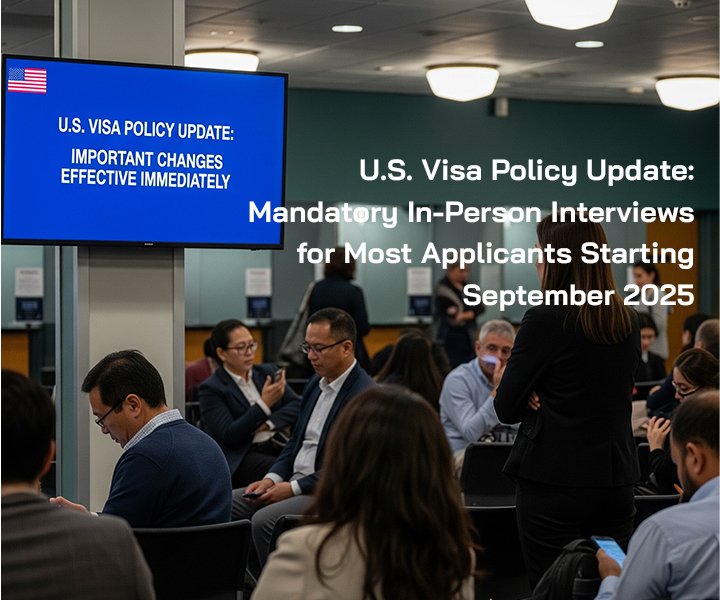
But starting September 2, 2025, the U.S. Department of State will scale back this convenience. A new policy requires most non-immigrant visa applicants to appear in person for interviews—including groups that were previously exempt, like children under 14 and seniors over 79.
For H-1B professionals, F-1 students, tourists, and business visitors, this means additional planning, higher costs, and longer wait times. Only a narrow set of applicants will remain eligible for the Interview Waiver benefit.
In this blog, we’ll break down exactly what’s changing, who is affected, the impact on different visa categories, and what you can do to prepare.
What is the Visa Interview Waiver (Dropbox) Program?
The Visa Interview Waiver Program, commonly called Dropbox, allowed certain applicants to skip in-person interviews if they met specific criteria. It was particularly popular for:
- Renewals of visas within a set timeframe (usually 12–48 months from expiration, depending on the policy at the time).
- Applicants under 14 and over 79, who were generally excluded from interviews.
- Applicants with no prior refusals or ineligibility concerns.
The purpose was to reduce consular workload, especially during the COVID-19 pandemic, when face-to-face interactions were limited. But with consular services returning to full operations, the State Department is revising the policy.
What Changes on September 2, 2025?
The U.S. Department of State has confirmed that most non-immigrant visa applicants will now be required to attend in-person interviews.
Here’s the breakdown of the new rules:
- Mandatory In-Person Interviews
- Applicants under 14 and over 79 will no longer be automatically exempt.
- They must appear in person unless they qualify under the new, narrow Interview Waiver criteria.
- Limited Waiver Eligibility
- Only certain applicants renewing full-validity B1, B2, or B1/B2 visitor visas (or Border Crossing Cards for Mexican nationals) may still qualify for an interview waiver.
- To qualify, the renewal must be within 12 months of the prior visa’s expiration.
- Applicants must have been at least 18 years old when the prior visa was issued.
- They must apply in their country of nationality or residence.
- They must never have been refused a visa and must have no potential ineligibility.
- End of Expanded Waiver Rules
- Earlier in 2025 (February), the U.S. had expanded waiver eligibility to cover certain applicants whose visas expired less than 12 months earlier.
- This was withdrawn on July 25, 2025, and has now been replaced by the stricter September policy.
- Consular Discretion Still Applies
- Even if you technically qualify for an Interview Waiver, a consular officer can still request an in-person interview on a case-by-case basis.
Who Will Be Most Affected?
H-1B Visa Holders
H-1B workers applying for renewals will no longer qualify for the Dropbox option if their visa expired less than 12 months before their new application. They will need to book an in-person slot at a U.S. consulate.
F-1 Student Visa Applicants
Students applying for the first time—or those renewing after an expired visa—will face mandatory in-person interviews. With U.S. universities welcoming thousands of Indian, Chinese, and other international students each year, this could significantly increase consular wait times.
Children and Elderly Applicants
Until now, applicants under 14 and over 79 were almost always exempt. Starting in September, these groups must appear in person unless they fall under the new limited Interview Waiver category. Families applying for children’s visas should factor in extra scheduling.
Business and Tourist Visitors (B1/B2)
The only category with a slightly easier path is B1/B2 applicants. If you meet all the conditions (renewal within 12 months, never refused, no ineligibility, 18+ at original issuance), you may still qualify for the Interview Waiver. But this is much narrower than before.
Why Is the U.S. Making This Change?
Several factors likely contributed to the policy shift:
- Security Concerns
In-person interviews allow consular officers to directly assess applicants’ intent, verify documents, and spot inconsistencies that might not appear on paper. - Backlog Management
Ironically, while waivers helped reduce interview backlogs, they also created a backlog of cases requiring further checks. Bringing applicants back for interviews distributes workload differently. - Standardization
Different consulates previously applied the waiver policy unevenly. A uniform rule helps maintain consistency worldwide. - Return to Pre-Pandemic Norms
The expanded Interview Waiver program was always considered temporary. The September 2025 update signals a full return to stricter pre-pandemic practices.
Additional Financial Impact: Visa Fee Hike
On top of the stricter interview rules, applicants should also prepare for higher costs.
- Non-petition-based visas (B1/B2, F-1, F-2, transit visas, etc.) will see a 148% fee increase.
- The current charge of $185 will rise sharply, making U.S. travel and study significantly more expensive.
This means that not only will applicants spend more time arranging interviews, but they’ll also spend more money on the application process itself.
What Does This Mean for Different Groups?
For Students (F-1, J-1, M-1)
- Expect longer interview wait times at consulates in India, China, and Nigeria—the top source countries for international students.
- Plan applications months in advance. Last-minute scheduling could risk missing program start dates.
For Professionals (H-1B, L-1, O-1)
- Renewal applicants will face extra delays due to in-person requirements.
- This may affect U.S. employers relying on timely visa processing for overseas hires.
For Tourists & Visitors (B1/B2)
- Renewals within 12 months may still qualify for Dropbox, but only if all other conditions are met.
- First-time applicants or those with prior refusals will need an in-person appointment.
For Families with Children
- Parents applying for children’s visas should now factor in consular visits for minors under 14.
What Applicants Should Do Now
If you plan to apply for a U.S. visa in late 2025 or early 2026, here’s how to prepare:
- Apply Early
Don’t wait until the last moment. With fewer waiver options, consulates will see longer queues. - Check Eligibility for Waiver
If you’re a B1/B2 applicant renewing within 12 months, double-check whether you qualify before assuming you can skip the interview. - Book Interview Slots ASAP
As soon as interview scheduling opens, grab your slot—especially in high-demand consulates like Mumbai, New Delhi, Beijing, or Lagos. - Prepare Documentation Thoroughly
Expect stricter scrutiny. Bring financial records, proof of ties to your home country, and any required supporting documents. - Budget for Higher Fees
Factor in the visa fee hike and additional costs like travel, accommodation, and medical tests if required. - Stay Updated
Policies can shift quickly. Follow official updates from the U.S. Department of State and your local consulate.
Final Thoughts: Navigating the New Reality
The September 2, 2025 U.S. visa policy changes are not minor adjustments—they’re a return to stricter rules that will affect millions of travelers, students, and professionals worldwide.
For H-1B and F-1 visa applicants especially, the loss of Interview Waiver benefits means more time, more expense, and more hurdles in the already complex U.S. immigration process.
Still, with careful planning, early preparation, and a clear understanding of eligibility, applicants can minimize disruptions. While the days of widespread Dropbox convenience are ending, being proactive will help you stay ahead of the curve.
Immigration rules may tighten, but opportunities remain. The key is to adapt early, prepare fully, and never underestimate the importance of the interview itself—because from September 2025 onward, that interview will once again be the most critical step in your U.S. visa journey.