
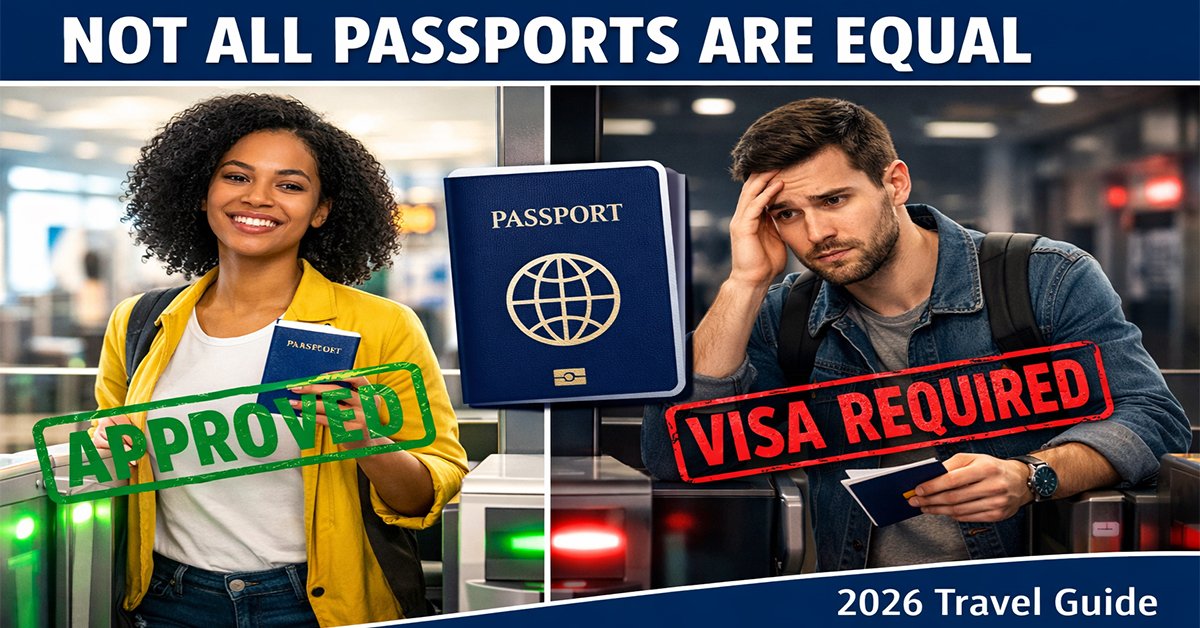

I learned this the hard way at Bangkok’s Suvarnabhumi Airport last year. Standing behind a British couple who breezed through immigration in under two minutes, I confidently approached the officer with my own passport. “Purpose of visit?” “Tourist—I read Thailand is visa-free now.” The officer’s expression said it all before her words did: “Not for your nationality. You need a visa.”
The flight I’d booked months ago? Wasted. The hotel reservation? Non-refundable. The assumption that “visa-free” applied to everyone? Expensive.
Here’s what I wish someone had told me before I learned it in an airport departure hall.
The Big Misconception About Visa-Free Travel
When we see “Thailand opens visa-free travel” or “Indonesia welcomes tourists without visas,” our brains fill in the blank: for everyone. But that’s not how international agreements work.
Visa-free access exists because of bilateral or multilateral agreements between specific countries. Japan might allow Germans to visit for 90 days without a visa while limiting Bangladeshi visitors to 15 days with an e-visa. Same destination, completely different rules, all based on one factor: the passport you carry.
In 2026, approximately 199 different passports exist globally, and each one unlocks a different set of doors. The Japanese passport currently tops the Henley Passport Index with visa-free access to 194 destinations. An Afghan passport? Just 26 destinations. That’s not a reflection of the traveler—it’s pure geopolitics.
Why Travel Websites Keep Getting This Wrong
Google “visa-free countries for travel” and you’ll drown in listicles and blog posts. Most are written from a Western perspective, assuming readers hold US, UK, or EU passports. Travel influencers film their “spontaneous” border crossings without mentioning their Australian passport is doing the heavy lifting.
Booking platforms like Expedia and Booking.com will happily sell you flights and hotels anywhere. Their algorithms don’t cross-reference your passport nationality with destination visa requirements—that’s your job. I’ve clicked “confirm booking” dozens of times without a single pop-up warning me to check entry rules.
Travel forums are slightly better, but even there, someone asking “Is Vietnam visa-free?” will get answers that vary wildly because responders assume everyone shares their nationality.
The Devil’s in the Details (Even When Entry Is “Free”)
Let’s say you’ve confirmed your passport does qualify for visa-free entry. You’re done, right? Not quite.
Electronic Travel Authorizations (ETAs) are the new normal. Canada introduced its eTA in 2016. The US has ESTA. Europe launched ETIAS in late 2024, and by 2026, it’s mandatory for visitors from over 60 visa-exempt countries. These aren’t visas, but you absolutely cannot board a plane without them.
Then there’s the proof of onward travel requirement. Many countries technically offer visa-free entry but will deny you at immigration if you can’t show a flight leaving their country within the permitted timeframe. I’ve watched travelers in Bali frantically booking refundable flights on their phones while immigration officers wait.
Length of stay is another trap. Your passport might grant you 90 days in the Schengen Area, but that’s 90 days within any 180-day period, not per visit. Overstay by even a day, and you’re looking at fines, deportation, and bans from future entry. Some countries, like Thailand in 2026, now use automated tracking systems that flag overstays the moment they occur.
Airlines Are the First Gatekeepers
Here’s something most travelers don’t realize: airlines have enormous power over your trip before it even starts.
If you show up at check-in without proper documentation for your passport nationality, the airline will deny boarding. It’s not personal—it’s liability. If they fly you to a country that refuses you entry, the airline pays for your return flight and faces regulatory fines.
This is why check-in agents scan your passport and tap through multiple screens. They’re not just confirming your identity; they’re verifying that your specific passport allows entry to your destination under current immigration law. I’ve seen this happen in real time: two travelers, same flight to Dubai, one boarding pass printed, the other denied because their passport required a visa they didn’t have.
Dual Citizens: Choose Your Passport Wisely
If you hold multiple passports, you might assume you’ve got options. You do—but you need to use them correctly.
The passport you use to enter a country determines which rules apply to your entire stay. Enter Thailand on your Malaysian passport (which gets 30 days visa-free), and you can’t suddenly claim 90 days by mentioning your German passport. Immigration systems track entry documents, not your entire identity.
Some countries also have exit control: you must leave using the same passport you entered with. Use the wrong one, and you’ll trigger red flags in the system that can delay or complicate your departure.
What This Means for Travelers from Emerging Economies
If you hold a passport from Nigeria, Pakistan, or many countries in Africa, Asia, and South America, visa-free travel is often the exception, not the rule.
You’re probably used to applying for visas, attending embassy interviews, showing bank statements, and waiting weeks for approval—even for short tourist trips. Meanwhile, travel content creators make it look effortless because their passports do most of the work.
This isn’t fair, but it’s reality in 2026. The good news? Some countries are expanding visa-free access. Malaysia recently opened visa-free entry for Indian and Chinese nationals. Several African nations have reciprocal visa-free agreements that are often overlooked in Western travel media.
How to Actually Check Visa Requirements (The Right Way)
Stop trusting headlines. Start with these methods:
1. Official government sources: Every destination country has an immigration or foreign affairs website. Search “[country name] visa requirements” and look for .gov or official domains.
2. IATA Travel Centre: Airlines use the IATA Timatic database to verify passenger documentation. You can access a public version at iatatravelcentre.com—enter your nationality and destination for accurate, up-to-date requirements.
3. Your passport’s embassy: Contact the embassy or consulate of your destination country. They can confirm what your specific passport allows.
4. VisaGuide or iVisa: These commercial services aggregate visa requirements by nationality. They’re not perfect, but they’re more reliable than random blog posts.
5. Check before every trip: Visa policies change. A country that required a visa last year might offer visa-free entry this year, or vice versa. Always verify within 30 days of departure.
Real Stories, Real Consequences
A colleague of mine, a Indian national living in Singapore, booked a “last-minute weekend in Bali” based on a travel blog that said Indonesia was visa-free. It is—for Singaporeans. Not for Indian passport holders. He discovered this at Changi Airport. The trip was canceled, the money was lost.
Another friend with a Pakistani passport planned a European backpacking route based on ETIAS coverage, assuming it worked like a visa. It does grant entry, but she missed that she still needed separate authorization for the UK, which isn’t in Schengen. She rearranged her entire itinerary two days before departure.
These aren’t edge cases. They happen daily at airports worldwide.
My Checklist Before Any International Trip
After my Bangkok mishap, I’ve developed a routine I follow religiously:
Verify visa requirements for my passport nationality (not just “visa-free for tourists”)
Check if an ETA or online authorization is required
Confirm maximum length of stay and any reset periods
Screenshot or print proof of onward travel
Save digital copies of passport, bookings, and authorizations
Double-check requirements again 48 hours before departure
It takes 20 minutes. It has saved me thousands of dollars and countless headaches.
The Bottom Line
Visa-free travel is a privilege, not a universal right—and it’s determined by the diplomatic relationships between the country that issued your passport and the country you want to visit.
Two people can stand in the same immigration line, visiting the same country for the same reason, and face completely different rules. That’s not unfair treatment by the immigration officer—it’s the legal reality of how modern borders work.
Before you book your next international trip, ask yourself: does my passport allow me to enter visa-free? Not someone else’s. Not a generic traveler’s. Yours.
Because at the end of the day, the only passport that matters at immigration is the one in your hand.
