


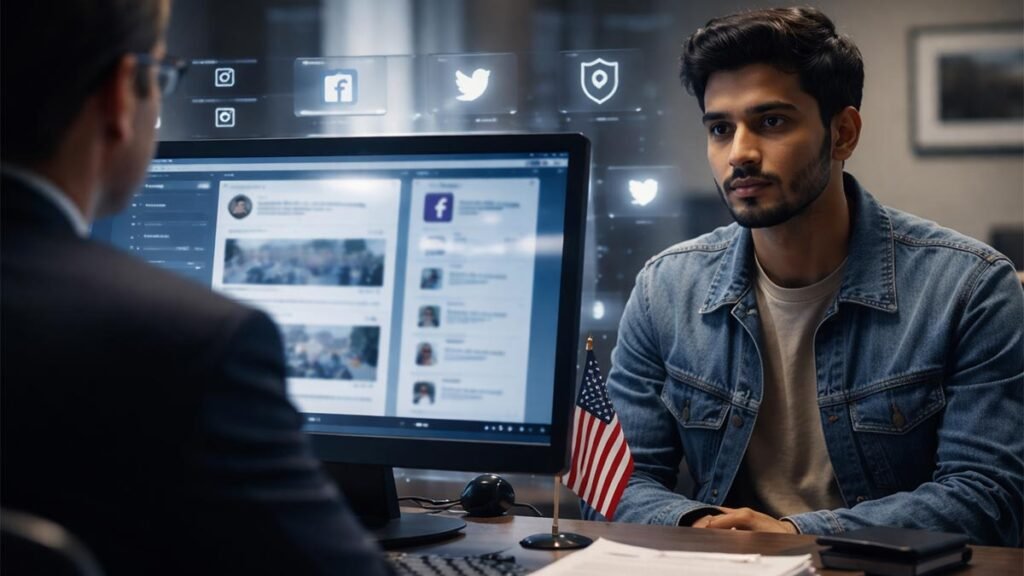
The United States Department of State has announced a significant expansion of its visa vetting process, introducing broader social media screening requirements for several additional visa categories. Beginning March 30, 2026, applicants applying through US consulates worldwide will be required to undergo a more detailed review of their online presence as part of standard background checks.
This policy marks another step in the United States’ ongoing efforts to tighten immigration screening procedures, reflecting a growing reliance on digital footprints to assess applicant eligibility and security risks.
What the New Policy Means for Visa Applicants
Under the updated rules, applicants across a wider range of visa categories must now allow authorities to examine their social media activity. This includes making their accounts publicly accessible so officials can review posts, interactions, and general online behavior.
The expanded screening applies to the following visa types:
- A-3 and G-5 (domestic workers for diplomats and international organization staff)
- C-3 (foreign government transit workers)
- H-3 trainees and their dependents (H-4 linked to H-3)
- K visas (fiancé(e) and certain family-based categories)
- Q visas (cultural exchange participants)
- R visas (religious workers)
- S visas (informants and witnesses)
- T and U visas (victims of trafficking and certain crimes)
Applicants in these categories will now be subject to mandatory digital screening as part of their visa processing.
Mandatory Public Access to Social Media Accounts
One of the most notable elements of the new policy is the requirement for applicants to set their social media profiles to “public.” This ensures that consular officers can directly access and review content without restrictions.
Officials will evaluate various aspects of an applicant’s online presence, including:
- Posts and shared content
- Comments and interactions
- Group affiliations
- Any publicly visible online behavior
This information will be analyzed alongside traditional background checks to provide a more comprehensive assessment of the applicant.
Expansion Builds on Existing Screening Measures
This is not the first time the US government has incorporated social media into its immigration screening process. The current expansion builds on policies introduced in earlier phases.
Since June 2025, applicants for student and exchange visitor visas—specifically F, M, and J categories—have already been required to disclose their social media activity. Later, in December 2025, similar requirements were extended to H-1B skilled worker visa applicants and their H-4 dependents.
By extending these checks to additional visa types in 2026, the US government is standardizing digital screening across a broader spectrum of immigration pathways.
Why the US Is Increasing Digital Vetting
The decision to expand social media screening reflects a shift in how immigration authorities assess risk. With much of modern life taking place online, digital behavior is increasingly seen as a valuable source of information.
US officials believe that reviewing online activity can help:
- Identify potential security concerns
- Verify information provided in visa applications
- Detect inconsistencies or misrepresentation
- Assess intent and credibility
This approach aligns with global trends, as several countries have begun integrating digital background checks into their immigration systems.
Impact on Applicants and Processing Times
While the policy aims to enhance security, it may also have practical implications for visa applicants.
Applicants should be aware that:
- Visa processing times could increase due to additional screening steps
- Incomplete or restricted social media access may delay applications
- Online activity could influence final decisions
Experts advise applicants to review their digital presence carefully before applying, ensuring that publicly visible content accurately reflects their background and intentions.
Privacy Concerns and Ongoing Debate
The expansion of social media checks has also raised questions about privacy and data use. Critics argue that requiring applicants to make their accounts public could be intrusive and may lead to subjective interpretations of online content.
However, US authorities maintain that the policy is necessary for national security and is conducted within legal frameworks. They emphasize that the goal is not to invade privacy but to ensure that individuals entering the country meet safety and credibility standards.
A Broader Shift in US Immigration Policy
This development highlights a broader transformation in US immigration practices, where digital transparency is becoming increasingly important. By applying these checks across more visa categories, the government is moving toward a unified and technology-driven screening system.
For applicants, this means that online behavior is no longer separate from formal application processes. Instead, it plays a direct role in shaping immigration outcomes.
Conclusion
The expansion of social media screening for US visa applicants, effective March 30, 2026, represents a major shift in how immigration applications are evaluated. By requiring applicants across additional visa categories to make their online presence accessible, the United States is strengthening its vetting process in line with modern digital realities.
While the policy may introduce new challenges for applicants, including longer processing times and increased scrutiny, it also reflects a broader effort to enhance security and transparency. Anyone planning to apply for a US visa should take proactive steps to review and manage their online presence to avoid complications during the application process.
FAQs
Which visa categories are affected by the new rule?
The rule applies to A-3, C-3, G-5, H-3, H-4 (linked to H-3), K, Q, R, S, T, and U visa categories.
When does the new policy take effect?
The expanded social media screening begins on March 30, 2026.
Do applicants need to make their social media accounts public?
Yes, applicants are required to set their accounts to public so they can be reviewed by consular officers.
Were any visa categories already subject to social media checks?
Yes, F, M, and J visa applicants have been screened since June 2025, and H-1B and H-4 applicants since December 2025.
Will this affect visa processing times?
It may lead to longer processing times due to the additional layer of review.