


Introduction
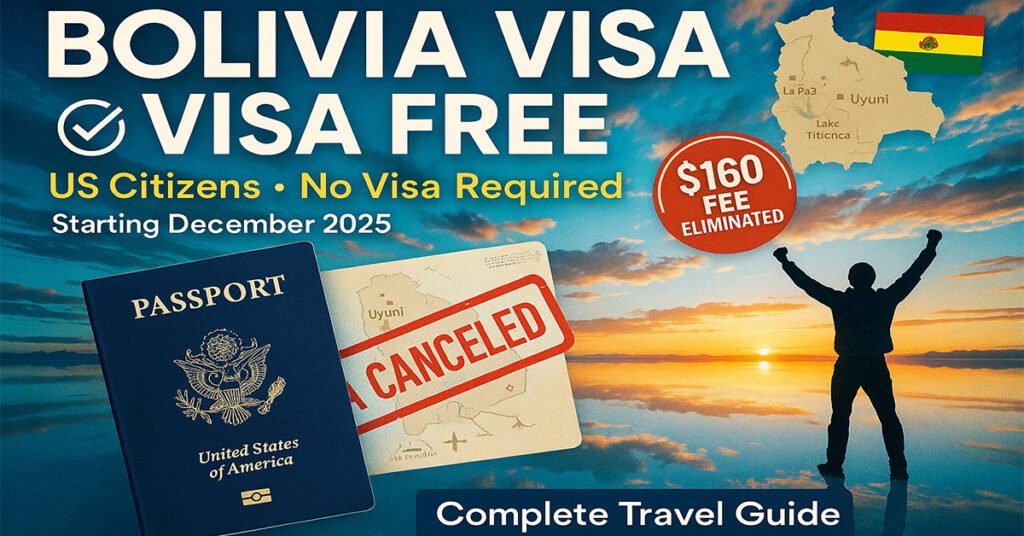
Bolivia introduced a historic visa-free travel program on December 1, 2025, for citizens from seven countries including the United States, marking a dramatic policy reversal after nearly two decades of restrictive entry requirements. This landmark decision eliminates the $160 visa fee and complicated application process that previously deterred travelers from experiencing one of South America’s most spectacular destinations.
For American travelers, this change represents the most significant opening of Bolivia’s borders since 2008. Visitors from the United States, Israel, South Korea, South Africa, Latvia, Estonia, and Romania can now visit Bolivia visa-free for up to 90 days, transforming the country into an accessible destination for tourism, business, and cultural exploration.
This comprehensive guide covers everything you need to know about Bolivia’s new visa-free policy, from entry requirements and top destinations to practical travel tips and economic impact.
Bolivia’s Historic Policy Shift: What Changed and Why
From Restriction to Welcome: Reversing Two Decades of Barriers
Bolivia imposed visa requirements in 2007 for travelers from several countries, driven by ideological and political motivations, creating one of South America’s most burdensome travel systems. The policy required detailed applications, invitation letters, hotel bookings, and expensive fees—obstacles that effectively closed Bolivia to many international visitors.
Foreign Minister Fernando Aramayo announced the policy change on December 1, 2025, alongside President Rodrigo Paz and Tourism Minister Cinthya Yañez, describing it as the end of ideological barriers that hindered the country’s development.
The Economic Reality That Prompted Change
The financial consequences of Bolivia’s restrictive visa policy became impossible to ignore:
- $900 million in lost tourism revenue since 2007
- $80 million in additional losses from border restrictions
- Only 650,000 international tourists visited Bolivia in 2023
Meanwhile, neighboring Peru welcomed over 3.5 million international visitors in the same year, highlighting the dramatic disparity created by Bolivia’s visa barriers.
The government anticipates the visa waiver will generate at least $320 million in new revenue between 2026 and 2029, with potential for significantly higher returns as airlines expand routes and tour operators respond to increased demand.
Countries Granted Visa-Free Access
As of December 1, 2025, citizens from these seven countries can enter Bolivia without visas:
- United States
- Israel
- South Korea
- South Africa
- Latvia
- Estonia
- Romania
Additionally, citizens of Bulgaria, Malta, and the United Arab Emirates will gradually be added to the visa-free list as the policy expands in phases.
Entry Requirements: What You Need to Visit Bolivia
Simple Requirements for Visa-Free Entry
Starting immediately, citizens from the seven exempt countries can enter Bolivia for tourism, business, or transit for up to 90 days without prior application, invitation letters, or hotel vouchers. The streamlined process requires only:
Essential Documents:
- Valid passport with at least 6 months validity
- Proof of onward travel (return ticket or next destination)
- No visa application
- No visa fees
- No invitation letters
- No pre-booked accommodation required
Understanding the 90-Day Stay
Visitors can remain in Bolivia for up to 90 consecutive days for:
- Tourism and sightseeing
- Business meetings and conferences
- Cultural exchanges
- Family visits
- Transit to other countries
Important Limitations:
- Cannot work or study without proper permits
- Cannot extend beyond 90 days without leaving the country
- Must demonstrate sufficient funds for your stay if asked
What This Means for American Travelers
For Americans specifically, this eliminates a 17-year anomaly where U.S. visitors faced a $160 reciprocal visa fee and a complicated application process that deterred all but the most determined travelers. The change transforms a week-long visa application into a simple passport check at the border.
Bolivia’s Top Destinations: Where to Go and What to See
Salar de Uyuni: The World’s Largest Salt Flat
The crown jewel of Bolivian tourism, Salar de Uyuni stretches over 10,000 kilometers of the Altiplano Mountain Range and can be seen from space. This otherworldly landscape offers experiences unlike anywhere else on Earth.
What Makes It Special:
- World’s largest salt flat (10,582 square kilometers)
- Home to 70% of the world’s lithium reserves
- Mirror effect during rainy season (December-April)
- Stark white hexagonal patterns during dry season (May-November)
- Located at 3,660 meters (12,000 feet) above sea level
Best Time to Visit:
- Rainy Season (December-April): Famous mirror effect when thin water layer creates perfect reflections
- Dry Season (May-November): Access to all areas, colder temperatures, stark white landscapes
Popular Tour Options:
- 1-Day Tours: From Uyuni town, covering main salt flat highlights
- 3-Day Tours: Including Salar de Uyuni, colored lagoons, and geysers
- 4-Day Tours: From Tupiza, adding South Lipez region exploration
Lake Titicaca: The Sacred Lake
Straddling the Bolivia-Peru border, Lake Titicaca holds profound cultural and spiritual significance for Andean peoples. At 3,812 meters above sea level, it’s the highest navigable lake in the world.
Must-See Highlights:
- Isla del Sol (Island of the Sun): Birthplace of the Inca civilization in Andean mythology
- Copacabana: Charming lakeside town with colonial architecture
- Traditional Reed Boat Tours: Experience ancient watercraft techniques
- Tiwanaku Ruins: Pre-Inca archaeological site near the lake
La Paz: The World’s Highest Capital
La Paz sits at 3,650 meters above sea level, making it the world’s highest administrative capital. The city cascades dramatically down a canyon, creating stunning vistas at every turn.
Top Attractions:
- Witches’ Market: Traditional remedies, textiles, and unique souvenirs
- Moon Valley (Valle de la Luna): Otherworldly rock formations just outside the city
- Teleferico Cable Car System: Spectacular city views from interconnected cable cars
- San Francisco Church: Baroque colonial architecture
- Cholitas Wrestling: Unique cultural performance featuring indigenous women wrestlers
Amazon Rainforest: Bolivia’s Tropical Frontier
Bolivia contains significant portions of the Amazon basin, offering pristine rainforest experiences with fewer crowds than Brazilian or Peruvian alternatives.
Prime Locations:
- Madidi National Park: One of Earth’s most biodiverse protected areas
- Rurrenabaque: Gateway town for jungle and pampas tours
- Pampas Tours: Wildlife viewing including pink river dolphins, caimans, and capybaras
Sucre: The Constitutional Capital
Known as the “White City” for its colonial architecture, Sucre offers refined culture, beautiful plazas, and pleasant climate.
Highlights:
- Casa de la Libertad: Where Bolivia’s independence was declared
- Dinosaur Footprint Wall: One of the world’s largest paleontological sites
- Colonial Architecture: Perfectly preserved Spanish colonial buildings
- Tarabuco Market: Sunday indigenous market featuring traditional textiles
Potosí: Mining History and Colonial Splendor
Once one of the world’s wealthiest cities due to silver mining, Potosí showcases colonial grandeur alongside sobering mining history.
Key Sites:
- Cerro Rico Mine Tours: Experience working mine conditions (controversial but popular)
- Casa de la Moneda: Former royal mint, now an excellent museum
- UNESCO World Heritage Colonial Center: Baroque churches and mansions
Death Road: Adventure Tourism Icon
The infamous North Yungas Road, nicknamed “Death Road,” has transformed from the world’s most dangerous road into a thrilling mountain biking destination.
Adventure Details:
- 64-kilometer descent from La Cumbre (4,650m) to Yolosa (1,200m)
- Organized tours with safety equipment and support vehicles
- Spectacular views of cloud forests and valleys
- Full-day adventure from La Paz
Planning Your Bolivia Trip: Practical Information
Getting to Bolivia
International Airports:
- La Paz (El Alto Airport – LPB): Main international gateway, world’s highest international airport
- Santa Cruz (Viru Viru Airport – VVI): Alternative entry point with growing international connections
Airlines Serving Bolivia:
- LATAM Airlines (connections throughout South America)
- Avianca (via Bogotá)
- Copa Airlines (via Panama City)
- American Airlines (limited direct routes)
- Boliviana de Aviación (national carrier)
Domestic Transportation
Within Bolivia:
- Buses: Extensive network, comfortable long-distance options available
- Domestic Flights: Quick connections between major cities (recommended for time-constrained travelers)
- Shared Taxis (Trufis): Common for shorter intercity routes
- Private Tours: Best option for remote areas like Salar de Uyuni
Altitude Considerations
Many Bolivian destinations sit at extreme altitudes. Altitude sickness (soroche) can affect anyone, regardless of fitness level.
Altitude of Major Destinations:
- La Paz: 3,650 meters (11,975 feet)
- Salar de Uyuni: 3,660 meters (12,000 feet)
- Lake Titicaca: 3,812 meters (12,507 feet)
- Potosí: 4,090 meters (13,420 feet)
Prevention Strategies:
- Arrive at lower altitudes first (Santa Cruz at 416m is ideal)
- Ascend gradually, spending 2-3 days in La Paz before higher destinations
- Stay hydrated (3-4 liters of water daily)
- Avoid alcohol and heavy meals initially
- Consider coca tea (legal and traditional altitude remedy)
- Consult doctor about Acetazolamide (Diamox) before travel
Common Symptoms:
- Headaches
- Nausea and loss of appetite
- Fatigue and dizziness
- Shortness of breath
- Difficulty sleeping
Best Time to Visit Bolivia
Bolivia’s climate varies dramatically by region and altitude.
Optimal Seasons:
Dry Season (May-October):
- Pros: Clear skies, better road conditions, cooler temperatures
- Cons: Colder nights at altitude, dustier conditions
- Best For: Hiking, visiting all regions, photography
Rainy Season (November-April):
- Pros: Salar de Uyuni mirror effect, lush Amazon, warmer temperatures
- Cons: Road closures possible, some areas inaccessible, flight delays
- Best For: Salt flat photography, Amazon visits
Peak Tourist Season:
- June through August (Northern Hemisphere summer vacation)
- December through February (South American summer)
Budget Considerations
Bolivia remains one of South America’s most affordable destinations.
Daily Budget Estimates (USD):
Budget Traveler:
- Accommodation: $10-20 (hostels, basic hotels)
- Food: $10-15 (local restaurants, markets)
- Transportation: $5-10 (public buses, shared transport)
- Total: $25-45 per day
Mid-Range Traveler:
- Accommodation: $30-60 (comfortable hotels)
- Food: $20-35 (mix of local and tourist restaurants)
- Transportation: $15-25 (some taxis, domestic flights)
- Total: $65-120 per day
Luxury Traveler:
- Accommodation: $100+ (upscale hotels, boutique properties)
- Food: $50+ (fine dining, hotel restaurants)
- Transportation: $40+ (private transfers, frequent flights)
- Total: $190+ per day
Major Tour Costs:
- Salar de Uyuni 3-day tour: $150-250
- Amazon jungle tour (3 days): $200-350
- Death Road biking: $60-100
- Lake Titicaca day tour: $30-50
Currency and Money
Official Currency: Boliviano (BOB) Exchange Rate (December 2025): Approximately 6.9 BOB = 1 USD
Money Tips:
- US dollars widely accepted in tourist areas
- ATMs available in major cities (often have withdrawal limits)
- Credit cards accepted at upscale establishments
- Bring cash for rural areas and smaller towns
- Exchange money at official cambios (exchange houses) for best rates
- Small bills essential (many places cannot break large notes)
Language
Official Languages: Spanish and 36 indigenous languages Tourism Reality: Limited English in most areas outside luxury hotels
Useful Phrases:
- Hola (OH-lah) – Hello
- Gracias (GRAH-see-ahs) – Thank you
- ¿Cuánto cuesta? (KWAN-toh KWEHS-tah) – How much does it cost?
- No entiendo (noh en-tee-EN-doh) – I don’t understand
- ¿Dónde está…? (DON-deh es-TAH) – Where is…?
Download Spanish Translation Apps: Essential for independent travelers
Health and Safety
Vaccinations:
- Yellow fever vaccine required for Amazon regions (bring certificate)
- Typhoid, hepatitis A, and hepatitis B recommended
- Routine vaccinations up to date
Safety Tips:
- Bolivia generally safe for tourists exercising normal precautions
- Petty theft common in crowded areas and bus terminals
- Avoid displaying expensive electronics or jewelry
- Use registered taxis or ride-sharing apps in cities
- Don’t hike alone in remote areas
- Political demonstrations occasionally occur—avoid large gatherings
Travel Insurance:
- Strongly recommended due to altitude-related risks
- Ensure coverage includes high-altitude trekking and evacuation
- Medical facilities limited outside major cities
Bolivia’s National Tourism Strategy: What’s Changing
Comprehensive Tourism Development Plan
The visa-free policy is one component of a broader national plan to rejuvenate Bolivia’s tourism industry, with the government implementing sweeping changes across multiple sectors.
Five Pillars of Tourism Reform:
- Modernizing Tourism Governance
- Creating streamlined regulatory frameworks
- Improving coordination between national and local authorities
- Establishing tourism standards and certifications
- Strengthening Institutions
- Training tourism professionals
- Developing hospitality education programs
- Building capacity at all levels of the industry
- Elevating Safety Standards
- Improving tourist police presence
- Implementing visitor safety protocols
- Enhancing emergency response systems
- Aggressive International Promotion
- Launching global marketing campaigns
- Participating in international travel fairs
- Developing Bolivia’s brand identity as a destination
- Raising Service Quality
- Hotel and restaurant standards improvement
- Tour operator certification programs
- Customer service training initiatives
Infrastructure Improvements
Infrastructure bodies, airport authorities, tourism boards, and local administrations are expected to collaborate to improve travel experiences from arrival to departure.
Focus Areas:
- Expanding airport facilities and international connections
- Improving road access to major tourist sites
- Enhancing telecommunications in remote areas
- Developing sustainable tourism infrastructure
- Creating visitor centers and information services
Impact on Local Communities
Economic Opportunities Across Bolivia
The visa policy change extends benefits far beyond airports and hotels.
Community-Level Benefits:
- Rural Artisans: Increased demand for traditional textiles, crafts, and souvenirs
- Mountain Guides: More trekking and mountaineering opportunities
- Homestay Operators: Cultural tourism expansion in indigenous communities
- Local Restaurants: Growing customer base for traditional cuisine
- Transportation Services: More business for local drivers and tour operators
Sustainable Tourism Goals
Bolivia aims to develop tourism that benefits local communities while preserving natural and cultural heritage.
Sustainable Practices:
- Community-based tourism initiatives
- Preservation of indigenous cultural traditions
- Environmental protection in ecologically sensitive areas
- Fair wages and working conditions for tourism workers
- Revenue sharing with local communities
Diplomatic Implications and Future Goals
Reciprocal Visa Ambitions
Bolivia’s long-term objective is to secure visa-free travel for Bolivian citizens to large international blocs, particularly the Schengen Area. By demonstrating openness through its own policies, Bolivia aims to strengthen its position in future negotiations.
Strategic Objectives:
- Build reciprocal relationships with major economies
- Simplify travel for Bolivian citizens seeking business or tourism opportunities abroad
- Demonstrate Bolivia as a reliable international partner
- Increase global connectivity and integration
Regional Integration
The policy also supports South American regional integration by easing travel among neighboring countries and promoting multi-country tourism circuits.
Travel Industry Response
Immediate Market Reaction
Major U.S. and European tour operators are already reporting spikes in inquiries for 2026 trips, particularly for the Salar de Uyuni during the mirror season early in the year and the high-altitude trekking circuits around La Paz and Lake Titicaca.
Industry Developments:
- Airlines evaluating new routes to Bolivia
- Tour operators developing Bolivia-focused itineraries
- Hotels and tourism businesses expanding capacity
- Travel agencies promoting Bolivia as newly accessible destination
Multi-Country South American Circuits
Bolivia’s accessibility makes it easier to include in comprehensive South American itineraries:
Popular Combinations:
- Peru-Bolivia (Cusco-Lake Titicaca-La Paz-Salar de Uyuni)
- Chile-Bolivia (Atacama Desert-Salar de Uyuni)
- Argentina-Bolivia (Salta-Tupiza-Uyuni)
- Brazil-Bolivia (Pantanal-Amazon-La Paz)
Cultural Experiences Not to Miss
Indigenous Heritage
Bolivia has the highest percentage of indigenous population in South America, offering rich cultural experiences.
Cultural Highlights:
- Traditional Festivals: Oruro Carnival (UNESCO Intangible Heritage), Alasitas Festival
- Indigenous Markets: Tarabuco Sunday market, witches’ markets in La Paz
- Living Communities: Visit Aymara and Quechua communities maintaining traditional lifestyles
- Textile Arts: Some of the world’s finest traditional weaving
Bolivian Cuisine
Bolivian food reflects indigenous, Spanish, and immigrant influences.
Must-Try Dishes:
- Salteñas: Savory pastries filled with meat, vegetables, and slightly sweet sauce
- Pique Macho: Hearty dish of beef, sausage, fries, vegetables, and spicy sauce
- Anticuchos: Grilled beef heart skewers (street food specialty)
- Api: Sweet purple corn drink, perfect with pastries
- Silpancho: Thin breaded meat cutlet over rice with potato, egg, and salsa
- Llama and Alpaca: Lean, flavorful meat served in various preparations
Music and Dance
Bolivia’s musical traditions blend indigenous, African, and European influences.
Traditional Instruments:
- Charango (small Andean guitar)
- Quena (bamboo flute)
- Zampoña (pan pipes)
- Bombo (large drum)
Dance Traditions:
- Saya (Afro-Bolivian dance)
- Diablada (Dance of the Devils)
- Morenada (dance honoring miners)
- Caporales (energetic modern folkloric dance)
Frequently Asked Questions
Do I need a visa to visit Bolivia as a US citizen?
No. As of December 1, 2025, US citizens can enter Bolivia visa-free for up to 90 days for tourism, business, or transit purposes.
How long can I stay in Bolivia without a visa?
Citizens from the seven visa-exempt countries can stay up to 90 consecutive days.
Do I need travel insurance for Bolivia?
While not required, travel insurance is strongly recommended due to Bolivia’s high altitudes, remote locations, and limited medical facilities in some areas.
Is altitude sickness a serious concern?
Yes. Many Bolivian destinations exceed 3,500 meters altitude. Allow time for acclimatization and consult your doctor before traveling if you have heart or respiratory conditions.
What vaccinations do I need for Bolivia?
Yellow fever vaccination is required for visiting Amazon regions. Typhoid, hepatitis A, and hepatitis B are recommended. Ensure routine vaccinations are current.
Is Bolivia safe for tourists?
Bolivia is generally safe for tourists exercising normal precautions. Petty theft occurs in crowded areas. Avoid political demonstrations and use registered transportation.
Can I drink tap water in Bolivia?
No. Drink only bottled or purified water. This includes ice in drinks and water used for brushing teeth.
What currency should I bring?
Bring US dollars, which are widely accepted. Exchange for Bolivianos at official cambios for better rates. Credit cards work in cities but cash is essential elsewhere.
Do I need to speak Spanish?
Basic Spanish is very helpful. English is limited outside upscale hotels in major cities. Translation apps are essential for independent travelers.
Can I extend my 90-day stay?
Extensions are difficult to obtain. Most travelers must leave Bolivia and re-enter if wanting to stay longer.
What’s the best way to get to Salar de Uyuni?
Most visitors take overnight buses from La Paz to Uyuni town (10-12 hours), or fly (1 hour, more expensive). Tours can also be arranged from San Pedro de Atacama, Chile, or Tupiza, Bolivia.
When is the best time to see the mirror effect at Salar de Uyuni?
The mirror effect occurs during rainy season, with the best chances typically in February and March when water depth is optimal.
Conclusion: Bolivia’s New Chapter in Global Tourism
Bolivia’s elimination of visa requirements for seven countries represents far more than administrative convenience—it signals a fundamental shift in the nation’s approach to international engagement and economic development.
After nearly two decades of restrictions, Bolivia is correcting past decisions and choosing openness, integration, and international cooperation over ideological barriers.
For American travelers, this change opens the door to one of South America’s most extraordinary and undervisited destinations. From the surreal landscapes of the Salar de Uyuni to the cultural richness of La Paz, from the Amazon’s biodiversity to the colonial beauty of Sucre, Bolivia offers experiences that rival any destination on the continent—now without the bureaucratic hurdles that once stood in the way.
Key Takeaways:
- US citizens can enter Bolivia visa-free for 90 days starting December 1, 2025
- No applications, fees, or invitation letters required
- Valid passport and proof of onward travel are the only requirements
- Tourism expected to generate $320+ million in revenue by 2029
- Part of comprehensive national tourism development strategy
- Altitude acclimatization essential for safe travel
Your Next Steps:
- Verify your passport has at least 6 months validity
- Book flights to La Paz or Santa Cruz
- Plan acclimatization time for high-altitude destinations
- Research tour operators for Salar de Uyuni and other highlights
- Learn basic Spanish phrases
- Purchase travel insurance with high-altitude coverage
- Get required vaccinations (especially yellow fever for Amazon)
Bolivia is ready to welcome the world. The question is: are you ready to discover one of Earth’s most spectacular destinations?