
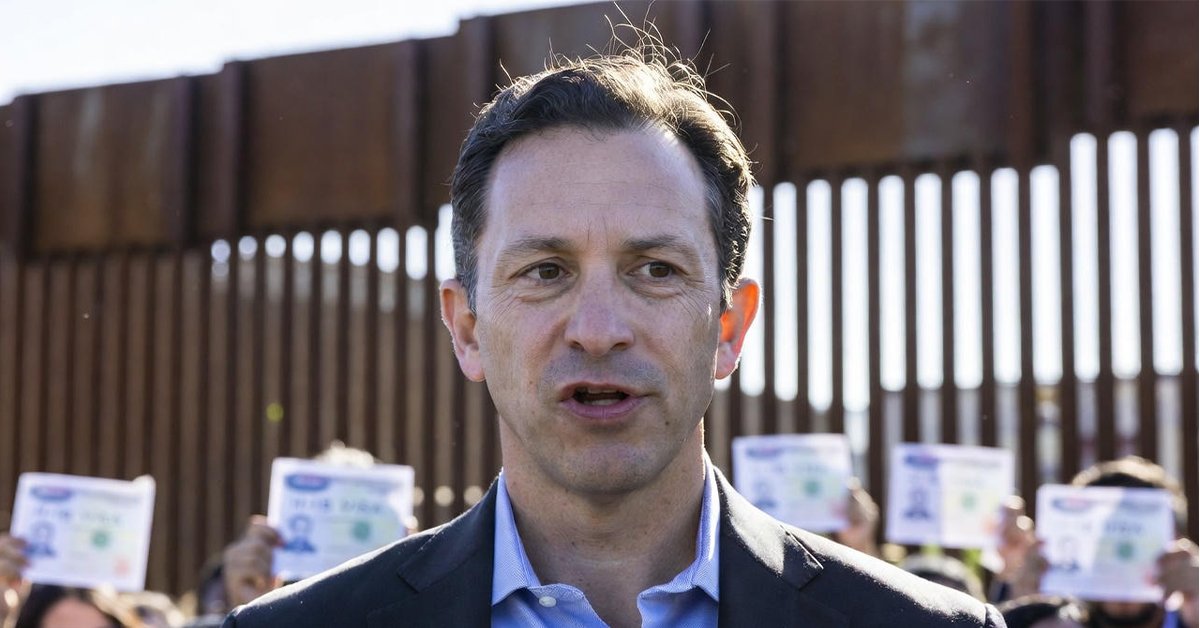

In a bold and controversial move, U.S. Representative Chip Roy (R-TX) has announced plans to introduce legislation that would halt all immigration into the United States—including the widely used H-1B visa program—until the nation addresses what he calls a deep-rooted “cultural and demographic crisis.”
Speaking on The Benny Show podcast with conservative commentator Benny Johnson, Roy declared:
“Why don’t we freeze immigration entirely until we sort this crap out?”
The proposed bill comes just days after Congresswoman Marjorie Taylor Greene (R-GA) introduced separate legislation aimed at phasing out the H-1B visa program entirely, citing concerns over the “mass replacement of American workers.”
Together, these twin proposals signal a growing hardline shift within the Republican Party on immigration—one that goes beyond border security and now targets legal, high-skilled immigration that has long been a cornerstone of America’s tech-driven economy.
What Is Chip Roy’s “Freeze Immigration Entirely” Bill?
Roy’s forthcoming legislation is not incremental reform—it is a complete pause on all forms of immigration, including:
- H-1B visas (specialty occupation workers)
- Family-based “chain migration”
- Diversity Visa Lottery
- Refugee and asylum admissions
- Temporary Protected Status (TPS)
The freeze would remain in place until a series of “cultural and security objectives” are met, including:
- Completion of the U.S.-Mexico border wall
- Reform or elimination of birthright citizenship
- Ending public education for children of undocumented immigrants
- Mandatory assimilation and civics education programs
- Restoration of “American values” in public schools
Roy argues that decades of unchecked immigration—both illegal and legal—have created a “demographic and cultural problem” that now threatens the very identity of the United States.
The Core Argument: A Nation Losing Its Identity
During his appearance on The Benny Show, Roy didn’t mince words.
“We’re dealing with a cultural problem of who we are as Americans.”
He pointed to Texas—his home state—as ground zero for this crisis:
“Texas has borne the brunt of illegal immigration… but now we’re seeing the ramifications of the H-1B system being abused, chain migration, diversity visas. We’ve got a massive Islamism problem.”
Roy claimed that large immigrant communities—particularly those who “have no desire to assimilate”—are growing faster than native-born populations. He blamed this on:
- Low birth rates among “core Americans”
- Failure of the U.S. education system to teach Western civilization, the Constitution, and Judeo-Christian values
- Immigration policies that prioritize quantity over cultural compatibility
“The people we’re importing are churning out babies. Our core Americans aren’t. Now we have a demographics problem.”
This rhetoric echoes “Great Replacement” theory—a controversial idea that has gained traction in conservative circles but is widely criticized as xenophobic and factually misleading.
Marjorie Taylor Greene’s Parallel Push: End H-1B “Worker Replacement”
Just days before Roy’s announcement, Rep. Marjorie Taylor Greene introduced the “American Worker Protection Act”, a bill that would:
- Phase out the H-1B visa program over five years
- Ban outsourcing companies from using H-1B workers
- Require U.S. companies to prioritize American citizens for tech and STEM roles
Greene framed her bill as a defense of the American middle class:
“We cannot allow Big Tech to replace hardworking Americans with cheap foreign labor.”
Her legislation has already garnered support from labor advocates, tech critics, and populist conservatives—but fierce opposition from Silicon Valley, universities, and free-market think tanks.
What Is the H-1B Visa Program—and Why Is It So Controversial?
The H-1B visa allows U.S. companies to hire foreign workers in “specialty occupations” that require at least a bachelor’s degree. It is the primary pipeline for global tech talent into the United States.
Key Facts About H-1B Visas (2024):
| Metric | Value |
|---|---|
| Annual cap (new visas) | 85,000 |
| Total approvals (incl. renewals) | ~400,000 |
| Top industries | Tech (72%), Engineering, Finance |
| Top companies | Amazon, Microsoft, Google, Infosys, TCS |
| Average salary | $130,000+ |
| % held by Indian nationals | ~70% |
Despite its name, the program is not just for “geniuses”—though it does bring in top talent. Critics like Greene and Roy argue it is abused by outsourcing firms to undercut American wages.
Supporters counter that H-1B workers fill critical gaps, drive innovation, and create more jobs for Americans.
The Economic Case Against Freezing H-1B and Immigration
Leading economists and immigration researchers have warned that a total immigration freeze—or even ending H-1B—would have devastating consequences for the U.S. economy.
Dr. Madeline Zavodny, Professor of Economics at the University of North Florida, told reporters:
“Ending H-1B would lead to a considerable drop in U.S. innovation in both firms and universities.”
Her research shows:
- H-1B workers are complementary to U.S.-born employees—not substitutes
- Every 100 H-1B hires create 183 jobs for native workers (due to firm growth)
- H-1B-heavy firms have higher survival rates
- Immigrants file 50% of U.S. patents in tech fields
Projected Economic Impact of a Full Immigration Freeze (CBO & IMF Estimates):
| Impact Area | Projected Outcome |
|---|---|
| GDP Growth | -1.2% to -2.8% annually |
| Per Capita Income | Decline by ~$1,100/year |
| Federal Tax Revenue | -$400B over 10 years |
| Innovation (Patents) | -35% in STEM fields |
| Housing Prices | Short-term decline (5–8%) |
| Local Service Costs | Increase (childcare, dining, healthcare) |
“Such legislation would shrink the labor force, reduce investment, slow new firm creation, and lower productivity growth,” warns the Congressional Budget Office (CBO).
The Legal Hurdle: Can Congress Unilaterally End H-1B?
There’s a major catch: The U.S. cannot simply abolish H-1B visas without violating international law.
Why?
The General Agreement on Trade in Services (GATS) Mode IV—signed by the U.S. as part of the World Trade Organization (WTO)—commits America to allowing up to 60,000 temporary professional workers annually from member nations.
- India, Canada, the EU, and others could challenge a U.S. H-1B ban at the WTO
- Retaliatory tariffs on U.S. exports (tech, agriculture, aviation) are likely
- Congress cannot override a treaty without withdrawing from GATS—a lengthy and politically explosive process
“Congressman Roy is likely unaware that H-1B is part of a binding trade commitment,” said Amb. Sarah Bianchi, former U.S. Trade Representative deputy.
The Assimilation Debate: Fact vs. Fiction
Roy’s central claim—that immigrants refuse to assimilate—is hotly contested.
What the Data Says:
| Metric | Finding |
|---|---|
| English Proficiency | 91% of 2nd-generation immigrants are fluent |
| Intermarriage Rates | 1 in 5 immigrant families marry U.S.-born partners |
| Civic Participation | Naturalized citizens vote at higher rates than native-born |
| Crime Rates | Immigrants commit crimes at lower rates than native-born |
The National Academies of Sciences (2017) found:
“Immigration has an overall positive—though small—impact on long-run economic growth.”
Yet Roy insists the education system has failed to instill American values—and that mass immigration is filling the void with incompatible cultures.
The Birthrate Crisis: Are Immigrants “Replacing” Americans?
Roy highlighted a real trend: U.S. fertility rates are at historic lows.
- Native-born women: 1.6 children (below replacement)
- Immigrant women: 2.0 children (still declining)
But demographers warn against scapegoating immigrants:
“Immigration is not the cause of low native birthrates—it’s the only thing preventing population decline,” says Dr. William Frey, Brookings Institution.
Without immigration, the U.S. population would shrink by 2035—triggering:
- Social Security insolvency
- Shrinking tax base
- Aging workforce crisis
What Happens Next?
Rep. Roy confirmed he will introduce the “Immigration Moratorium Act” within the next week—delayed slightly by the recent government funding showdown.
Political Outlook:
| Factor | Likelihood |
|---|---|
| House Passage | Possible (GOP majority + populist support) |
| Senate Passage | Unlikely (60-vote filibuster threshold) |
| Presidential Action | Trump has signaled support for H-1B reform—but not total freeze |
| Legal Challenges | Immediate (ACLU, Chamber of Commerce, tech giants) |
Even if the bill fails, it will force a national reckoning on:
- The role of high-skilled immigration in innovation
- The balance between cultural preservation and economic growth
- Whether assimilation should be a prerequisite for entry
The Bigger Picture: A Nation at a Crossroads
The Roy and Greene bills are more than policy proposals—they are a referendum on America’s future.
Two Visions in Conflict:
| Restrictionist View | Pro-Immigration View |
|---|---|
| America is a nation, not just an economy | America is an idea—open to talent |
| Cultural cohesion > GDP growth | Innovation requires global talent |
| Native workers must come first | Immigrants create jobs for natives |
| Assimilation is non-negotiable | Diversity strengthens resilience |
Final Thoughts: Will America Close the Golden Door?
For over a century, the Statue of Liberty has welcomed the world’s “huddled masses.” Chip Roy and Marjorie Taylor Greene want to lock that door—at least until America “figures itself out.”
But at what cost?
- Lost innovation?
- Economic stagnation?
- Global isolation?
Or is this the tough medicine a fractured nation needs to rediscover its soul?
One thing is clear: The immigration debate is no longer just about the border.
- → 7 Essential Business Strategies Transforming Success in 2024
- → AI and Machine Learning in 2026: Transforming Business Through Intelligent Innovation
- → Canada Immigration Backlog Update 2026: What the Latest IRCC Data Really Means
- → Mass Flight Disruptions Across Asia: 2,186 Delays and 134 Cancellations Hit Major Airports in India, Japan, Thailand, Malaysia, UAE, Singapore, and Qatar
- → $800 CRA Payment in March 2026: Which Canadian Families Qualify and When to Expect Their Direct Deposit
- → $533 GST/HST Credit for March 2026: Payment Dates, Eligibility, and Everything Canadians Need to Know
- → Canada Medical Expense Tax Claims 2026: Everything You Need to Know Before Filing
It’s about who we are—and who we want to become.
What do you think? Should America freeze immigration to save its culture—or embrace global talent to secure its future? Comment below and join the conversation.
