
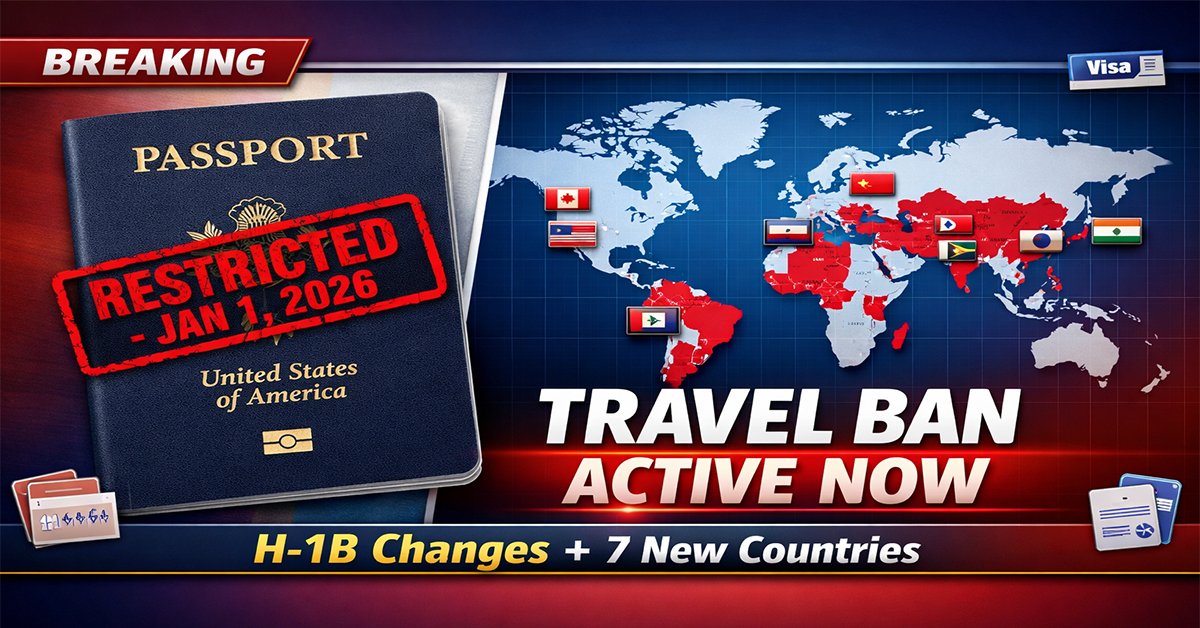

New Travel Restrictions Take Effect Today
Starting today, Wednesday, January 1, 2026, individuals from seven countries face complete travel bans to the United States. According to Customs and Border Protection guidance dated December 29, 2025, the newly restricted nations include:
- Burkina Faso
- Laos
- Mali
- Niger
- Sierra Leone
- South Sudan
- Syria
These restrictions, established through executive orders signed in early 2025, apply to both immigrant and nonimmigrant visa categories, effectively prohibiting entry for tourism, business, education, and permanent residency purposes.
Comprehensive Ban Now Covers 21 Countries
Today’s additions join an existing list of countries already facing U.S. travel restrictions. The complete roster now includes Afghanistan, Myanmar (Burma), Chad, Republic of the Congo, Equatorial Guinea, Eritrea, Haiti, Iran, Libya, Somalia, Sudan, and Yemen.
Additionally, Venezuela and Cuba face partial travel restrictions, though the specific limitations vary by visa category and individual circumstances.
The Administration’s Security Justification
The White House has defended these measures as essential for national security and public safety. Administration officials argue that these nations either lack adequate vetting infrastructure, face significant internal security challenges, or have insufficient information-sharing agreements with U.S. authorities.
However, immigrant advocacy groups have strongly criticized the policy, noting that the majority of affected nations are either African countries or have predominantly Muslim populations. Critics contend this represents discriminatory policy-making rather than evidence-based security measures, raising concerns about humanitarian impacts and international relations.
H-1B Visa Program: A Week into Major Changes
Running parallel to today’s travel ban expansion, significant changes to the H-1B visa program took effect on Monday, December 30, 2025, fundamentally transforming how skilled foreign workers enter the United States.
What Changed:
The H-1B program, which allows U.S. employers to hire foreign nationals with specialized skills, previously used a lottery system for allocating its 85,000 annual visas. The new system replaces random selection with a wage-weighted approach that prioritizes higher-paid positions.
Official Reasoning:
- → 7 Essential Business Strategies Transforming Success in 2024
- → AI and Machine Learning in 2026: Transforming Business Through Intelligent Innovation
- → Canada Immigration Backlog Update 2026: What the Latest IRCC Data Really Means
- → Mass Flight Disruptions Across Asia: 2,186 Delays and 134 Cancellations Hit Major Airports in India, Japan, Thailand, Malaysia, UAE, Singapore, and Qatar
- → $800 CRA Payment in March 2026: Which Canadian Families Qualify and When to Expect Their Direct Deposit
- → $533 GST/HST Credit for March 2026: Payment Dates, Eligibility, and Everything Canadians Need to Know
- → Canada Medical Expense Tax Claims 2026: Everything You Need to Know Before Filing
“The existing random selection process of H-1B registrations was exploited and abused by U.S. employers who were primarily seeking to import foreign workers at lower wages than they would pay American workers,” explained Matthew Tragesser, spokesman for U.S. Citizenship and Immigration Services.
The agency maintains that wage-based selection better aligns with Congressional intent and prevents companies from using the program to undercut American workers’ salaries while strengthening America’s competitiveness by attracting higher-skilled foreign talent.
Immigration Attorneys Sound the Alarm
Immigration attorney Rosanna Beradi offers a contrasting perspective on the H-1B changes. “The change will severely limit the number of applicants who qualify under the H-1B program,” she recently told ABC News. “It will make it even harder for international students to remain in the U.S. after graduation, which will exacerbate the brain drain.”
Beradi’s concerns highlight a potential paradox: while the new system aims to attract “higher-skilled” workers, it may actually reduce opportunities for recent graduates from American universities—individuals who have already invested in U.S. education and possess in-demand technical skills but command entry-level salaries.
International Students Face Uncertain Future
The practical impact on international students is becoming increasingly clear. Many foreign nationals studying at American universities on F-1 visas hope to transition to H-1B status after graduation. The wage-weighted system may disadvantage entry-level positions, even in high-skill fields like software engineering, data science, biotechnology research, or artificial intelligence.
With approximately 85,000 H-1B visas available annually (65,000 under the regular cap plus 20,000 for advanced degree holders from U.S. institutions), competition has always been intense. The new prioritization system adds another layer of complexity to an already challenging process, potentially pricing out recent graduates regardless of their qualifications.
Business Community Divided
The changes have created divisions within the business community. Some technology leaders have supported reforms that prioritize highly compensated specialists, arguing this prevents exploitation of the program. However, others—particularly in the MAGA movement—have expressed concern that prioritizing high-wage foreign workers could still disadvantage American citizens, leading to what some have termed an “uproar” over the policy direction.
Immediate Impact and Real-World Consequences
As of today, individuals from the seven newly restricted countries who had planned trips, family reunifications, educational opportunities, or business ventures in the United States face immediate barriers. Families may be separated, students accepted to American universities cannot attend, and professionals with job offers cannot take positions.
For businesses dependent on international talent—particularly in technology, healthcare, engineering, and academic research—these policies present new challenges in workforce planning and talent acquisition strategies. Companies are scrambling to adjust hiring timelines and may need to consider international offices or remote work arrangements.
Legal Status for Those Already in the US
For individuals from affected countries currently in the United States on valid visas, the restrictions primarily impact future travel and new visa applications rather than current legal status. However, anyone planning to leave and return should consult with an immigration attorney about their specific circumstances, as leaving the country could mean permanent inability to return.
What Legal Challenges Lie Ahead?
Both the expanded travel ban and H-1B changes are likely to face legal challenges from advocacy organizations, though previous iterations of travel restrictions survived Supreme Court scrutiny. Civil rights groups are preparing lawsuits arguing the policies violate constitutional protections and international human rights obligations.
Immigration law experts suggest that while executive authority over immigration is broad, courts may examine whether these specific restrictions are justified by genuine security concerns or represent impermissible discrimination.
Global Reactions and Diplomatic Implications
International reaction to these policies has been mixed. Some countries have expressed concern about the treatment of their citizens, while diplomatic relationships with several African nations may face strain. The policies could also impact international cooperation on security, trade, and educational exchange programs.
Looking Ahead: What Comes Next?
The coming months will reveal whether these policies achieve their stated security and economic objectives or whether unintended consequences outweigh the purported benefits. Potential concerns include:
- Brain drain: Loss of international talent to competitor nations like Canada, Australia, and European countries
- Innovation impact: Reduced diversity in research and technology sectors
- Diplomatic tensions: Strained relationships with affected nations
- Economic effects: Labor shortages in critical industries
- Humanitarian concerns: Separated families and stranded individuals
For now, the policies are in full effect as of today, reshaping America’s immigration landscape for 2026 and potentially beyond. Individuals affected by these changes should seek qualified legal counsel, while businesses must adapt their talent strategies to this new regulatory environment.
