
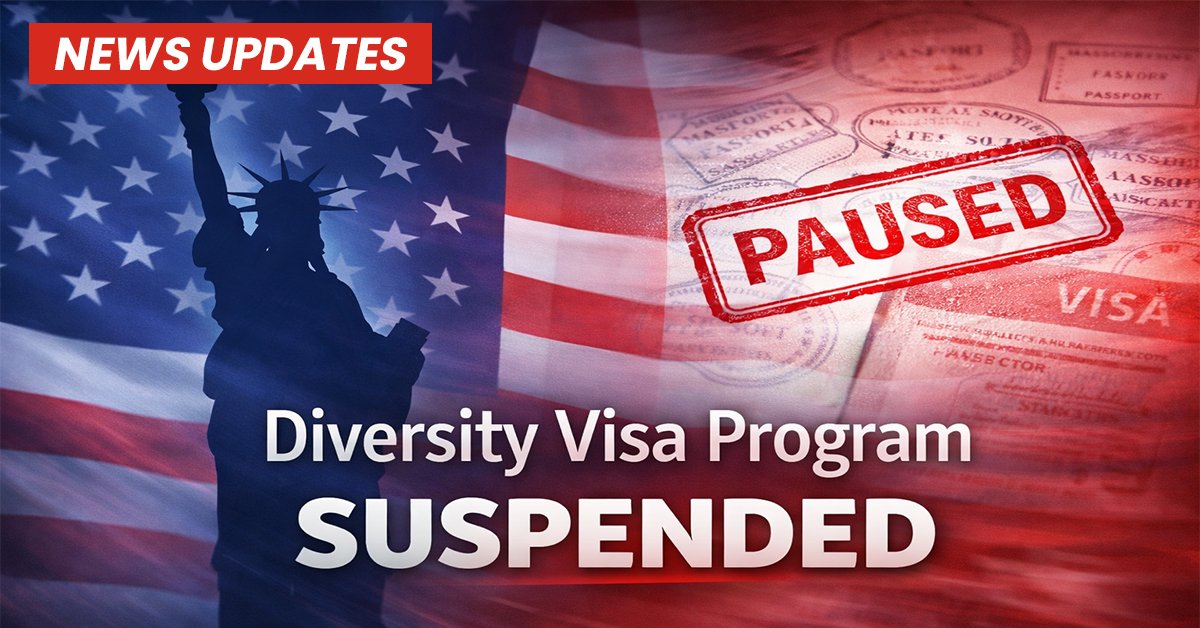

The Trump administration hit pause on America’s diversity immigrant visa program this week, and the timing tells you everything you need to know about why.
The decision came after investigators discovered that the suspect in the horrific shootings at Brown University and MIT—a Portuguese national—had entered the United States through the lottery-based diversity visa system. It’s the kind of revelation that stops policymakers in their tracks.
What Happened?
Department of Homeland Security Secretary Kristi Noem didn’t mince words when she announced the suspension. Her message was blunt: this individual should never have been allowed into the country in the first place.
The diversity visa program, for those unfamiliar, works differently than most immigration pathways. Instead of being tied to employment, family connections, or specific skills, it literally uses a lottery system to randomly select applicants from countries with historically low immigration rates to the U.S. About 50,000 visas are awarded annually through this program.
Administration officials are now asking a fundamental question: Does a random lottery deserve the same level of trust as employer-sponsored visas where American companies vouch for the applicant?
The Government’s Perspective
Secretary of State Marco Rubio tried to clarify the administration’s thinking, and his explanation is worth hearing in full.
- → 7 Essential Business Strategies Transforming Success in 2024
- → AI and Machine Learning in 2026: Transforming Business Through Intelligent Innovation
- → Canada Immigration Backlog Update 2026: What the Latest IRCC Data Really Means
- → Mass Flight Disruptions Across Asia: 2,186 Delays and 134 Cancellations Hit Major Airports in India, Japan, Thailand, Malaysia, UAE, Singapore, and Qatar
- → $800 CRA Payment in March 2026: Which Canadian Families Qualify and When to Expect Their Direct Deposit
- → $533 GST/HST Credit for March 2026: Payment Dates, Eligibility, and Everything Canadians Need to Know
- → Canada Medical Expense Tax Claims 2026: Everything You Need to Know Before Filing
“The reason why you suspend this program is not because you argue everybody who came in under that visa is a bad person and is going to shoot a place up,” Rubio said. “It’s because you want to determine whether there’s something in the vetting of that program that’s insufficient.”
U.S. Citizenship and Immigration Services Director Joseph Edlow has been vocal about his concerns with the program’s structure, arguing that the randomness itself might be creating security gaps.
The suspension isn’t meant to be permanent—at least not officially. The stated goal is to take a hard look at the vetting procedures and figure out if something’s broken.
The Pushback
Immigration advocates aren’t buying it.
They see this as something else entirely: collective punishment. One person commits an atrocious act, and suddenly 50,000 annual opportunities disappear for people who had nothing to do with it.
Myal Greene, President of World Relief, put it this way: “This is the latest instance of the administration leveraging an isolated evil action to advance its goal of dramatically reducing legal immigration.”
The advocates point out that there’s no statistical evidence showing diversity visa holders commit crimes at higher rates than other immigrant groups. They worry this is less about security and more about cutting legal immigration numbers across the board.
What This Really Means
Here’s where things get complicated. Both sides have legitimate points.
On one hand, after a tragedy like this, it’s reasonable to ask whether our vetting systems are good enough. If there were red flags that got missed, we need to know why. National security isn’t something you gamble with.
On the other hand, is it fair to shut down an entire program because of one person’s actions? Millions of Americans drive cars every day, but we don’t ban driving when there’s a fatal accident. We investigate, we improve safety standards, and we move forward.
The diversity visa program has brought in doctors, engineers, teachers, and entrepreneurs since 1990. For many people around the world, it represents the only realistic shot at American residency. These aren’t people with family connections here or job offers from U.S. companies—they’re simply hoping for a chance.
What Happens Next?
The administration says they’re reviewing the vetting process. That could mean tighter background checks, longer wait times, more interviews, or changes to which countries are eligible. Or it could mean the program never comes back at all.
Immigration policy always sits at the intersection of security concerns, economic interests, humanitarian values, and political calculations. This pause on the diversity visa program is all of those things at once.
For the roughly 50,000 people who might have won a visa lottery this year, their American dream is on hold. For the families affected by the Brown and MIT shootings, no policy change will undo their loss. And for the rest of us, we’re left watching another chapter in America’s endless debate over who gets to come here and why.
The question isn’t whether we should vet immigrants carefully—of course we should. The question is whether a lottery system can ever be as secure as we need it to be, or whether the very randomness that makes it fair also makes it risky.
Right now, the Trump administration is betting on the latter. Time will tell if the American public agrees.
