
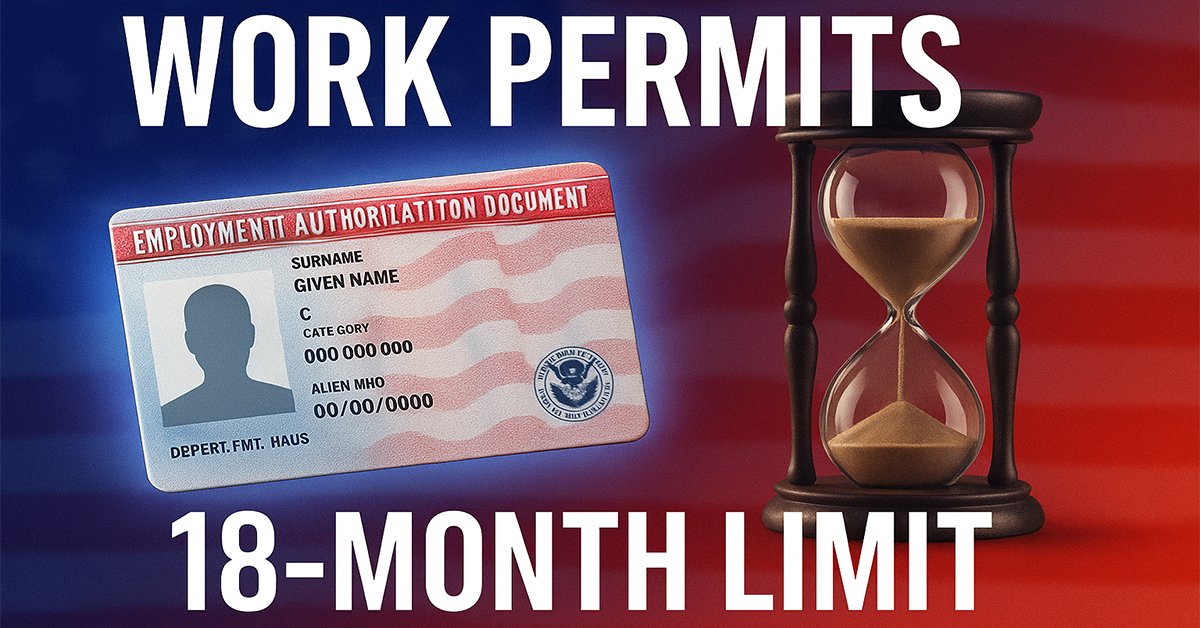

Trump Administration Slashes Work Permit Duration Following National Guard Attack
The Trump administration announced Thursday a significant reduction in employment authorization validity periods for refugees, asylum seekers, and other legally protected immigrants, marking the latest escalation in federal immigration enforcement measures.
Under revised regulations from U.S. Citizenship and Immigration Services, work permits for these populations will now expire after 18 months instead of the previous five-year standard. The policy change affects both newly filed applications and those currently pending review as of Friday, December 6, 2025.
Security Concerns Drive Policy Overhaul
USCIS officials cited the December attack on two National Guard members in Washington, D.C., as justification for increasing screening frequency. The assault, which killed one service member and critically injured another, was allegedly carried out by 29-year-old Afghan national Rahmanullah Lakanwal.
Immigration records indicate Lakanwal entered the United States in September 2021 during the Biden administration’s Afghanistan evacuation but received asylum approval in April 2025, several months after President Trump began his second term.
“Reducing the maximum validity period for employment authorization will ensure that those seeking to work in the United States do not threaten public safety or promote harmful anti-American ideologies,” stated USCIS Director Joseph Edlow in an official announcement.
Who Will Be Affected by the New Rules
The policy impacts multiple immigrant categories with authorized U.S. presence:
Refugees and asylees who have been granted legal protection in the United States will now need to renew their work permits every 18 months rather than every five years.
Asylum applicants with pending cases, many of which remain unresolved for years due to substantial case backlogs, must now undergo more frequent renewal processes.
Green card applicants awaiting permanent residency decisions will face the same reduced validity period during their often lengthy application process.
The shortened timeframe requires affected individuals to file renewal applications more frequently, subjecting them to additional background checks and security vetting during each review cycle.
Broader Immigration Enforcement Measures
The work permit change represents one component of expanded immigration restrictions implemented following the National Guard attack. Additional measures include:
The administration has suspended all USCIS-overseen asylum applications indefinitely, halting new requests for protection. Visa and immigration applications from Afghan nationals face complete processing holds regardless of application type or individual circumstances.
All legal immigration proceedings for nationals from 19 countries listed in the president’s travel ban have been paused, including citizenship ceremonies for approved applicants. Federal officials indicated to CBS News that the travel ban could expand to encompass 30 nations total in response to security concerns.
Implementation Timeline and Practical Impact
The new 18-month work permit standard takes effect immediately for applications submitted after Friday, December 5, 2025. Pending applications filed before this date will also be processed under the reduced validity period.
Immigration advocates warn the policy will create administrative burdens for both applicants and the USCIS system. More frequent renewals mean increased filing fees, documentation requirements, and processing demands on an agency already managing substantial backlogs.
For immigrants with pending asylum or green card cases that typically require years to resolve, the 18-month cycle means multiple renewal applications throughout their legal proceedings. Each renewal involves completing forms, gathering supporting documentation, paying fees, and waiting for adjudication.
Historical Context of Work Authorization Policy
Employment authorization documents have traditionally provided multi-year validity to reduce administrative overhead and allow immigrants to maintain stable employment while their cases proceed through the immigration system. The previous five-year standard reflected a balance between security screening and practical considerations.
The reduction to 18 months represents a substantial departure from established practice, prioritizing increased vetting frequency over administrative efficiency. USCIS officials argue that more frequent renewals allow the agency to identify security concerns that may emerge after initial authorization.
Questions About Long-Term Effects
Immigration policy experts have raised concerns about the practical implications of shortened work permit validity. Employers hiring immigrants with work authorization may face uncertainty about employee retention when permits expire more frequently.
The policy could also strain USCIS processing capacity as renewal applications increase substantially. With the agency already managing significant case backlogs across various immigration benefit categories, the additional workload may extend processing times.
For immigrants themselves, the 18-month renewal cycle means ongoing uncertainty about employment authorization even when they have legitimate pending applications or protected status. This instability could affect their ability to maintain consistent employment and plan for their futures in the United States.
What This Means for Affected Immigrants
Refugees, asylees, asylum seekers, and green card applicants should prepare for more frequent renewal processes. Understanding the new timeline and requirements becomes critical to maintaining continuous work authorization.
Immigrants should track their work permit expiration dates carefully and file renewal applications well in advance to avoid gaps in employment authorization. Consulting with immigration attorneys or accredited representatives can help navigate the more complex renewal schedule.
- → 7 Essential Business Strategies Transforming Success in 2024
- → AI and Machine Learning in 2026: Transforming Business Through Intelligent Innovation
- → Canada Immigration Backlog Update 2026: What the Latest IRCC Data Really Means
- → Mass Flight Disruptions Across Asia: 2,186 Delays and 134 Cancellations Hit Major Airports in India, Japan, Thailand, Malaysia, UAE, Singapore, and Qatar
- → $800 CRA Payment in March 2026: Which Canadian Families Qualify and When to Expect Their Direct Deposit
- → $533 GST/HST Credit for March 2026: Payment Dates, Eligibility, and Everything Canadians Need to Know
- → Canada Medical Expense Tax Claims 2026: Everything You Need to Know Before Filing
The policy change underscores the administration’s focus on security vetting in immigration processes, even for individuals who have already received legal protections or have applications pending with U.S. authorities
