
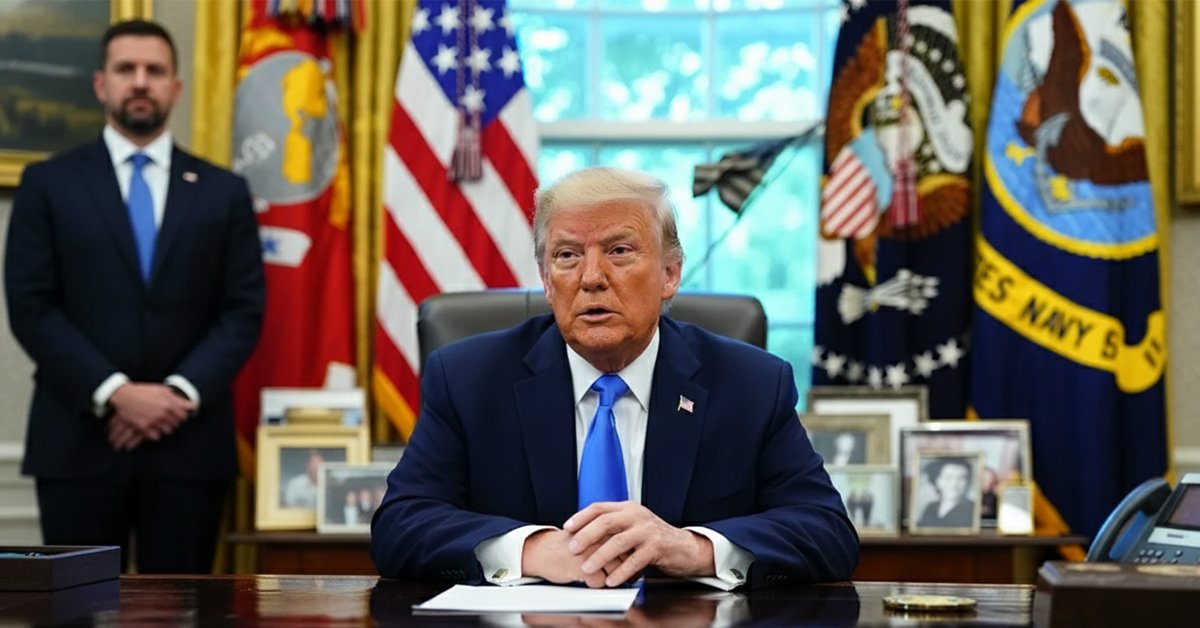

Former President Donald Trump is once again reshaping the national immigration conversation — this time by surprising some of his most loyal supporters. While his administration continues aggressive deportation efforts, Trump has recently spoken in favor of foreign students and high-skilled immigration, signaling a more complex stance on legal immigration than many expected from the leader of the MAGA movement.
His comments — specifically supporting foreign students at American universities and advocating for skilled H-1B visa workers — have divided Republicans, sparked pushback from prominent conservatives, and raised questions about how Trump intends to balance his broad anti-immigration agenda with economic and political realities.
This new chapter in the immigration debate reveals a president trying to merge two competing priorities: hardline border enforcement and the economic needs of universities, farms, and major industries that depend on immigrant labor.
Trump’s Unexpected Support for Foreign Students and H-1B Visas
In an interview with Fox News host Laura Ingraham, Trump made remarks that many saw as unusually sympathetic to legal immigration:
“Blocking students from overseas would destroy our entire university and college system — I don’t want to do that,” he said.
He then shifted to defend the H-1B visa system — a program often criticized by conservative nationalists but heavily relied on by American tech companies, manufacturers, and universities.
“You can’t take people off, like an unemployment line, and say, ‘I’m going to put you into a factory. We’re going to make missiles,’” Trump said. “You need people with talent.”
For a president whose brand centers on restricting immigration and championing the American worker, these remarks were seen by many as a major departure from MAGA orthodoxy.
Conservatives Erupt: Nationalists Reject Trump’s H-1B Support
Trump’s comments drew almost immediate criticism from some of the GOP’s most vocal “America First” lawmakers.
Marjorie Taylor Greene Breaks with Trump
In a striking public break with Trump, Representative Marjorie Taylor Greene posted on X:
She wants to eliminate the H-1B program entirely
She reiterated she is “America First and America Only”
Greene has rarely opposed Trump publicly, making this pushback significant.
More House Republicans Speak Out
Representatives Chip Roy and Eli Crane, two hardline conservatives, also told Bloomberg Government they disagree with Trump’s stance on skilled-worker visas.
Their concerns reflect an ongoing divide within the GOP:
- Nationalists argue legal immigration harms American workers
- Pro-business conservatives warn that cutting skilled immigration will cripple the economy
- Universities insist international students are essential for funding, innovation, and STEM programs
Trump, as usual, is attempting to position himself as the ultimate arbiter of what “MAGA” stands for.
“Don’t forget, MAGA was my idea,” Trump declared.
“I know what MAGA wants better than anybody else.”
Despite His Words, Trump’s Policies Are Still Restrictive
While Trump’s recent comments sound conciliatory toward legal immigration, his administration’s policy actions tell a very different story.
$100,000 H-1B Visa Application Fee
In September 2025, Trump imposed a massive $100,000 application fee for H-1B visas — a move designed to drastically reduce applications.
This fee:
- Makes it nearly impossible for small companies to sponsor foreign workers
- Hits universities and tech companies hardest
- Significantly restricts legal skilled immigration
This is one of the most severe legal immigration restrictions in modern U.S. history.
Visa Revocations for Students in Pro-Palestinian Protests
The administration has also:
- Revoked visas of foreign students who participated in pro-Palestinian demonstrations
- Targeted elite universities for their handling of international applicants
- Tightened oversight of F-1, J-1, and OPT programs
These actions send a clear message: legal immigration is not welcome unless it fits very narrow criteria.
Increased Scrutiny on Visa Compliance
The White House claims these moves reduce fraud and abuse. A senior official emphasized efforts to modernize the H-1B system and strengthen the Labor Department’s oversight of employers.
Why Trump Is Straddling Both Sides of the Immigration Debate
Trump’s cautious signaling appears to be a deliberate political strategy.
He must satisfy:
- The MAGA base, which demands mass deportations and strict immigration controls
- Big business, which needs skilled workers
- Farmers, who rely on seasonal immigrant labor
- Universities, which depend financially on foreign students
- Defense and tech sectors, which require highly specialized talent not always available domestically
These groups represent pillars of Trump’s political coalition. Losing any of them could weaken his standing in Congress and the private sector.
Trump is betting he can keep everyone on board — even if his messaging looks contradictory.
Broader Policy Context: Trump Is Expanding Immigration Enforcement Everywhere Else
Beyond H-1B visas and student comments, Trump is aggressively expanding his broader immigration agenda.
Mass Deportations Continue
His administration is carrying out widespread removals, including:
- Workplace raids
- Community sweeps
- Expanded detention levels
- Use of local law enforcement via new 287(g) agreements
New Executive Orders
Trump is implementing policies that shift the immigration landscape, such as:
- Cutting legal immigration processing
- Targeting asylum eligibility
- Increasing background-check scrutiny
Economic Moves to Appease Voters
Trump is also taking actions designed to offset rising living costs:
- Cutting tariffs on beef, tomatoes, bananas, and coffee
- Increasing imports to lower grocery prices
- Negotiating new trade deals with Switzerland and China
These moves are part of a broader economic message aimed at middle-class voters feeling inflation pressure.
Foreign Policy and Defense Changes Add to Immigration Tensions
In addition to immigration changes, the Trump administration is reshaping major foreign policy partnerships:
- Negotiating a deal for Saudi Arabia to purchase F-35 stealth fighters
- Working with South Korea to explore co-developing nuclear-powered submarines
- Reversing restrictions on oil drilling in Alaska’s petroleum reserve
- Investigating high-profile individuals for alleged ties to Jeffrey Epstein
- Closing and reopening investigations into industries like meatpacking
These policies reflect Trump’s broader plan to:
- Strengthen alliances that support U.S. military interests
- Undercut global rivals
- Boost domestic energy production
- Reinforce his law-and-order image
Immigration is just one part of a much larger political machine.
Global Entry Revocations Shake Frequent Travelers
Another lesser-known development is the surge in Global Entry membership revocations.
Tens of thousands of travelers have lost access to the expedited entry program since 2024, with CBP citing:
- Concerns about criminal activity
- Data mismatches
- National-security risks
Many travelers report that revocations came:
- Without warning
- Without explanation
- Without clear appeal pathways
This signals heightened scrutiny across all immigration and border programs — not just illegal immigration.
- → 7 Essential Business Strategies Transforming Success in 2024
- → AI and Machine Learning in 2026: Transforming Business Through Intelligent Innovation
- → Canada Immigration Backlog Update 2026: What the Latest IRCC Data Really Means
- → Mass Flight Disruptions Across Asia: 2,186 Delays and 134 Cancellations Hit Major Airports in India, Japan, Thailand, Malaysia, UAE, Singapore, and Qatar
- → $800 CRA Payment in March 2026: Which Canadian Families Qualify and When to Expect Their Direct Deposit
- → $533 GST/HST Credit for March 2026: Payment Dates, Eligibility, and Everything Canadians Need to Know
- → Canada Medical Expense Tax Claims 2026: Everything You Need to Know Before Filing
Trump’s Balancing Act: What It Means for the Future of U.S. Immigration
Trump’s recent comments reveal a president who understands the economic necessity of skilled labor and foreign students — yet is committed to keeping immigration restrictions at the forefront of his political identity.
Key Takeaways:
- Trump publicly supports foreign students and high-skilled immigration.
- His policies, however, actively restrict legal immigration pathways.
- Conservative Republicans are increasingly willing to challenge him.
- Businesses and universities fear losing competitiveness without immigrant talent.
- Trump believes he can maintain loyalty across all factions of the GOP.
- The tension between rhetoric and policy will continue to define immigration debates in 2025 and beyond.
Trump’s approach is less a shift in ideology and more a political balancing act — one that attempts to reconcile nationalistic demands with the economic needs of a modern global superpower.
