
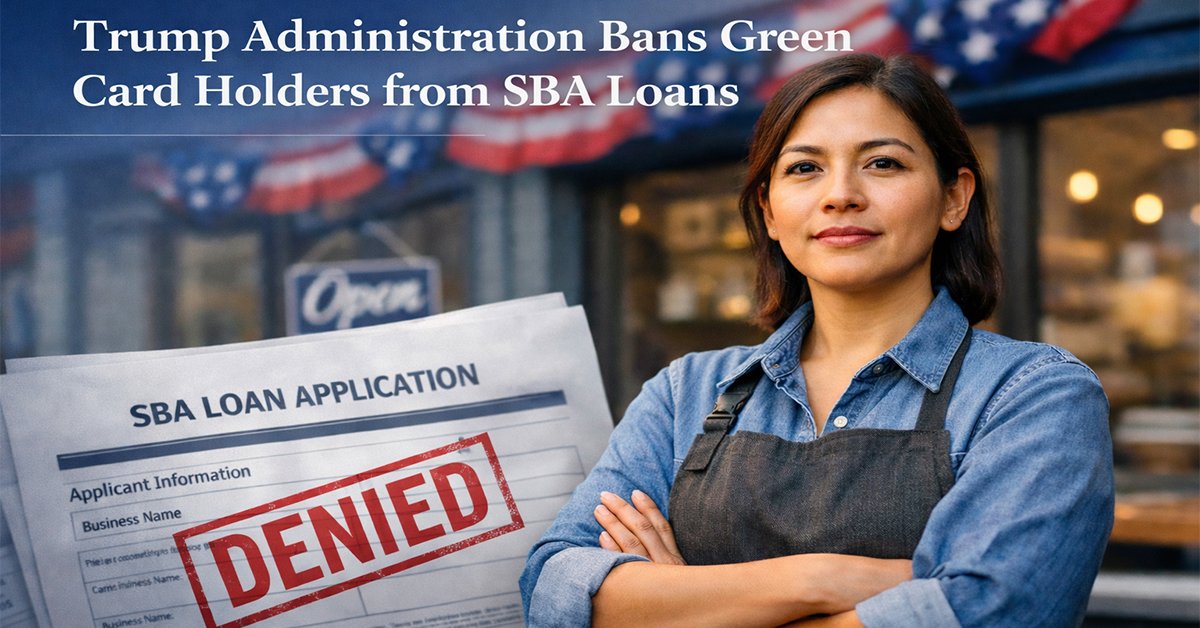

The American small business landscape is about to undergo a significant shift. Starting March 1, 2026, green card holders will no longer qualify for Small Business Administration loans—a policy change that’s sending shockwaves through immigrant communities and lending institutions nationwide.
I’ve been covering small business policy for years, and this reversal caught even seasoned lenders by surprise. Let me break down what’s happening and what it means for you.
What’s Actually Changing?
The Trump administration’s new SBA rule is straightforward but sweeping: only businesses that are 100% owned by U.S. citizens or U.S. nationals living in America can access SBA-backed loans. If you’re a legal permanent resident—even if you’ve lived here for decades, paid taxes, and built a thriving business—you’re now excluded from this critical funding source.
This isn’t a minor tweak. The SBA just eliminated a previous allowance that permitted businesses with up to 5% ownership by foreign nationals or green card holders. Now, it’s all or nothing.
Why This Matters More Than You Think
Here’s something most headlines miss: we’re talking about roughly 14 million legal permanent residents in the United States. Industry experts estimate that green card holders account for anywhere between 5% to 15% of existing SBA loan portfolios. Do the math—that’s potentially hundreds of thousands of businesses affected.
These aren’t abstract numbers. They’re restaurant owners in Minnesota, tech startups in California, construction companies in Texas, and family-owned shops in communities across America.
The Official Reasoning (and the Pushback)
The SBA defends this move as supporting “American citizens” and preventing fraud. But here’s where things get murky. Green card holders have been eligible for these loans for decades without any documented widespread fraud issues. They pay the same taxes, follow the same regulations, and contribute to the same communities as citizen business owners.
Critics—including lawmakers from both sides of the aisle, immigrant advocates, and even the lenders who administer these loans—argue the policy punishes “hard-working legal immigrants” who’ve done everything by the book.
Real-World Impact: Already Feeling the Pain
I spoke with community development organizations in Minnesota, and the picture isn’t pretty. Governor Tim Walz didn’t mince words, calling the policy “crushing” for small business owners trying to support employees and communities.
The timing couldn’t be worse. Immigrant-owned businesses in states like Minnesota were already reporting steep revenue losses—some by double digits—due to fear and uncertainty surrounding intensified federal immigration enforcement. This SBA change is like kicking someone when they’re down.
These businesses aren’t just statistics. They employ thousands, generate millions in local tax revenue, and often serve as economic anchors in culturally diverse neighborhoods that mainstream banks have historically underserved.
What Green Card Holders Can Do Right Now
If you’re a green card holder running a business, you’re probably wondering: “What are my options?” Here’s the practical advice I’m hearing from financial experts:
Before March 1: Lenders are working overtime to process applications from eligible green card holders before the deadline hits. If you’ve been considering an SBA loan, now is the time to act—not next month.
After March 1: The SBA loan door may be closing, but other windows remain open. Community Development Financial Institutions (CDFIs), credit unions, and state-backed programs don’t fall under this restriction. They’re ramping up alternative loan offerings specifically for immigrant entrepreneurs.
The Bigger Picture: A Policy Reversal Decades in the Making
What makes this particularly jarring is that it contradicts the SBA’s long-standing mission. For years, the agency worked to expand access to capital, believing that more small business lending equals more job creation and economic growth. This was bipartisan common sense.
Now, we’re watching a complete 180-degree turn. Lenders told me they received little to no advance warning, leaving them scrambling to adjust systems, notify borrowers, and figure out how to serve communities that suddenly lost a major funding lifeline.
Looking Ahead: State Solutions and Advocacy
Here’s where I see a glimmer of hope. State governments and community organizations aren’t taking this lying down. Officials and bankers are actively lobbying for state-funded programs to replace lost federal support.
Minnesota is already exploring options. Other states with large immigrant business populations—California, New York, Florida, Texas—are watching closely and considering similar moves.
Meanwhile, advocacy groups are challenging the legal and policy foundations of this rule. Whether through congressional pressure or potential legal action, this fight is far from over.
The Bottom Line
This isn’t just an immigration story or a business story—it’s both. When you bar legal residents from accessing the same small business tools as citizens, you’re making a statement about who belongs in America’s economic future.
Green card holders aren’t asking for handouts. They’re asking for the same opportunities to build, grow, and contribute that they’ve had access to for decades. Many have already proven themselves as job creators and community pillars.
As we move deeper into 2026, the full economic impact of this policy will become clearer. What we know now is that thousands of businesses are in limbo, lenders are adapting on the fly, and immigrant entrepreneurs are being forced to find new paths forward.
If you’re affected by this change, don’t wait. Talk to your lender, explore alternative financing, and connect with advocacy organizations in your community. And whatever your citizenship status, pay attention—because policies like this don’t exist in a vacuum. They shape the kind of economy we all live in.
