
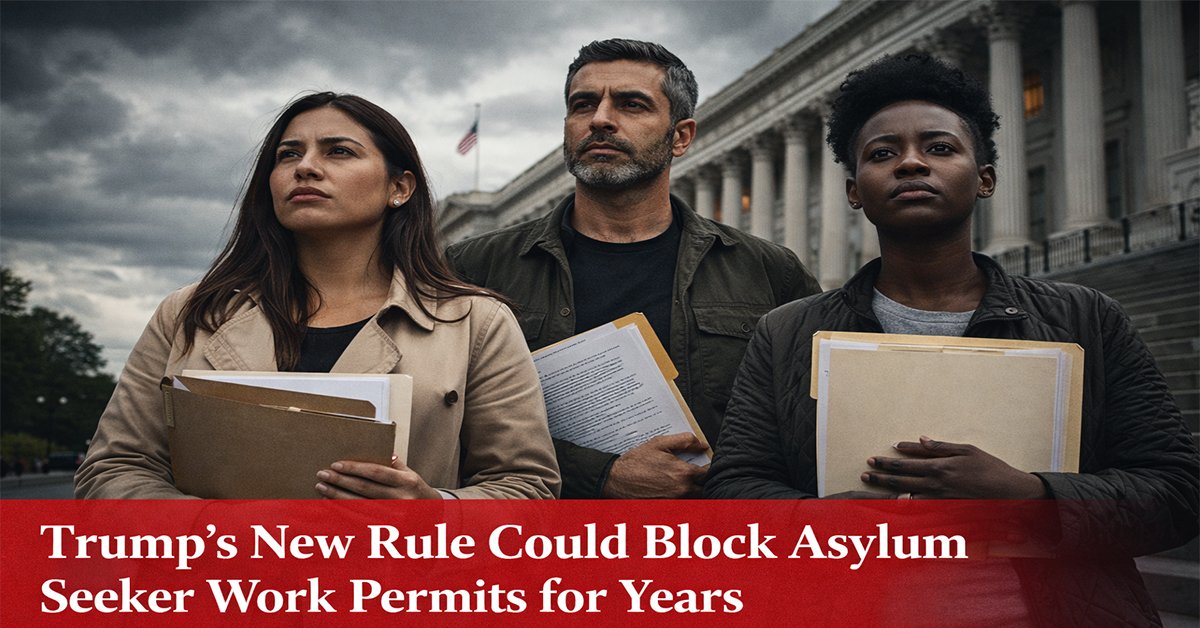

There’s a proposal sitting at U.S. Citizenship and Immigration Services right now that could quietly upend the lives of hundreds of thousands of people — people who came to this country legally, filed their cases, and are simply waiting for the system to process them.
And the thing is, most people outside the immigration world haven’t heard about it yet.
Here’s what’s happening — and why it matters regardless of where you stand politically.
The Proposal, In Plain English
USCIS released a draft regulation that would do two significant things to asylum seekers seeking work authorization:
- → AI and Machine Learning in 2026: Transforming Business Through Intelligent Innovation
- → Canada Immigration Backlog Update 2026: What the Latest IRCC Data Really Means
- → Mass Flight Disruptions Across Asia: 2,186 Delays and 134 Cancellations Hit Major Airports in India, Japan, Thailand, Malaysia, UAE, Singapore, and Qatar
- → $800 CRA Payment in March 2026: Which Canadian Families Qualify and When to Expect Their Direct Deposit
- → $533 GST/HST Credit for March 2026: Payment Dates, Eligibility, and Everything Canadians Need to Know
- → Canada Medical Expense Tax Claims 2026: Everything You Need to Know Before Filing
- → Canada Pension Plan (CPP) and Old Age Security (OAS): 2026 Payment Updates Every Canadian Retiree Should Know
First, it would halt the acceptance of new work permit applications — formally called Employment Authorization Documents, or EADs — whenever average processing times at the agency exceed 180 days. In other words, if USCIS gets backed up (which, historically, it almost always is), the door to applying simply closes. No exceptions. No workaround.
Second, it would extend the waiting period before asylum seekers are even eligible to apply for a work permit — stretching it from the current 150 days all the way to 365 days. That’s a full year of living in the United States legally, with a pending asylum case, and no ability to earn a paycheck.
USCIS itself acknowledged in the proposal that new work permit applications “would be paused for an extended period, possibly many years.”
Read that again: possibly many years. That language came directly from the agency’s own draft.
Who Gets Hurt — And How
Let’s talk about who we’re actually discussing here, because “asylum seeker” can feel abstract until you put a face on it.
These are people who entered the United States through legal ports of entry or filed their claims from within the country. They have pending cases before immigration courts or USCIS. Under current law, they are authorized to live here while their cases move forward. Many of them have been here for years already — working, paying taxes, raising children who were born in the United States.
Conchita Cruz, co-executive director of the Asylum Seeker Advocacy Project, put it as plainly as anyone can: “Forcing individuals who are working and living in the United States legally out of their jobs is not only cruel, but it is bad policy. If this regulation goes into effect, it will hurt U.S. families, businesses and the U.S. economy.”
She’s not exaggerating. When you strip work authorization from people already embedded in the workforce, the consequences ripple outward fast — missed rent, kids pulled from school activities, small businesses losing reliable workers, medical care going unpaid. The human cost is real and immediate.
This Doesn’t Exist in a Vacuum
It would be a mistake to look at this proposal in isolation. It’s part of a much broader pattern under the current administration.
The Department of Homeland Security has been working to terminate Temporary Protected Status designations that have provided work permits and deportation protection to hundreds of thousands of immigrants from countries experiencing crisis — places like Haiti, Venezuela, and El Salvador.
In a separate memo released this week, DHS also said agents are authorized to detain refugees who have not yet filed applications for lawful permanent residence after their first year in the United States. That’s a significant escalation for a population that came here through one of the most scrutinized and documented legal pathways in the entire immigration system.
Taken together, these moves reflect a deliberate effort to dismantle the humanitarian side of U.S. immigration policy — not just at the border, but for people already here with legal status.
This Has Been Tried Before
Here’s something worth knowing: this isn’t the first time this playbook has been used.
During the first Trump administration in 2020, officials proposed essentially the same change — extending the work permit eligibility waiting period to one year for asylum seekers. That proposal stalled and never went into effect.
The fact that it’s back, now in a more aggressive form with the added processing-backlog trigger, tells you something about the direction this administration wants to go. And this time, the political and legal landscape looks different enough that immigration advocates aren’t dismissing it as noise.
The Backlog Problem Nobody Wants to Talk About
Here’s a layer of this story that doesn’t get enough attention: the 180-day processing trigger is almost guaranteed to be hit.
USCIS has struggled with backlogs for years — not because of any single administration, but because of structural underfunding, staffing shortages, and a immigration system that hasn’t been legislatively updated in decades. Average processing times for work permits have frequently exceeded 180 days even during periods of relative calm.
What this means practically is that the “pause” built into this regulation isn’t a theoretical backstop for unusual circumstances. It could become the permanent default state. The agency is essentially writing a regulation that acknowledges — right in the text — that it may never fully reopen applications once the pause kicks in.
Critics argue this is the point. Build in a mechanism that looks technical and administrative on the surface, but functions as a near-permanent closure in practice.
What Happens Next
The draft regulation has been released for public comment, which means there’s still a window for advocates, attorneys, affected individuals, and members of Congress to respond formally. Public comment periods matter — they create a legal record, and courts weigh them when challenges are filed.
Immigration advocacy organizations are already mobilizing. The Asylum Seeker Advocacy Project and others are expected to submit detailed legal and policy objections. Legal challenges are likely if the rule moves forward to finalization.
But the timeline is moving fast. And for people currently in the asylum process — waiting out their 150-day eligibility period, already holding work permits that may come up for renewal, or preparing to file — the uncertainty itself is destabilizing.
The Bigger Question
There’s a debate worth having about immigration policy, border management, and the capacity of federal agencies to process cases efficiently. That debate is legitimate and complicated.
But this proposal isn’t really about any of that. It’s about people who already followed the rules — who showed up at the legal entry point, or filed their claims through the proper channels, and are living in the United States with full legal authorization while they wait.
Removing their ability to work doesn’t make the immigration system more functional. It doesn’t speed up court backlogs. It doesn’t add immigration judges or USCIS officers. What it does is make life significantly harder for a population that is already, by definition, going through one of the most stressful experiences a person can face.
Whether you think that’s good policy is a question worth sitting with.
What You Can Do
If you’re an asylum seeker currently in the system, talk to an immigration attorney or a nonprofit legal aid organization as soon as possible. Understand your current authorization status, when your work permit expires, and what your options look like under different scenarios.
If this regulation is finalized, renewal timelines, employer notifications, and legal challenge outcomes will all matter enormously. You want to be informed and prepared — not caught off guard.
And if you’re someone who cares about this issue but isn’t directly affected, the public comment period is an opportunity to make your voice part of the official record. It counts more than most people realize.
This article is for informational purposes only and does not constitute legal advice. Immigration law is complex and changes rapidly. Consult a licensed immigration attorney or accredited representative for guidance specific to your situation.
