
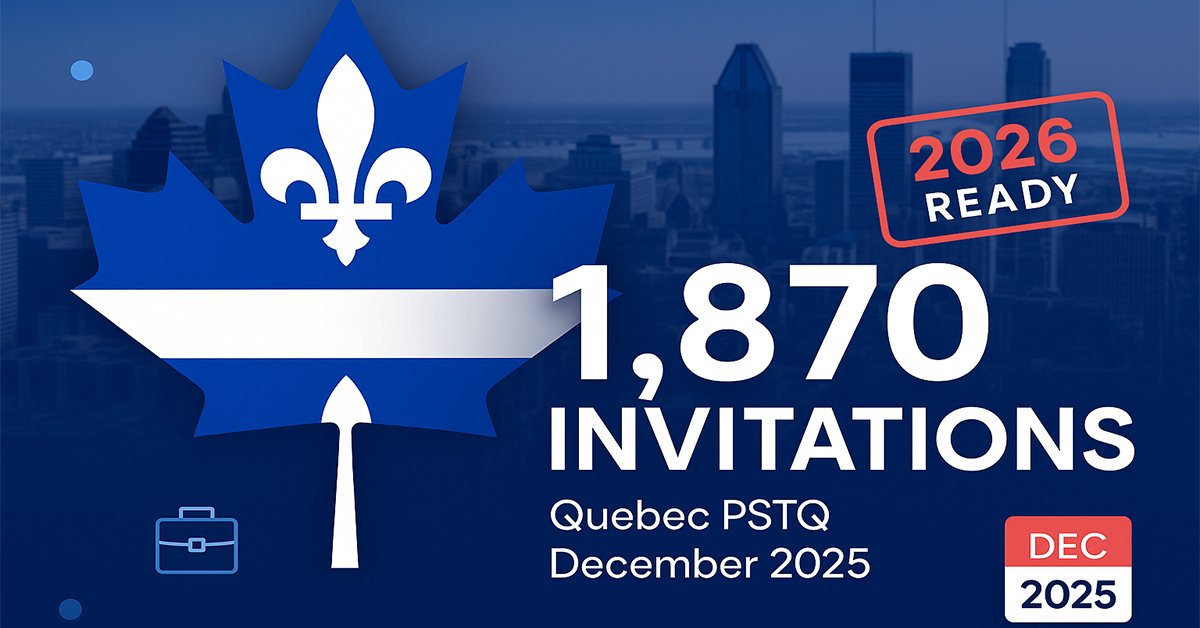

Quebec’s immigration system has delivered significant news for prospective immigrants. The province issued 1,870 invitations through its Skilled Worker Selection Program (PSTQ) on December 4, 2025, marking the first major selection round after a three-month pause. This comprehensive guide breaks down what these invitations mean for your immigration journey and how you can prepare for future draws in 2025-2026.
Understanding the Quebec PSTQ Selection Round
After a three-month hiatus, Quebec reopened opportunities for skilled workers, professionals, and exceptional talent. The province extracted candidates from the Arrima immigration bank on December 1, 2025, at 3 p.m., targeting specific skills and occupations that align with Quebec’s economic priorities.
The selection covered all four program streams, with each stream addressing different skill levels and professional backgrounds. Whether you’re a highly qualified professional, skilled tradesperson, regulated professional, or exceptional talent, understanding these streams is crucial for your application success.
- → 7 Essential Business Strategies Transforming Success in 2024
- → AI and Machine Learning in 2026: Transforming Business Through Intelligent Innovation
- → Canada Immigration Backlog Update 2026: What the Latest IRCC Data Really Means
- → Mass Flight Disruptions Across Asia: 2,186 Delays and 134 Cancellations Hit Major Airports in India, Japan, Thailand, Malaysia, UAE, Singapore, and Qatar
- → $800 CRA Payment in March 2026: Which Canadian Families Qualify and When to Expect Their Direct Deposit
- → $533 GST/HST Credit for March 2026: Payment Dates, Eligibility, and Everything Canadians Need to Know
- → Canada Medical Expense Tax Claims 2026: Everything You Need to Know Before Filing
Stream 1: Highly Qualified and Specialized Skills (605 Invitations)
Who Received Invitations?
Quebec prioritized highly qualified professionals with specialized expertise. The province divided invitations between two distinct groups:
General Quebec Residents (Score: 781+ points)
Successful candidates demonstrated:
- Employment in NOC FEER categories 0, 1, or 2 (management, professional, or technical roles)
- At least 12 months of verified work experience in their primary occupation within the past five years
- Completion of a Quebec diploma (minimum 900 hours for vocational/college programs or 30 university credits)
- French language proficiency: Level 7+ for oral comprehension, Level 5+ for written comprehension
- Accompanying spouses met Level 4+ French proficiency in oral competencies
Manufacturing Sector Candidates Outside Montreal (Score: 644+ points)
Candidates residing outside the Montreal Metropolitan Community needed to work in manufacturing and food processing occupations. This geographic targeting reflects Quebec’s strategy to distribute economic growth beyond its major urban center.
Why This Matters
The dual-scoring system creates opportunities for manufacturing professionals willing to settle in Quebec’s regions. The 137-point score difference (781 vs. 644) represents a significant advantage for those committed to regional development.
Stream 2: Intermediate and Manual Skills (604 Invitations)
Target Occupations and Requirements
Stream 2 focuses on essential workers in NOC FEER categories 3, 4, and 5, covering technical support, skilled trades, and manual labor positions.
Regional Manufacturing Focus (Score: 573+ points)
Candidates outside Montreal needed:
- 24 months of total work experience in the past five years
- At least 12 months working in Quebec in their primary occupation
- French language Level 5+ in both oral competencies
- Primary occupation in manufacturing or food processing
Province-Wide In-Demand Occupations (Score: 612+ points)
Quebec identified 12 critical occupations experiencing labor shortages. These positions span various sectors, and candidates could reside anywhere in Quebec.
Strategic Importance
The 24-month work experience requirement, with half needing Quebec experience, demonstrates the province’s preference for candidates who have already integrated into its workforce. This reduces adaptation challenges and accelerates economic contribution.
Stream 3: Regulated Professions (649 Invitations)
Healthcare and Priority Sectors
This stream attracted the highest number of invitations, reflecting Quebec’s urgent needs in regulated professions.
Standard Regulated Professions (Score: 717+ points)
Requirements included:
- Intent to practice a Minister-listed regulated profession in NOC FEER 0, 1, or 2
- French proficiency: Level 7+ in oral competencies, Level 5+ in written competencies
- Primary occupation in priority sectors from the Labour Force Operation list
Healthcare Specialists (Standard scoring)
Quebec specifically targeted three medical specialties:
- Clinical and laboratory medicine specialists (NOC 31100)
- Surgical specialists (NOC 31101)
- General practitioners and family physicians (NOC 31102)
These candidates required evaluation from the relevant regulatory authority and at least one year of Quebec work experience.
Alternative Pathway Occupations (Score: 535+ points)
Ten designated occupations qualified with a significantly lower score threshold, creating accessible entry points for specific in-demand professions.
Healthcare System Urgency
The three-tier scoring system for regulated professions reveals Quebec’s strategic priorities. Medical specialists received preferential treatment, addressing critical shortages in the healthcare system while ensuring quality through regulatory body evaluations.
Stream 4: Exceptional Talent (12 Invitations)
Two Qualification Pathways
Partnership-Based Selection
Candidates held positive opinions from Ministry partners in:
- Strategic economic sectors
- Research and development
- Arts and culture
- Professional sports
This pathway required 36 months of work experience in the primary occupation.
Achievement-Based Selection
Alternatively, candidates qualified through:
- Documentary proof of exceptional accomplishments from the Ministry’s official list
- Education equivalent to a Quebec doctorate
- 36 months of experience in their primary occupation
Elite Talent Attraction
With only 12 invitations issued, this stream represents Quebec’s most selective immigration pathway. It targets individuals who can make extraordinary contributions to the province’s economy, culture, or knowledge sectors.
Understanding the Arrima Point System
How Scores Are Calculated
The Arrima Expression of Interest system evaluates candidates across multiple factors:
Human Capital Factors
- Education level and Quebec study credentials
- Work experience quality and duration
- Age (optimizing for workforce participation years)
- Language proficiency in French and English
Labor Market Integration
- Valid job offers in Quebec
- Previous Quebec work experience
- Occupation demand levels
- Regional settlement commitments
Adaptability Elements
- Family connections in Quebec
- Previous visits or studies in the province
- Spouse education and language skills
- Children’s age and education
Maximizing Your Score
Strategic improvements in specific areas can significantly boost your ranking:
- French Language Proficiency: The single most impactful factor. Moving from Level 5 to Level 7 in oral French can add substantial points.
- Quebec Credentials: Completing a Quebec diploma program provides dual benefits: points for education and potential Quebec work experience.
- Regional Commitment: Willingness to settle outside Montreal opens opportunities with lower score thresholds.
- Spousal Qualification: An accompanying spouse’s education and French language skills contribute meaningfully to your total score.
Immigration Strategy for Future Draws
Timing Considerations
Quebec conducted this draw after a three-month pause, suggesting variable frequency. Candidates should maintain profile readiness and continuously improve their scores rather than waiting for draws.
Occupation Selection
Priority occupations shift based on labor market demands. Review the Ministry’s updated lists quarterly and consider training or certification in growing sectors if your current occupation faces limited opportunities.
Geographic Flexibility
Montreal versus regional Quebec presents a strategic choice. Regional settlement offers:
- Lower score requirements (often 100-200 points difference)
- Targeted occupation opportunities
- Potentially faster processing
- Less competition from other candidates
French Language Investment
French proficiency consistently emerges as the critical differentiator. Consider:
- Intensive French training programs
- Quebec-based French studies (dual benefit)
- Online certification courses accepted by Quebec
- Regular practice with native speakers
Next Steps for Invited Candidates
Application Submission Timeline
Invited candidates receive 90 days to submit complete applications. This tight deadline requires immediate action:
Week 1-2: Document Gathering
- Educational credentials and transcripts
- Employment verification letters
- Language test results
- Identity documents
- Police certificates
Week 3-6: Translation and Authentication
- Certified translations of non-French documents
- Educational credential assessments
- Professional regulatory body evaluations
- Notarization requirements
Week 7-8: Application Completion
- Online form completion in Arrima
- Document uploads and organization
- Fee payment processing
- Application review and verification
Week 9-12: Buffer Period
- Final document checks
- Response to any deficiency requests
- Submission before deadline
Professional Assistance Considerations
Given the 90-day deadline and comprehensive requirements, many candidates benefit from immigration consultant or lawyer guidance. Consider professional help if:
- You have complex work history or education credentials
- Your occupation requires regulatory body evaluation
- You need certified translations of multiple documents
- You’re unfamiliar with Quebec’s application systems
Long-Term Quebec Immigration Trends
Economic Priorities
Quebec’s selections reflect strategic economic goals:
- Manufacturing sector growth outside Montreal
- Healthcare system strengthening
- French language preservation
- Regional population distribution
Future Draw Predictions
Based on this December 2025 draw’s composition, expect Quebec to continue in 2026:
- Prioritizing French-speaking candidates
- Targeting manufacturing and healthcare
- Encouraging regional settlement
- Maintaining high score thresholds for Montreal-based applicants
The three-month gap before this draw suggests Quebec may conduct quarterly selections rather than monthly draws, making profile optimization between draws even more critical.
Conclusion: Your Quebec Immigration Pathway
The December 4, 2025 PSTQ selection demonstrates Quebec’s balanced approach to immigration, combining immediate labor market needs with long-term demographic and linguistic goals. Whether you’re a specialized professional, skilled tradesperson, regulated professional, or exceptional talent, Quebec offers pathways suited to various qualifications.
Success requires understanding your target stream, maximizing your Arrima score, and maintaining application readiness. With 1,870 invitations issued and more draws anticipated in early 2026, strategic preparation positions you for success in Quebec’s competitive immigration landscape.
For the most current information and detailed eligibility requirements, visit Quebec’s official immigration portal and consult the Ministry of Immigration, Francization and Integration’s resources. Your Canadian dream in la belle province awaits—start preparing today.
