
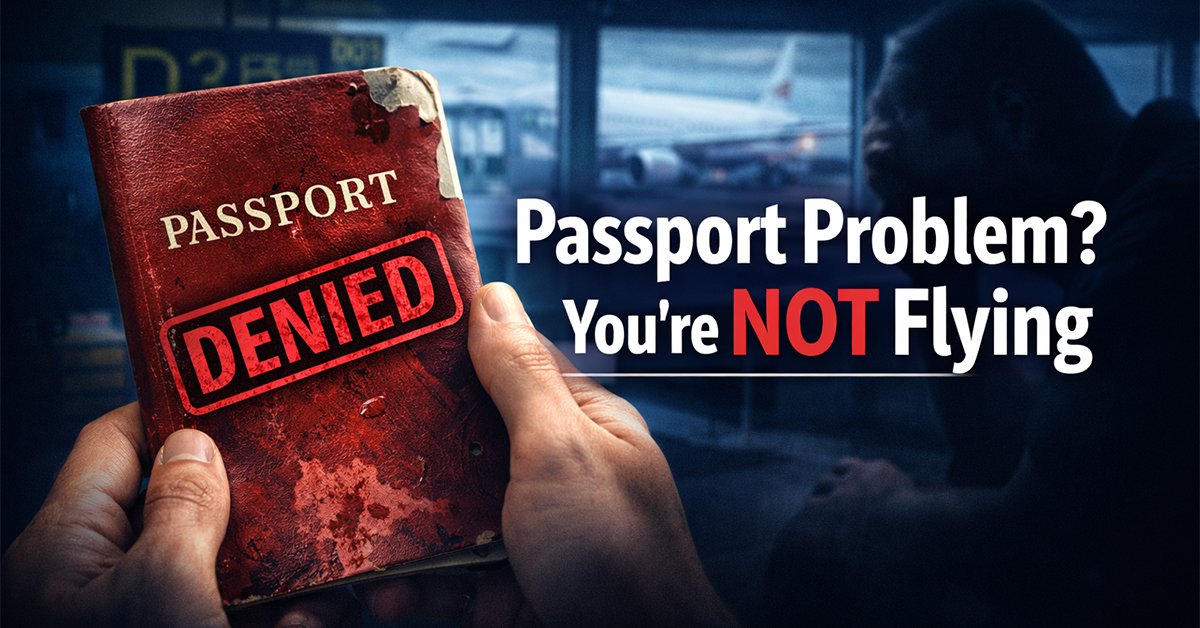

I watched it happen last month at JFK. A woman in her fifties, visibly excited about her trip to Italy, was pulled aside at the gate. Her passport looked fine to me—a little worn, maybe, but nothing crazy. Ten minutes later, she was in tears. Trip canceled. Money lost.
This is happening more often than anyone wants to admit, and chances are, you’re carrying around a passport that could get you denied boarding without even realizing it.
Let me walk you through what’s really going on at airport gates in 2026, because this information might save your next vacation.
The Problem Nobody Saw Coming
Here’s what’s changed: airlines and border control are no longer giving anyone the benefit of the doubt when it comes to passport condition. And I mean any doubt.
That coffee ring from your last trip? That slight tear on page seven you’ve been ignoring? The corner that got a little crumpled in your carry-on? Any of these could be the reason you’re watching your flight take off without you.
Water damage is the silent killer of international travel plans right now. We’ve all done it—tossed our passport in a beach bag, left it near a sweating water bottle, or packed it in luggage that got caught in the rain. It seems harmless until you’re standing at check-in and the agent is shaking their head.
When passport pages swell up, when ink starts to blur, or when that laminate coating begins to peel, immigration systems can’t properly scan your information. More importantly, it raises red flags about potential tampering or fraud, even if you’ve never touched the thing except to flip through it.
Why Airlines Are Suddenly Playing Hardball
You might be wondering why airlines care so much about a few wrinkled pages. The answer is simple: money.
If an airline lets you board with a questionable passport and you get denied entry at your destination, they’re on the hook financially. We’re talking about hefty fines from immigration authorities, plus the cost of flying you back to where you came from. Some airlines have been hit with penalties in the tens of thousands of dollars for a single passenger with invalid documents.
So they’ve made a choice: better to deny you at departure than risk the consequences on arrival. It’s business, not personal, but it sure feels personal when it’s your trip getting canceled.
The Biometric Chip Nightmare
Modern passports have electronic chips embedded in them. These chips store your photo, personal data, and other biometric information. They’re supposed to make travel faster and more secure.
Emphasis on “supposed to.”
The problem is these chips are fragile. Drop your passport the wrong way, bend it too much, or expose it to magnetic fields, and that chip can stop working. You won’t know until you try to use an automated gate and it keeps spitting your passport back out like a vending machine rejecting a crumpled dollar bill.
Here’s the maddening part: even if the chip is dead, your passport is technically still valid. You’re entitled to go through manual processing with an actual human officer. But those automated e-gates that most airports are pushing everyone toward? They won’t work for you.
I’ve seen people miss connections because they were stuck in manual processing lines while everyone else glided through the machines. One guy told me he spent 45 minutes in secondary inspection at Heathrow because his chip wouldn’t read, even though there was nothing actually wrong with his passport or his travel plans.
The Six-Month Rule That Catches Everyone
Pop quiz: when does your passport expire?
If you said “the date printed on the passport,” you’re technically correct but practically wrong.
Most countries require your passport to be valid for at least six months beyond your return date. Not your departure date—your return date. This trips up so many people it’s almost comical, except it’s not funny when it’s your family vacation on the line.
Here’s a real scenario: Your passport expires on August 1st. You’re planning a trip to Thailand from February 15 to March 1. Seems fine, right? You’ve got five months of validity.
Wrong. Thailand requires six months validity from your date of entry. You’d be denied boarding.
The cruelest version of this rule hits people in January. That passport that was perfectly acceptable for travel in December suddenly becomes useless in the new year because it dips below that six-month threshold. Airlines are absolutely ruthless about this now because they’ve been burned too many times.
When Airlines Get the Rules Wrong (And You Pay the Price)
Sometimes your passport is perfectly fine and you still get denied. Why? Because the airline employee checking you in doesn’t actually know the rules.
Last September, British Airways stopped a UK citizen from flying to Florida, insisting she needed six months of passport validity. The United States doesn’t have that requirement—your passport just needs to be valid through your departure date. She was right. They were wrong. She still didn’t make her flight.
Another BA passenger was denied boarding to Spain over an incorrect three-month validity requirement. His passport was completely valid for EU travel, but by the time that got sorted out, his flight was gone.
The worst part about these situations is that you have almost no recourse in the moment. You can argue, you can show them the official requirements printed from government websites, but if that gate agent says no, you’re not getting on that plane. And good luck getting compensation later for their mistake.
The Digital Border Revolution Creating New Problems
Europe rolled out its new Entry/Exit System starting in October 2025, replacing passport stamps with digital biometric scanning across all 29 Schengen countries. It’s supposed to be more efficient.
In practice? It’s creating bottlenecks nobody anticipated.
The facial recognition systems are finicky. If your appearance has changed since your passport photo was taken—different hairstyle, glasses, weight change, even just aging—the system might reject the match. Then you’re pulled aside for manual verification while everyone else flows through.
U.S. Customs uses similar biometric processing, comparing live photos to passport images. When it works, it’s almost magical. When it doesn’t, you’re explaining to an officer why you look different from your five-year-old photo while a line of impatient travelers builds up behind you.
Singapore just implemented something even more aggressive starting January 30, 2026: “No-Boarding Directives.” They’re essentially moving border control to your departure gate. Before you even get on a plane to Singapore, they’re checking whether you’ll be allowed to enter the country.
One database error, one small discrepancy in your information, and you’re not boarding that flight. The border isn’t waiting for you on arrival anymore—it’s blocking you at departure.
What You Need to Do Right Now
Pull out your passport and actually look at it. Not the quick glance you usually give it—really examine it.
Check every page for water damage, stains, tears, or wear. Look at the laminate covering your photo page—is it peeling anywhere? Is your photo still crisp and clear? Flip through and make sure all the pages are intact with no missing corners or ripped sections.
Now check your expiration date. Add six months to your latest planned return date from any trip you’re considering. If your passport expires before that date, you need to renew it before you book anything.
If you’re traveling to the United States, you only need validity through your departure date, but literally everywhere else plays it safer and requires that six-month buffer. When in doubt, assume you need the six months.
The standard advice used to be to renew your passport when you have a year left. That’s no longer cautious enough. With processing times being unpredictable and requirements getting stricter, I’d say start the renewal process when you hit 18 months.
The Cost of Being Caught Unprepared
A new passport costs around $130 for a standard adult renewal. An expedited passport runs about $230 if you need it faster.
Know what’s more expensive? The $1,500 you lose when you miss your flight. The $3,000 hotel reservation you can’t use. The $5,000 vacation package that becomes a total write-off because your passport had a bent corner you didn’t think mattered.
Travel insurance typically doesn’t cover denied boarding due to invalid travel documents. That’s on you. The airlines aren’t refunding your ticket. The hotels aren’t giving you your money back. You’re just out the money and the vacation.
Why This Matters More Than Ever
We’re living in a weird moment for international travel. Border security is tighter than it’s been in years, automated systems are replacing human judgment calls, and airlines are terrified of liability.
- → 7 Essential Business Strategies Transforming Success in 2024
- → AI and Machine Learning in 2026: Transforming Business Through Intelligent Innovation
- → Canada Immigration Backlog Update 2026: What the Latest IRCC Data Really Means
- → Mass Flight Disruptions Across Asia: 2,186 Delays and 134 Cancellations Hit Major Airports in India, Japan, Thailand, Malaysia, UAE, Singapore, and Qatar
- → $800 CRA Payment in March 2026: Which Canadian Families Qualify and When to Expect Their Direct Deposit
- → $533 GST/HST Credit for March 2026: Payment Dates, Eligibility, and Everything Canadians Need to Know
- → Canada Medical Expense Tax Claims 2026: Everything You Need to Know Before Filing
The human discretion that might have let you slide five years ago? It’s gone. The gate agent who might have said “eh, it’s a small tear, I’m sure it’ll be fine”? They don’t exist anymore because their employer can’t afford for them to exist.
This isn’t about being paranoid. It’s about being realistic. The rules haven’t necessarily changed that much, but the enforcement of those rules has become absolutely rigid. There’s no wiggle room left, no appeals to common sense, no “just this once.”
Your passport needs to be in pristine condition with plenty of validity, and the time to ensure that is before you’re standing at a gate watching other people board your flight.
Check your passport today. Not tomorrow, not next week. Today.
Because I guarantee you don’t want to be the person I saw crying at JFK, holding a boarding pass for a flight they’re not allowed to take, all because of something that could have been fixed with a simple renewal application two months earlier.
Trust me on this one.
