

Introduction
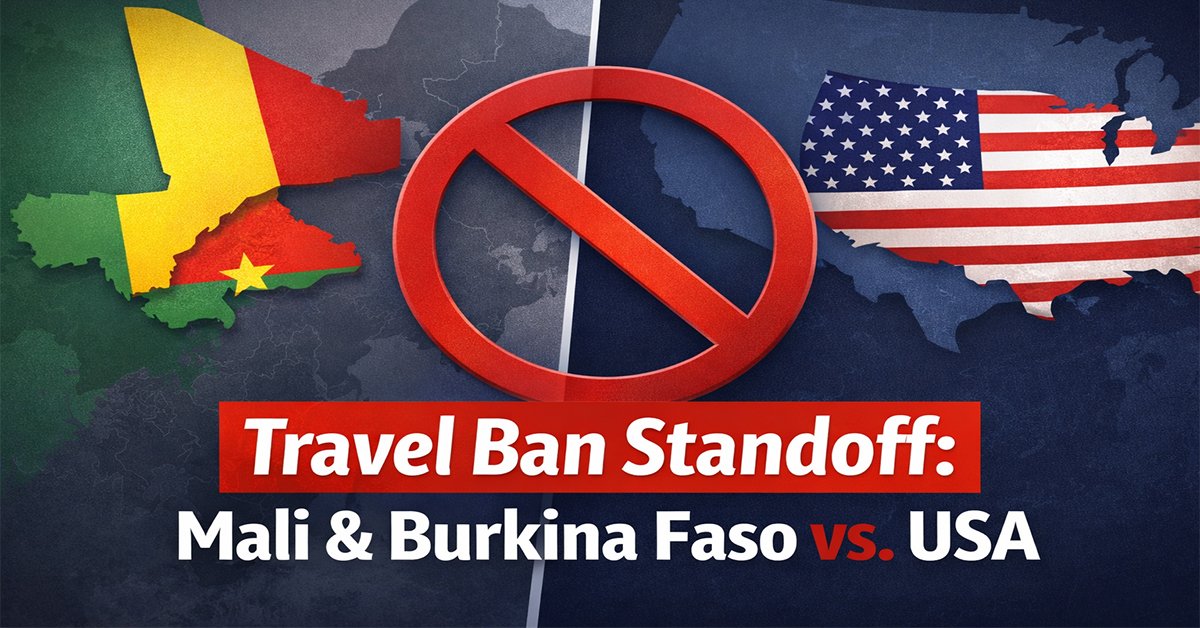
In a swift diplomatic response to recent U.S. immigration policy changes, two West African nations have implemented immediate travel restrictions on American citizens. Mali and Burkina Faso announced reciprocal bans effective immediately, mirroring the travel limitations the United States placed on their citizens under President Donald Trump’s latest executive actions.
This tit-for-tat measure marks a significant escalation in diplomatic tensions between the United States and the Sahel region, highlighting how immigration policies can trigger international consequences beyond national borders.
Understanding the U.S. Travel Ban
President Trump’s administration recently expanded travel restrictions to include citizens from Mali, Burkina Faso, and Niger—three nations located in Africa’s Sahel region. The White House framed these restrictions as necessary national security measures.
Official justification for the U.S. ban:
According to statements from Washington, the travel restrictions were implemented due to several factors:
- Regional instability: The Sahel region has experienced prolonged violence and conflict, with armed extremist groups operating across multiple countries
- Security concerns: The presence of terrorist organizations and militant groups in the area poses potential threats
- Information sharing challenges: U.S. officials cited difficulties in obtaining and verifying reliable traveler information from these nations
- Vetting concerns: The administration claimed it could not adequately screen travelers from these countries using current systems
The restrictions significantly limit or prohibit citizens from Mali, Burkina Faso, and Niger from entering the United States, affecting thousands of people with family, business, educational, and diplomatic ties between these nations and America.
The Reciprocal Response: Mali and Burkina Faso Strike Back
Both Mali and Burkina Faso wasted no time responding to the U.S. travel ban, invoking the principle of diplomatic reciprocity to justify their countermeasures.
Mali’s official position:
Malian officials characterized their ban as a direct mirror of U.S. policy. In official statements, the government declared it would “apply the same conditions and requirements to U.S. nationals as those imposed on Malian citizens.”
This means American citizens now face the same entry restrictions, visa limitations, and travel barriers that Malian nationals encounter when attempting to enter the United States.
- → 7 Essential Business Strategies Transforming Success in 2024
- → AI and Machine Learning in 2026: Transforming Business Through Intelligent Innovation
- → Canada Immigration Backlog Update 2026: What the Latest IRCC Data Really Means
- → Mass Flight Disruptions Across Asia: 2,186 Delays and 134 Cancellations Hit Major Airports in India, Japan, Thailand, Malaysia, UAE, Singapore, and Qatar
- → $800 CRA Payment in March 2026: Which Canadian Families Qualify and When to Expect Their Direct Deposit
- → $533 GST/HST Credit for March 2026: Payment Dates, Eligibility, and Everything Canadians Need to Know
- → Canada Medical Expense Tax Claims 2026: Everything You Need to Know Before Filing
Burkina Faso’s response:
The foreign ministry of Burkina Faso issued a parallel statement, emphasizing that their restrictions directly correspond to those imposed by Washington. The government made clear this action was not arbitrary but rather a measured response based on the principle of equal treatment in international relations.
Effective immediately:
Both bans took effect without a grace period, potentially affecting American travelers already en route or planning visits to these countries for business, humanitarian work, diplomatic missions, or tourism.
What Is the Principle of Reciprocity in International Relations?
The concept of reciprocity is a fundamental principle in diplomatic relations and international law. It holds that countries should treat each other’s citizens and diplomatic representatives in equivalent ways.
How reciprocity works:
When one nation imposes restrictions, requirements, or benefits on another country’s citizens, the affected nation often responds with equivalent measures. This can apply to:
- Visa requirements and fees
- Travel restrictions and bans
- Diplomatic privileges
- Trade policies
- Customs procedures
Why nations invoke reciprocity:
Countries use reciprocal measures for several reasons:
- To protest perceived unfair treatment
- To pressure other nations to reconsider policies
- To maintain dignity and sovereignty
- To protect their citizens’ interests abroad
- To signal that discriminatory policies will not be accepted without consequences
In this case, Mali and Burkina Faso are using reciprocity to demonstrate that unilateral actions by powerful nations come with diplomatic costs.
Impact on American Travelers and Interests
The reciprocal bans could affect various categories of U.S. citizens with connections to West Africa:
Humanitarian workers: Many American NGOs and international organizations operate in Mali and Burkina Faso, providing essential services in healthcare, education, and development. Staff members may now face entry challenges.
Business professionals: U.S. companies with investments or operations in these countries may need to reconsider travel plans for executives and employees.
Diplomatic personnel: While diplomatic staff typically receive special provisions, the restrictions signal deteriorating bilateral relations that could complicate diplomatic work.
Researchers and journalists: Americans conducting academic research or covering regional issues may find their access severely limited.
Dual citizens and families: Individuals with family connections spanning both countries face additional complications in maintaining relationships.
The Broader Geopolitical Context
This diplomatic exchange doesn’t happen in isolation. The Sahel region has experienced significant political and security challenges in recent years, reshaping relationships with Western powers.
Security situation in the Sahel:
The Sahel—a semi-arid region stretching across Africa south of the Sahara Desert—has become a focal point for international security concerns. Multiple armed groups operate across borders, creating instability that affects millions of people.
However, many analysts point out that Western military interventions and policies haven’t resolved these security challenges and may have contributed to anti-Western sentiment in the region.
Shifting alliances:
Both Mali and Burkina Faso have experienced military coups in recent years, leading to significant changes in their foreign policy orientations:
- Both countries have distanced themselves from traditional Western partners, particularly France
- Military governments in both nations have questioned the effectiveness of Western security assistance
- There’s been a reorientation toward alternative international partners
Regional solidarity:
