


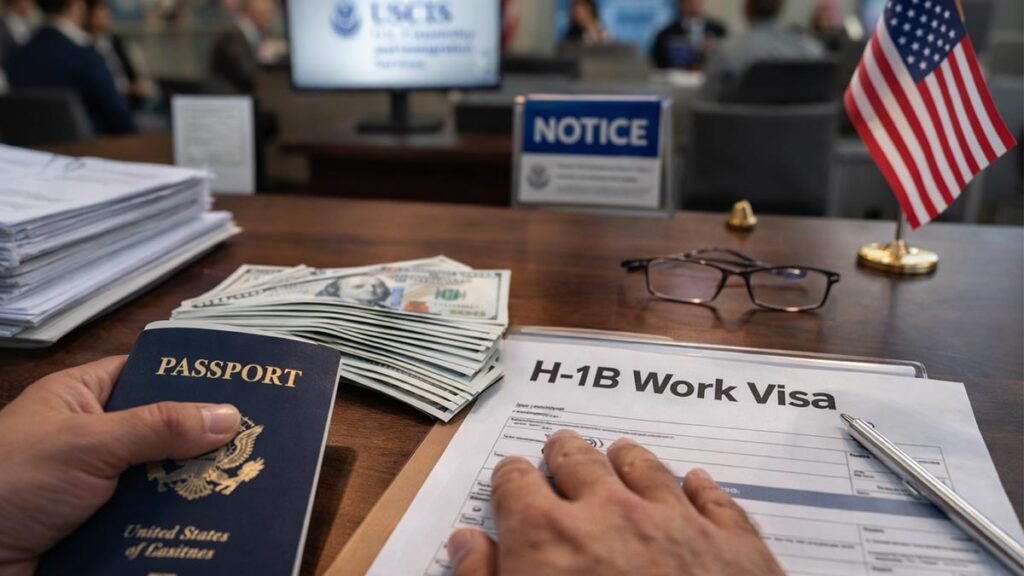
Major Policy Changes Reshape the H-1B Program
Recent updates to the H-1B visa program have introduced significant changes that could impact both employers and foreign workers planning to work in the United States. Under new guidelines introduced during the Trump administration, applicants may now be required to meet stricter conditions, including a substantial $100,000 fee for certain visa petitions.
These changes come after a temporary government shutdown disrupted visa processing and prompted a broader overhaul of immigration policies.
The $100,000 Fee: What It Means
One of the most notable updates is the introduction of a $100,000 payment tied to new H-1B visa applications. This fee applies specifically to petitions filed after September 21 and does not affect previously approved visas or renewals.
Initially described as an “entry fee,” the policy created confusion among employers and visa holders. Authorities later clarified that it functions as a processing-related cost rather than a fee required for entering the United States.
This high financial requirement is expected to influence hiring decisions, particularly for companies that rely heavily on international talent.
Who Is Exempt From the Fee?
While the fee is broadly applicable, there are limited exceptions. The U.S. Department of Homeland Security retains the authority to grant exemptions in rare cases.
To qualify, employers must demonstrate that hiring a foreign worker serves a strong national interest and that imposing the fee would negatively affect that interest. These exceptions are expected to be granted only under exceptional circumstances.
Confusion and Urgency Following the Announcement
The sudden announcement of the fee triggered widespread concern across industries. Many companies rushed to contact their H-1B employees and ensure their travel plans were not disrupted.
Reports indicated that the initial communication led to misunderstandings, with some workers fearing they would be unable to re-enter the United States without paying the fee. This uncertainty resulted in a surge of urgent travel arrangements over a single weekend before the rule took effect.
Concerns Over Broader Immigration Restrictions
The visa changes are part of a wider immigration policy shift that includes renewed travel restrictions affecting multiple countries. The administration has introduced a list of nations facing full or partial bans, citing concerns over visa overstays and security risks.
Countries such as Afghanistan, Iran, Somalia, Yemen, and others are subject to full entry bans, while additional nations face partial restrictions on work, study, and tourist visas.
These measures build on earlier policies introduced in 2017 but have been structured to better withstand legal challenges.
Impact on Global Workforce and Businesses
The introduction of a high-cost requirement and stricter regulations could significantly alter how U.S. companies approach international hiring. Smaller firms, in particular, may find it difficult to absorb the added financial burden.
For foreign professionals, the changes add another layer of complexity to an already competitive and uncertain visa process. Concerns have also been raised about reduced mobility, potential delays, and limited opportunities for skilled workers.
Ongoing Debate and Criticism
Critics argue that these policies could discourage global talent from seeking opportunities in the United States. Some have compared the initial rollout to earlier controversial travel bans, highlighting concerns about fairness and economic impact.
Advocates for immigration reform warn that such measures may hinder innovation and reduce the country’s competitiveness in sectors like technology and research.
Conclusion
The latest changes to the H-1B visa program mark a significant shift in U.S. immigration policy. With the introduction of a $100,000 fee and expanded restrictions, both employers and applicants must navigate a more complex and costly system. While the measures aim to strengthen oversight and reduce misuse, they also raise important questions about accessibility, fairness, and the future of skilled migration to the United States.
FAQs
Who must pay the $100,000 H-1B fee?
The fee applies to new H-1B visa petitions filed after September 21 and does not affect renewals or previously approved visas.
Is the fee required for entering the United States?
No, it is a processing-related fee, not an entry fee, despite initial confusion.
Are there any exemptions available?
Yes, but they are rare and granted only when it is in the national interest.
Do these changes affect current H-1B visa holders?
Existing visa holders and renewals are generally not impacted by the new fee.
What other immigration changes are linked to this policy?
The updates are part of a broader strategy that includes travel restrictions for certain countries.