
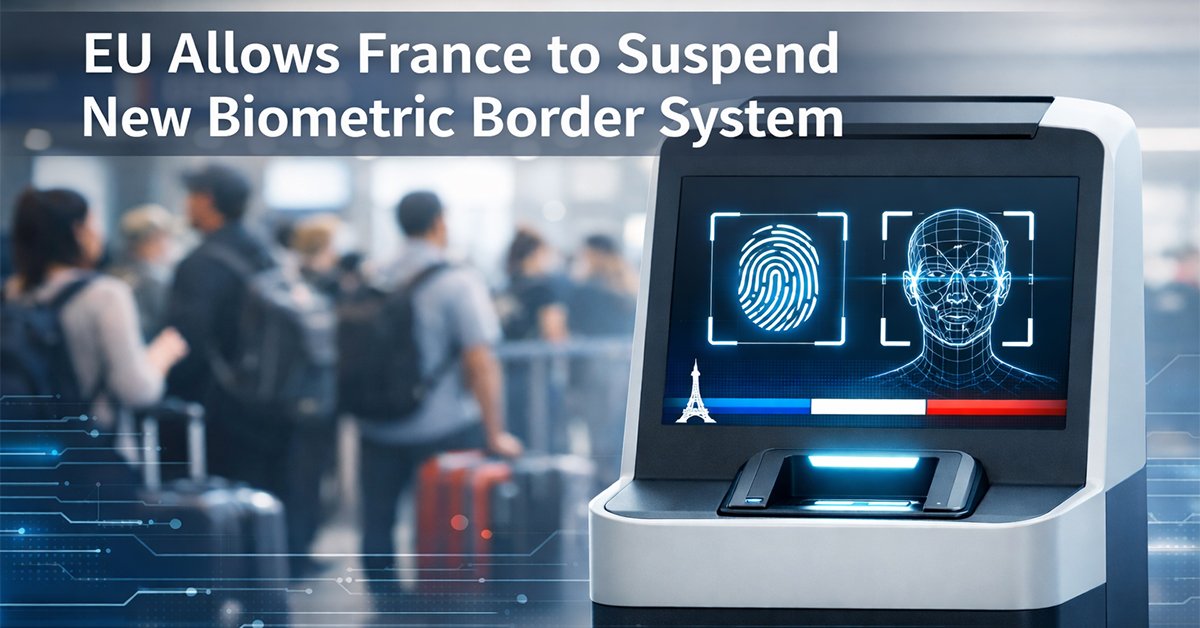

If you’ve traveled through a French airport or Channel port recently, you’ve probably experienced the chaos firsthand. Three-hour queues. Confused travelers. Malfunctioning kiosks. Welcome to Europe’s rocky rollout of the Entry/Exit System—or EES, as it’s awkwardly known.
But there’s good news: the European Commission just threw France a lifeline.
On February 3rd-4th, Brussels confirmed that France—and other struggling member states—can temporarily hit the pause button on the new biometric border system for up to 90 days after the April 10th deadline, with a possible 60-day extension covering the busy summer travel season.
As someone who’s been tracking this rollout since it began last October, I can tell you this isn’t just a technical glitch getting fixed. This is a massive, continent-wide infrastructure project that’s proving far messier than anyone in Brussels wanted to admit.
Let me explain what’s actually happening, why it matters to you, and what you should expect when traveling to France (or anywhere in the Schengen zone) over the next few months.
What Is the EES, and Why Is Everyone Struggling?
The Entry/Exit System is Europe’s answer to the question: “Who’s actually in our borders, and are they staying longer than they should?”
For decades, border guards simply stamped your passport when you entered and exited the Schengen Area. It was simple, quick, and—let’s be honest—easily circumvented by anyone who wanted to overstay their 90-day tourist allowance.
The new system is far more sophisticated. Every non-EU traveler entering the Schengen zone must now:
- Provide biometric data (fingerprints and facial scan) at a self-service kiosk
- Answer basic questions about their trip
- Get automatically logged into a centralized EU database
The first time you do this, it takes several minutes. After that, the system should recognize you and wave you through quickly—in theory.
The reality? Airports across Europe have been struggling since the October 2025 launch. Paris Charles de Gaulle has been particularly brutal, with some travelers reporting wait times exceeding three hours just to get through the initial border check.
Why France Is in Particular Trouble
France isn’t just any Schengen border. It’s one of the busiest entry points in Europe, handling millions of travelers from:
- The UK (via Channel ferries, Eurostar, and Eurotunnel)
- North America (massive transatlantic flight volume)
- Asia, Africa, and the Middle East (Paris is a major global hub)
When the EES went live in October, French authorities quickly realized they had a serious problem: they didn’t have nearly enough kiosks installed and operational to handle the volume.
Charles de Gaulle and Orly airports have been scrambling to install additional machines. The Channel ports—Dover, Calais, the Eurotunnel terminal—have faced even worse bottlenecks because many ferry travelers had no idea this system even existed until they showed up.
I spoke with a British friend who took the ferry to Calais in December. She told me the queue to enroll in the EES stretched for over an hour, with only two functioning kiosks for hundreds of passengers. Families with young children, elderly travelers, people with disabilities—everyone jammed into the same overwhelmed system.
It’s been a mess.
What the EU’s “Flexibility” Actually Means
Here’s what Brussels announced, stripped of the bureaucratic jargon:
France (and other struggling countries) can temporarily:
- Suspend biometric enrollment when queues get too long
- Revert to old-fashioned passport stamping during peak periods
- Collect only basic biographical data instead of full biometrics
- Mix manual and automated processing as needed
The timeline:
- Up to 90 days of flexibility after the April 10th “hard deadline”
- Possible 60-day extension to cover July-September peak travel season
- Countries must notify Brussels when they’re using these emergency measures
What this is NOT:
- A postponement of the EES (the system is staying)
- Permission to abandon biometrics permanently
- A signal that the EES is being reconsidered
Think of it as the EU admitting, “Okay, this is harder than we thought. You can phase it in more gradually.”
What This Means If You’re Traveling to France
The short version: expect inconsistency.
Depending on when you travel, which airport or port you use, and even what time of day you arrive, you might encounter:
- Full biometric enrollment at a kiosk (the intended experience)
- Traditional passport stamping (like the old days)
- A hybrid approach (biographical data collected digitally, but no fingerprints)
- Long queues regardless of which method is being used
My practical advice:
Budget extra time. If you have a connecting flight in Paris, add at least 90 minutes to your normal connection buffer. If you’re taking the Eurostar or a ferry, arrive earlier than you normally would.
Prepare for the kiosks. Even if France pauses biometrics during peak times, you might still encounter them. The process involves:
- Scanning your passport
- Having your photo taken
- Providing fingerprints (all ten fingers on some systems, just four on others)
- Answering questions about your trip purpose and accommodation
Keep your passport stamps. If the system goes down or France reverts to manual stamping, those stamps are your proof of entry/exit. Don’t assume everything is tracked digitally.
Check current conditions. Before traveling, look up real-time reports from the specific airport or port you’re using. Travel forums, Twitter, and airport websites can give you a sense of current wait times.
Business travelers: coordinate with your company. If you’re traveling for work, make sure your employer understands you might miss meetings or need schedule adjustments due to border delays.
The Bigger EES Picture Across Europe
France isn’t alone in struggling with this rollout.
Countries handling it relatively well:
- Netherlands (Schiphol has enough kiosks and staff)
- Germany (Frankfurt and Munich invested heavily in infrastructure)
- Finland (smaller volume, better preparation)
Countries struggling:
- France (massive volume, infrastructure shortfall)
- Italy (especially at smaller regional airports)
- Spain (Barcelona and Madrid facing similar kiosk shortages)
- Greece (island airports particularly unprepared)
The fundamental problem is that Brussels designed this system without fully accounting for the enormous infrastructure investment required at ground level. Installing, maintaining, and staffing thousands of biometric kiosks across hundreds of border points is expensive and logistically complex.
Many member states simply weren’t ready by the October 2025 deadline but were pressured to launch anyway. Now we’re all living with the consequences.
Why the EU Is Pushing Ahead Despite the Chaos
You might wonder: if this is causing such massive problems, why not just scrap it?
The EU has several reasons for sticking with the EES:
Security. The old passport-stamp system had massive holes. People could enter through one Schengen country, exit through another, and nobody really tracked whether they overstayed. Biometric tracking makes that much harder.
Overstay enforcement. The EU has struggled for years with tourists and temporary visitors who simply never leave when their 90 days are up. The EES creates an automatic alert system.
Preparation for ETIAS. The European Travel Information and Authorization System (similar to America’s ESTA) is launching later in 2026. The EES infrastructure is necessary for ETIAS to work.
Border efficiency (eventually). Once the system is fully operational, repeat travelers should actually move through borders faster than with manual stamping. Automated facial recognition beats having a border guard flip through passport pages.
The EU’s position is essentially: “Yes, it’s painful now, but it’ll be worth it in the long run.”
What About the UK and Brexit?
Here’s an irony: Brexit has made this harder for British travelers.
When the UK was in the EU, British citizens could use the EU/EEA lanes at borders and didn’t need entry/exit tracking. Now, as third-country nationals, they’re lumped in with Americans, Canadians, Australians, and everyone else who needs biometric enrollment.
This particularly affects the Channel crossings. Millions of Brits travel to France every year by ferry, Eurostar, and Eurotunnel. Many are weekend travelers or people with second homes in France who now face biometric enrollment every single time until they’re in the system.
The political optics are awful. British tabloids have been running headlines about “Brexit border chaos” and “EU punishing British travelers.” The reality is less dramatic—this system applies to all non-EU nationals, not just Brits—but the perception problem is real.
Tips for Specific Travel Scenarios
If you’re flying into Charles de Gaulle: The airport is prioritizing long-haul flights from the US and Asia for full EES enrollment. If you’re arriving during peak morning hours (when multiple transatlantic flights land simultaneously), expect the longest waits. Early afternoon and late evening arrivals tend to be smoother.
If you’re taking the Eurostar: The EES checks happen at the departure station (London St Pancras if you’re heading to France, Gare du Nord if returning to London). Budget extra time, especially during weekend and holiday periods. The good news: once you’re on the train, you’ve already cleared the border.
If you’re driving through a land border: Smaller crossing points may have fewer kiosks and longer waits. Major crossings like the Franco-German or Franco-Swiss borders near Basel or Geneva have better infrastructure. If you have flexibility in your route, choose the bigger crossing points.
If you’re traveling with children: Kids under 12 are exempt from fingerprint requirements (though facial photos are still required). Under-18s need parental consent documented. Bring birth certificates or other proof of relationship if traveling with minors.
If you have a disability: Assisted processing is supposed to be available, but in practice, many airports haven’t properly set this up. Call ahead to the specific airport/port and ask about accessibility accommodations for the EES kiosks.
The Summer Travel Concern
The EU’s willingness to extend the flexibility period through September tells you everything you need to know: they’re terrified of July and August.
European summer is peak travel season. Families heading to Mediterranean beaches. Americans and Asians visiting Paris, Rome, Barcelona. The volume is massive.
If the EES isn’t functioning smoothly by then, airports across Europe could face gridlock that makes the current situation look mild.
France hosting the Olympics in Paris this summer adds another layer of complexity—though most Olympic visitors will arrive after the Games begin, giving authorities a bit more time to sort things out.
What Happens After the Grace Period?
According to the European Commission, this flexibility is temporary. Once infrastructure is in place and staff are trained, countries are expected to run the full biometric system consistently.
The target is late 2026 for most major entry points to be operating smoothly. Whether that’s realistic remains to be seen.
Bottom Line for Travelers
The EES is happening. The delays and workarounds are frustrating, but they’re also temporary adjustments to a system that’s here to stay.
Your action plan:
- Accept that border crossings will take longer in 2026. Plan accordingly.
- Prepare for biometric enrollment. Understand the process before you arrive.
- Stay flexible. You might encounter the full EES system, or you might get a passport stamp. Either way, you’ll get through.
- Keep documentation. Retain evidence of your entry and exit dates.
- Check before you travel. Border procedures are changing week by week. Current information matters.
And maybe pack some extra patience in your carry-on. European borders are getting a technological upgrade, and like any major construction project, it’s going to be messy before it gets better.
