
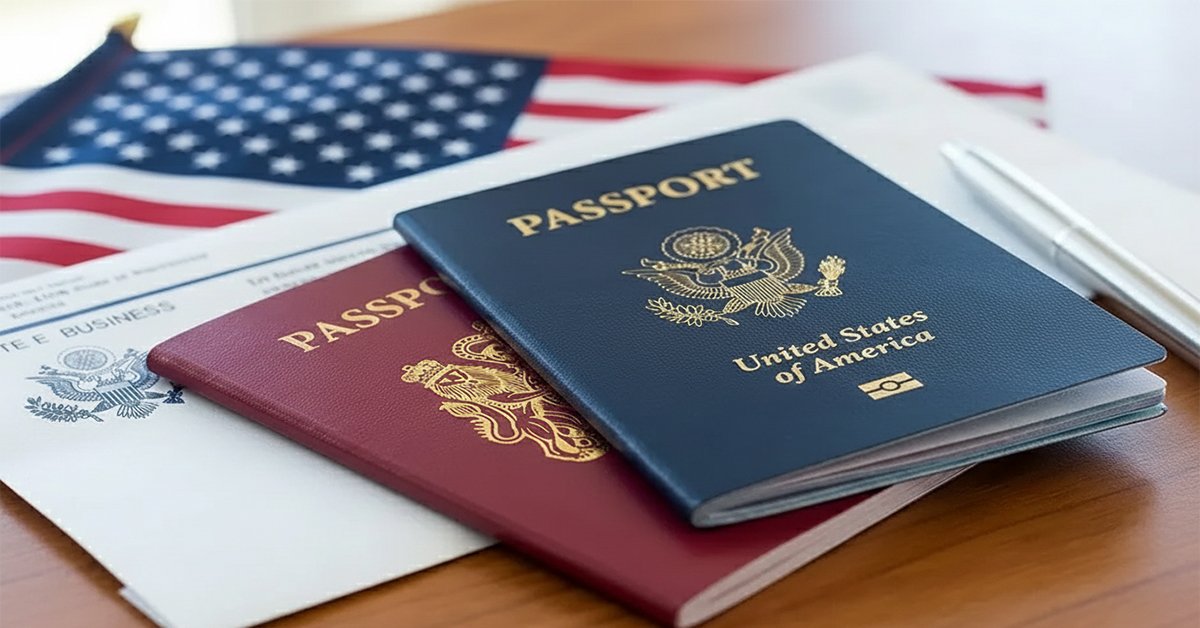

Breaking Update: Senator Bernie Moreno (R-OH) introduced legislation on December 1, 2025, that would ban dual citizenship for all Americans. Here’s what you need to know: Dual citizenship remains fully legal today. This is a proposal, not law, and experts say it faces nearly insurmountable constitutional and practical barriers. No action is required from dual citizens at this time.
What Is the Exclusive Citizenship Act of 2025?
The Exclusive Citizenship Act of 2025 is a legislative proposal that would fundamentally reshape American citizenship law by requiring all U.S. citizens to hold only one nationality. Introduced by freshman Senator Bernie Moreno, the bill argues that dual citizenship creates “conflicts of interest and divided loyalties” that undermine American allegiance.
Core Provisions of the Bill
If enacted, the legislation would:
1. Ban All Dual Citizenship No person could simultaneously hold U.S. citizenship and citizenship of any foreign country. This represents a radical departure from over 200 years of American immigration practice.
2. Force Existing Dual Citizens to Choose Current dual citizens would have one year from the date of enactment to submit written renunciation of either their foreign citizenship or their U.S. citizenship to federal authorities.
3. Create Automatic Citizenship Loss Anyone who fails to renounce within the one-year deadline would be “deemed to have voluntarily relinquished United States citizenship” under Section 349(a) of the Immigration and Nationality Act.
4. Strip Citizenship from Future Foreign Naturalizations Any U.S. citizen who voluntarily acquires foreign citizenship after the bill takes effect would immediately and automatically lose U.S. citizenship upon naturalizing elsewhere.
5. Establish a Federal Dual Citizenship Registry The State Department, Department of Homeland Security, and Attorney General would create centralized databases to track dual citizens and classify non-compliant individuals as foreign nationals requiring visas to enter the United States.
6. Implement 180-Day Timeline The bill would take effect 180 days after enactment, giving agencies six months to create enforcement systems before the one-year renunciation clock begins.
Who Would Be Affected by the Dual Citizenship Ban?
While the U.S. government doesn’t maintain a registry of dual citizens, experts estimate the impact would be enormous.
By the Numbers
Estimated Dual Citizens in the U.S.:
- Conservative estimate: 500,000 to 5.7 million Americans
- International Living estimate: Over 40 million Americans eligible for dual citizenship
- Forbes analysis: Approximately 40% of Americans could claim dual citizenship
Note: Being eligible doesn’t mean actively holding dual citizenship, but many Americans have dual status without realizing it, particularly those with ancestry from countries granting citizenship by descent.
Groups Most Impacted
Naturalized Americans Over 818,500 people naturalized as U.S. citizens in 2024 alone. In recent years, 19 out of the top 20 immigration source countries allow their citizens to retain original nationality upon U.S. naturalization. This includes Mexico, India, Philippines, China (though China doesn’t recognize it), El Salvador, Vietnam, Cuba, Dominican Republic, and Guatemala.
Mexican-Americans Since 1998, Mexico has allowed citizens who naturalize elsewhere to retain Mexican nationality. This represents millions of Mexican-Americans who are dual citizens, many without actively seeking the status.
Children of Mixed-Nationality Families Children born in the United States to foreign parents often automatically acquire both U.S. citizenship (through birthright) and their parents’ nationality (through descent). The bill would force families to choose nationalities for minor children who cannot legally consent.
Accidental Americans Individuals born in the U.S. to foreign parents who returned to their home countries often have U.S. citizenship they never actively claimed. Under this bill, they would face forced renunciation despite never exercising U.S. citizenship rights.
Americans Abroad Approximately 9 million Americans live outside the United States. Many have naturalized in their countries of residence to access employment, healthcare, property ownership, and other rights. The bill would force them to choose between their adopted homes and their U.S. citizenship.
High-Profile Cases The bill could affect prominent Americans including First Lady Melania Trump and her son Barron Trump, who reportedly hold dual U.S.-Slovenian citizenship, according to Mary Jordan’s book “The Art of Her Deal.”
Why This Bill Is Unlikely to Become Law
Legal experts, immigration attorneys, and constitutional scholars overwhelmingly agree the Exclusive Citizenship Act faces three insurmountable obstacles.
1. Constitutional Violations
The bill directly contradicts established Supreme Court precedent protecting citizenship rights.
Landmark Cases That Protect Dual Citizenship:
Afroyim v. Rusk (1967) The Supreme Court ruled that Congress cannot take away citizenship without the citizen’s voluntary, intentional act. The Court held that the Fourteenth Amendment’s citizenship guarantee means citizenship cannot be taken away by the government as punishment or policy choice.
Vance v. Terrazas (1980) The Court established that loss of citizenship requires both voluntary action AND specific intent to relinquish citizenship. Merely acquiring another citizenship, or failing to meet a government-imposed deadline, does not constitute voluntary relinquishment.
Constitutional Issues with the Bill:
- Deemed relinquishment – The automatic loss provision violates requirements for voluntary, intentional action
- Arbitrary deadlines – Congress cannot create “voluntary” relinquishment through compliance deadlines
- Children’s rights – Minors cannot legally form intent to relinquish citizenship
- Fourteenth Amendment – Birthright citizenship protections cannot be overridden by statute
Immigration attorney Ayla Blumenthal explained: “A 1-year-old certainly cannot relinquish citizenship, cannot take any voluntary acts of relinquishment or specific intent. And yet this bill makes no provisions to acknowledge that.”
2. Administrative Impossibility
Even if constitutional barriers didn’t exist, the practical implementation is functionally impossible.
Current Renunciation System Capacity:
- Annual processing capacity: Approximately 5,000 renunciations
- Current backlog: Over 30,000 pending cases
- Processing time: 12-18 months average wait for appointments
- Estimated dual citizens: 500,000 to 5.7 million (possibly much higher)
The Math Doesn’t Work: At current capacity, processing even the conservative estimate of 500,000 dual citizens would take 100 years. For the 5.7 million upper estimate, it would take over 1,000 years.
Additional Administrative Challenges:
- No registry exists – The U.S. doesn’t track who has dual citizenship
- Self-reporting required – Enforcement depends on individuals identifying themselves
- Foreign cooperation needed – Many countries won’t recognize unilateral U.S.-driven renunciations
- Massive costs – Creating databases, verification systems, and processing infrastructure would cost billions
3. Zero Political Support
The bill faces overwhelming political headwinds that make passage extremely unlikely.
Legislative Reality:
- Single sponsor – No co-sponsors from either party
- Committee referral – Sent to Judiciary Committee with no scheduled hearings
- Forecasting models – Legislative prediction algorithms estimate roughly 3% chance of passage
- Bipartisan opposition – Democrats Abroad chair Martha McDevitt-Pugh called it unconstitutional and harmful
- Practical concerns – Even immigration hawks recognize enforcement impossibility
Historical Context: Similar proposals have been introduced periodically over the past 30 years. None have advanced beyond committee referral. The last serious attempt to restrict dual citizenship died in the 1990s.
Current Law: Dual Citizenship Remains Fully Legal
Despite the Exclusive Citizenship Act proposal, current U.S. law explicitly permits dual citizenship.
How Americans Currently Obtain Dual Citizenship
By Birth
- Born in U.S. to foreign parents (birthright citizenship + descent)
- Born abroad to U.S. parents in countries with birthright citizenship
- Born to parents of different nationalities
Through Naturalization
- U.S. citizens can naturalize in foreign countries without losing U.S. citizenship
- Foreign nationals can naturalize as Americans while retaining original citizenship (if origin country allows)
By Descent
- Claiming citizenship from ancestors (e.g., Irish, Italian, Polish grandparents)
- Discovering citizenship through genealogy research
Through Marriage
- Spouses of foreign nationals may acquire citizenship in partner’s country
- U.S. citizenship unaffected by foreign naturalization
Current U.S. Government Position
According to the official USAGov website, as a U.S. citizen, you may naturalize in another country without risking your U.S. citizenship. The State Department recognizes dual citizenship and imposes no requirements to choose between nationalities.
- → 7 Essential Business Strategies Transforming Success in 2024
- → AI and Machine Learning in 2026: Transforming Business Through Intelligent Innovation
- → Canada Immigration Backlog Update 2026: What the Latest IRCC Data Really Means
- → Mass Flight Disruptions Across Asia: 2,186 Delays and 134 Cancellations Hit Major Airports in India, Japan, Thailand, Malaysia, UAE, Singapore, and Qatar
- → $800 CRA Payment in March 2026: Which Canadian Families Qualify and When to Expect Their Direct Deposit
- → $533 GST/HST Credit for March 2026: Payment Dates, Eligibility, and Everything Canadians Need to Know
- → Canada Medical Expense Tax Claims 2026: Everything You Need to Know Before Filing
Current Obligations of Dual Citizens:
- Owe allegiance to both countries
- Must use U.S. passport to enter and leave the United States
- Subject to laws of both countries while present in each
- May be required to fulfill military service in either country
- Must pay U.S. taxes on worldwide income regardless of residence
What Would Happen If the Bill Passed?
While passage is highly unlikely, understanding the bill’s potential impact helps clarify what’s at stake.
The Three Options for Dual Citizens
Option 1: Renounce Foreign Citizenship
Keeping U.S. citizenship would require formally renouncing foreign nationality, which could affect:
Residency Rights
- Loss of permanent residence status abroad
- Visa requirements for visiting former home country
- Potential deportation if no legal status after renunciation
Employment and Business
- Work authorization restrictions
- Business ownership limitations
- Professional licensing issues
Property and Inheritance
- Property ownership restrictions in some countries
- Inheritance law complications
- Banking and financial account access
Family and Healthcare
- Separation from family members abroad
- Loss of universal healthcare access
- Pension and social security complications
Option 2: Renounce U.S. Citizenship
Keeping foreign citizenship would trigger severe consequences:
Expatriation Tax
- Covered expatriate status if net worth ≥ $2 million
- Exit tax on worldwide assets (deemed sale)
- Future gifts/bequests to U.S. persons subject to 40% tax
- Five years of tax compliance required to avoid covered expatriate status
Travel Restrictions
- Visa requirements for U.S. visits
- No consular protection from U.S. government
- Potential travel restrictions to other countries
Rights and Benefits Lost
- Right to live and work in United States
- Federal benefits (Social Security, Medicare)
- Voting rights in U.S. elections
- Ability to sponsor family members for immigration
Option 3: Do Nothing
The bill’s most controversial provision would treat failure to act as voluntary relinquishment:
Automatic Consequences:
- Deemed to have relinquished U.S. citizenship
- Classified as foreign national requiring visa for U.S. entry
- Loss of all citizenship rights and benefits
- Potential exit tax liability despite not actively renouncing
Constitutional Vulnerability: This “automatic loss” provision directly contradicts Supreme Court rulings requiring voluntary, intentional action. It would almost certainly be struck down as unconstitutional, making it effectively unenforceable even if the bill passed.
Special Considerations
Minor Children The bill provides no exceptions for children who legally cannot form intent to relinquish citizenship. Parents would presumably make decisions for minors, raising profound questions about children’s constitutional rights.
Accidental Americans Individuals with U.S. citizenship by birth who never lived in America would be forced to formally renounce, often at significant expense, or face automatic loss of citizenship they never actively exercised.
Military and Government Employees Americans serving overseas in military or diplomatic capacities who have naturalized for operational reasons would face impossible choices between career and citizenship.
Tax Implications: The Exit Tax Trap
One of the bill’s most devastating consequences would be inadvertent triggering of expatriation tax rules.
Understanding Covered Expatriate Status
Three Ways to Become a Covered Expatriate:
- Net Worth Test: Worldwide net worth of $2 million or more
- Income Tax Test: Average annual income tax liability exceeding $206,000 (2025 threshold) for the prior five years
- Tax Compliance Test: Failure to certify full tax compliance for the five years before expatriation
Exit Tax Mechanics
Deemed Sale on Expatriation:
- All worldwide assets treated as sold the day before citizenship loss
- Unrealized capital gains taxed at up to 23.8% (20% capital gains + 3.8% net investment income tax)
- Limited exemption amount (approximately $866,000 in 2025)
- Applies to real estate, business interests, investments, and retirement accounts
Retirement Account Treatment:
- IRAs, 401(k)s, and other qualified accounts fully taxable as ordinary income
- Potential 30-40% effective tax rate on account balances
- Loss of tax-deferred growth benefits
Future Gifts and Bequests:
- U.S. recipients pay 40% tax on gifts/inheritances from covered expatriates
- Tax paid by recipient, not expatriate
- No gift or estate tax exemptions apply
Dual Citizens at Birth Exception
One potential relief: Dual citizens from birth who lived abroad may qualify for an exception if they meet specific criteria. However, the automatic loss provision in the Exclusive Citizenship Act could disqualify individuals from this relief if they’re deemed to have relinquished rather than voluntarily renounced.
The Inadvertent Expatriation Problem
Many Americans with modest net worth would become covered expatriates simply because they couldn’t get a renunciation appointment within the one-year deadline. Imagine:
- A dual citizen with $2.5 million in home equity and retirement savings
- Unable to secure renunciation appointment due to backlog
- Automatically loses citizenship under the bill
- Faces $500,000+ exit tax bill despite never intending to expatriate
- No administrative recourse or appeals process
This scenario alone demonstrates why experts view the bill as both unconstitutional and unconscionable.
Real-World Impacts on American Families
The bill would create impossible situations for millions of American families.
Case Study Examples
The Tech Worker in Ireland Maria, a U.S. citizen, moved to Ireland for work with a tech company. After five years, she naturalized as Irish to simplify employment, access healthcare, and integrate into her community. She maintains U.S. citizenship and returns home annually to visit family.
Impact: Maria would be forced to choose between her career and life in Ireland (requiring Irish citizenship) or her American identity and family connections.
The Military Family James is a U.S. soldier stationed in Germany. His German spouse naturalized as a U.S. citizen but retained German citizenship. Their three children hold both U.S. and German citizenship by birthright.
Impact: The family would need to choose nationalities for minor children who cannot legally consent, potentially splitting the family across citizenships.
The Mexican-American Community The Rodriguez family came from Mexico in 2010. Parents naturalized as U.S. citizens in 2020, automatically retaining Mexican citizenship under Mexican law. Their U.S.-born children automatically acquired Mexican citizenship through descent.
Impact: An entire family of U.S. citizens would face renunciation of Mexican nationality, cutting ties to extended family and cultural heritage, or choosing between family members’ citizenships.
The Accidental American Sophie was born in the U.S. while her French parents were on temporary work assignment. The family returned to France when Sophie was six months old. She’s now 35, has never been to the U.S. since infancy, and lives in Paris as a French citizen.
Impact: Sophie would be forced to formally renounce U.S. citizenship (at considerable expense and bureaucratic hassle) or automatically lose it and face future visa requirements if she ever wanted to visit America.
Senator Moreno’s Rationale and Critics’ Response
Understanding both sides of this debate reveals deep philosophical differences about American identity.
The Bill’s Stated Purpose
Senator Moreno, who was born in Colombia and immigrated to the U.S. as a child, renounced his Colombian citizenship when he turned 18. In his press release, he stated: “One of the greatest honors of my life was when I became an American citizen at 18, the first opportunity I could do so. It was an honor to pledge an Oath of Allegiance to the United States of America and ONLY to the United States of America! Being an American citizen is an honor and a privilege—and if you want to be an American, it’s all or nothing. It’s time to end dual citizenship for good.”
Arguments in Favor:
- Single allegiance prevents conflicts of interest
- Strengthens national identity and cohesion
- Eliminates potential security risks from foreign loyalties
- Encourages complete commitment to American values
- Mirrors Moreno’s personal experience and choice
Why Critics Call It Misguided
Democrats Abroad Chair Martha McDevitt-Pugh’s Statement: “Dual citizenship is not a threat – it’s an asset that reflects the reality of an interconnected world where Americans live, work, serve, and advocate for U.S. interests on a global scale. Questioning loyalty because a citizen possess another passport is not just wrong; it’s an attack on the millions of Americans whose lives span borders and who contribute every day to the strength of the United States.”
Key Criticisms:
It’s Based on a False Premise Millions of Americans hold dual citizenship without divided loyalty. Servicemembers, diplomats, aid workers, business leaders, and families represent U.S. interests globally precisely because of their dual status and deep understanding of both cultures.
It’s Unconstitutional The Fourteenth Amendment guarantees that all persons born or naturalized in the United States are citizens, and the Supreme Court has repeatedly affirmed that this citizenship cannot be taken away by the government as a punishment or policy choice.
It Harms America’s Global Interests American soft power depends on citizens who understand multiple cultures, speak multiple languages, and maintain connections across borders. Forcing renunciation weakens these strategic advantages.
It’s Administratively Impossible Creating and enforcing the system would cost billions of dollars and require unprecedented expansion of federal databases and enforcement mechanisms.
It Punishes Circumstances Beyond Individual Control Many dual citizens acquired their status automatically at birth through no choice of their own. Forcing children, accidental Americans, and those who simply followed U.S. immigration law to renounce is fundamentally unjust.
What Dual Citizens Should Do Right Now
The most important message: Do not panic, and do not take action based on this proposal.
Recommended Actions
1. Do NOT Renounce Either Citizenship
The bill is not law and is extremely unlikely to become law. Renouncing citizenship is a permanent, irreversible decision with serious consequences. Do not make this decision based on a legislative proposal with a 3% chance of passage.
2. Stay Tax Compliant
Whether or not this bill ever becomes relevant, maintaining five years of clean U.S. tax filings is essential. Tax compliance protects you from covered expatriate status if you ever choose to renounce citizenship in the future for any reason.
Critical Tax Obligations:
- File annual tax returns (Form 1040) even if living abroad
- Report foreign bank accounts (FBAR) if balances exceed $10,000
- File Form 8938 for foreign financial assets if thresholds met
- Claim foreign tax credits or Foreign Earned Income Exclusion
- Consider streamlined filing procedures if behind on filings
3. Stay Informed Through Credible Sources
Monitor developments through reliable, expat-focused resources:
- American Citizens Abroad (ACA)
- Democrats Abroad and Republicans Overseas
- American Immigration Lawyers Association (AILA)
- Professional expat tax services
- Official U.S. government websites (travel.state.gov, irs.gov)
Avoid:
- Social media rumors and fear-mongering
- Unverified claims about implementation dates
- Pressure tactics from service providers exploiting anxiety
- Hasty decisions based on speculation
4. Understand Your Rights
Educate yourself on:
- Constitutional protections for citizenship
- Supreme Court precedents (Afroyim v. Rusk, Vance v. Terrazas)
- Current dual citizenship law
- Expatriation tax rules and covered expatriate criteria
- Your specific country’s dual citizenship policies
5. Consider Long-Term Planning
While this specific bill is unlikely to pass, long-term considerations include:
- Estate planning for assets across multiple countries
- Retirement account strategy considering both countries’ tax systems
- Property ownership structuring
- Family immigration planning
- Succession planning for businesses
How to Monitor Legislative Progress
If you want to track the bill’s status:
Official Legislative Information
Bill Details:
- Bill Number: S.3283
- Title: Exclusive Citizenship Act of 2025
- Status: Referred to Committee on the Judiciary (December 1, 2025)
- Sponsor: Senator Bernie Moreno (R-OH)
- Co-sponsors: None (as of December 9, 2025)
Where to Track:
- Congress.gov official bill tracker
- Senate Judiciary Committee hearing schedules
- Roll call votes (if it ever reaches floor vote)
What Would Need to Happen for Passage
- Committee Action: Judiciary Committee would need to hold hearings, debate, and vote favorably
- Senate Floor: Majority Leader would need to schedule floor debate
- Senate Passage: 51 votes required (60 for cloture if filibustered)
- House Action: House Judiciary Committee and floor vote
- Conference: Reconcile any differences between House and Senate versions
- Presidential Signature: President would need to sign (or Congress override veto)
Current Probability: Legislative forecasting models estimate approximately 3% chance of passage. Most bills die in committee without hearings.
Comparison: How Other Countries Handle Dual Citizenship
The United States is unusual in the intensity of debate over dual citizenship. Most developed countries accept it as normal.
Countries That Welcome Dual Citizenship
Canada:
- Fully accepts dual citizenship since 1977
- No reporting or registry requirements
- Citizens can hold as many citizenships as they want
United Kingdom:
- Allows dual citizenship without restrictions
- Common among Commonwealth citizens
- No conflict of loyalty concerns
Australia:
- Permits dual citizenship since 2002
- Applies equally to native-born and naturalized citizens
- Recent parliamentary eligibility issues resolved in favor of dual citizens
Most of Europe:
- France, Germany, Italy, Spain, Ireland all permit dual citizenship
- EU citizenship creates de facto multiple nationality system
- GDPR protects privacy of citizenship information
Latin America:
- Mexico allows dual citizenship since 1998
- Most Latin American countries permit dual nationality
- Recognizing diaspora populations’ ties to origin countries
Countries That Restrict Dual Citizenship
China:
- Does not recognize dual citizenship
- Acquiring foreign citizenship results in automatic loss of Chinese nationality
- Strictly enforced
India:
- Does not permit dual citizenship
- Offers Overseas Citizen of India (OCI) status as alternative
- OCI provides most benefits except voting
Japan:
- Requires citizens to choose one nationality at age 22
- Policy widely criticized and poorly enforced
- Many Japanese citizens maintain dual status unofficially
Singapore:
- Must renounce other citizenships upon becoming Singaporean
- Strictly enforced through national service requirements
The global trend is toward accepting dual citizenship as normal, not restricting it.
Historical Context: America’s Evolving Relationship with Dual Citizenship
Understanding history reveals why the Exclusive Citizenship Act swims against the tide of American legal development.
Pre-20th Century: Perpetual Allegiance
Before 1868, both the U.S. and UK followed the doctrine of perpetual allegiance – once a citizen, always a citizen. This created conflicts when naturalized Americans returned to visit their countries of origin and were conscripted into foreign militaries.
The Expatriation Act of 1868: Congress passed landmark legislation establishing the right of Americans to renounce citizenship and expatriate. This was revolutionary, treating citizenship as a voluntary choice rather than permanent obligation.
Early to Mid-20th Century: Automatic Loss
From roughly 1870-1967, various U.S. laws stripped citizenship automatically for:
- Voting in foreign elections
- Serving in foreign militaries
- Naturalizing in another country
- Marrying a foreign national (for women)
- Living abroad for extended periods
These provisions reflected fears about loyalty during world wars and Cold War tensions.
The Afroyim Revolution (1967)
The Supreme Court’s decision in Afroyim v. Rusk fundamentally changed American citizenship law. The Court held that the Fourteenth Amendment’s citizenship guarantee means Congress cannot revoke citizenship without the citizen’s consent, regardless of their actions.
This decision recognized that citizenship is a fundamental right, not a privilege the government can revoke at will.
Modern Era (1980-Present): Protection and Acceptance
Vance v. Terrazas (1980): Established that loss of citizenship requires both voluntary action and specific intent to relinquish.
1990s-2000s: Most automatic loss provisions repealed or declared unconstitutional.
Current Law: U.S. fully accepts dual citizenship. The State Department recognizes it as normal and lawful.
The Exclusive Citizenship Act would reverse over 50 years of constitutional development and return to discredited policies from the early 20th century.
FAQs About the Exclusive Citizenship Act
Q: Is dual citizenship illegal now? No. Dual citizenship is completely legal in the United States. The Exclusive Citizenship Act is a proposal, not law. Nothing has changed.
Q: Do I need to renounce one of my citizenships immediately? No. There are no deadlines or requirements to act. The bill has not passed and is unlikely to become law.
Q: What happens if I ignore this bill? Nothing. You should continue living your life as normal. Monitor credible sources for actual legislative developments, but don’t change your plans based on a proposal with minimal chance of passage.
Q: Could this bill really become law? Experts say no. It faces constitutional barriers (Supreme Court precedent), administrative impossibility (can’t process millions of renunciations), and zero political support (no co-sponsors, 3% passage probability).
Q: Would the bill affect children born with dual citizenship? If enacted (highly unlikely), yes. The bill makes no exceptions for minors, creating profound constitutional issues about children’s inability to form legal intent.
Q: What about Melania Trump? Would she have to renounce her Slovenian citizenship? If enacted, yes. Reports indicate the First Lady holds dual U.S.-Slovenian citizenship. This could become politically awkward for the bill’s supporters.
Q: How would the government know I have dual citizenship? Currently, they wouldn’t. The U.S. doesn’t maintain a registry. The bill would require self-reporting or detection through passport applications, but enforcement would be essentially impossible given the scale.
Q: Can Congress really take away my citizenship? No. The Supreme Court has ruled that Congress cannot revoke citizenship without your voluntary, intentional consent. The automatic loss provisions in this bill directly violate established constitutional law.
Q: What should I tell my friends and family who are worried? Share credible information from official sources. Emphasize that nothing has changed, the bill is extremely unlikely to pass, and panic is unnecessary. Encourage tax compliance as general good practice.
Q: Should I consult an immigration attorney? If you’re already planning citizenship-related actions for other reasons, yes. For this bill specifically, it’s premature. Wait to see if it advances beyond committee referral.
Q: How is this different from Trump’s birthright citizenship executive order? That order attempted to deny citizenship to future children of non-citizens. Courts blocked it as unconstitutional. This bill would strip existing citizenship from millions of current citizens, facing even steeper constitutional barriers.
Q: Could a compromise version pass with exceptions for certain groups? Theoretically possible but still unlikely. Any version would face the same constitutional and administrative problems. The fundamental concept of forcing renunciation contradicts Supreme Court precedent.
Expert Perspectives and Analysis
Immigration Lawyers’ Assessment
Immigration attorneys universally view the bill as legally and practically unworkable.
Key attorney concerns:
- Constitutional violations – Directly contradicts Afroyim and Terrazas precedents
- Children’s rights – Impossible to apply to minors who can’t form intent
- Enforcement impossibility – No registry exists and creating one would cost billions
- Processing capacity – System couldn’t handle required volume
- Foreign cooperation – Most countries won’t recognize U.S.-mandated renunciations
Tax Professionals’ Warnings
CPAs and tax attorneys emphasize the devastating tax consequences:
- Inadvertent covered expatriate status – Thousands would face exit tax without intending to expatriate
- Unrealized gains taxation – Life savings could be taxed on deemed sale
- Retirement account devastation – 401(k)s and IRAs fully taxable
- No advance planning – Automatic loss prevents tax-efficient structuring
- Compliance costs – Final year filings and expatriation paperwork extremely complex
Constitutional Scholars’ Analysis
Legal academics note the bill would face immediate court challenges and likely preliminary injunctions.
Predicted Legal Challenges:
- Facial constitutional challenge under Fourteenth Amendment
- Due process violations (no meaningful opportunity to comply)
- Equal protection issues (disparate impact on ethnic minorities)
- First Amendment concerns (chilling effect on naturalizing abroad)
- Administrative Procedure Act violations (arbitrary and capricious rule)
Likely Outcome: If passed, federal courts would almost certainly issue nationwide injunctions blocking implementation within days. The bill would then begin years of litigation that would ultimately reach the Supreme Court, where it would be struck down 7-2 or 8-1 based on clear precedent.
Political Scientists’ Take
Political science experts view the bill as political posturing rather than serious legislation.
Political Context:
- Appeals to nationalist base concerned about immigration
- Signals “tough on immigration” stance without policy consequences
- Creates controversy and media attention for freshman senator
- Unlikely to alienate voters since passage is implausible
- Fits broader Trump administration immigration narrative
Legislative Reality: Bills with single sponsors and no co-sponsors almost never pass. Without committee hearings scheduled and facing unanimous opposition from immigration advocacy groups, the bill will likely die quietly in committee.
Alternatives to Forced Renunciation
Even those concerned about dual citizenship acknowledge better alternatives exist than the Exclusive Citizenship Act’s blunt approach.
Existing Tools and Regulations
Security Clearances: The U.S. already has robust systems for vetting dual citizens who apply for security clearances. Dual citizenship alone doesn’t disqualify but requires additional scrutiny.
Foreign Influence Monitoring: FARA (Foreign Agents Registration Act) and ethics laws govern foreign influence. These can be strengthened without stripping citizenship.
Immigration Vetting: Enhanced screening during naturalization can identify concerning foreign ties. Post-naturalization revocation already exists for fraud cases.
International Cooperation: Intelligence sharing with allies provides visibility into dual citizens’ activities abroad without mass renunciation.
Policy Alternatives Worth Discussing
Rather than banning dual citizenship, policymakers could consider:
Optional Registry: Create voluntary registry with benefits (expedited passport renewal, consular assistance) to encourage disclosure without penalties.
Enhanced Disclosure: Require dual citizenship disclosure for certain positions (high-level government, military, law enforcement) without general bans.
Tax Simplification: Address burdensome worldwide taxation that punishes Americans abroad rather than forcing citizenship choices.
Reciprocity Requirements: Condition recognition of dual citizenship on reciprocity from foreign countries.
Education and Integration: Invest in citizenship education and integration programs to strengthen connections to American values.
These approaches address legitimate concerns without unconstitutional mass citizenship revocation.
Conclusion: The Reality Check Americans Need
The Exclusive Citizenship Act of 2025 is making headlines, generating anxiety, and prompting questions. Here’s what matters:
The Bottom Line:
- Dual citizenship is legal today
- The bill is a proposal, not law
- Passage is extremely unlikely (approximately 3% probability)
- Constitutional barriers are insurmountable
- Administrative implementation is impossible
- No action is required from dual citizens
Why You Should Pay Attention: Not because this specific bill will pass, but because it represents:
- Ongoing immigration policy debates in America
- Philosophical differences about citizenship and identity
- Potential for future variations on similar themes
- Importance of understanding your rights and protections
What You Should Actually Do:
- Stay tax compliant (always good practice)
- Monitor credible news sources
- Understand your constitutional protections
- Educate friends and family to prevent panic
- Live your life normally without fear
The Bigger Picture: America has moved steadily toward accepting dual citizenship for over 50 years, following Supreme Court recognition that citizenship is a fundamental right, not a privilege to be revoked at government whim. The Exclusive Citizenship Act swims against this tide and would require overturning constitutional precedent that has stood for decades.
For the millions of Americans with connections to multiple countries, dual citizenship isn’t about divided loyalty – it’s about the reality of an interconnected world where families, careers, and identities span borders. These Americans strengthen the United States through their global connections, cultural understanding, and bridge-building capabilities.
While Senator Moreno’s personal journey led him to renounce his Colombian citizenship, millions of Americans have made different, equally valid choices. Constitutional democracy protects the right to make those choices without government coercion
