
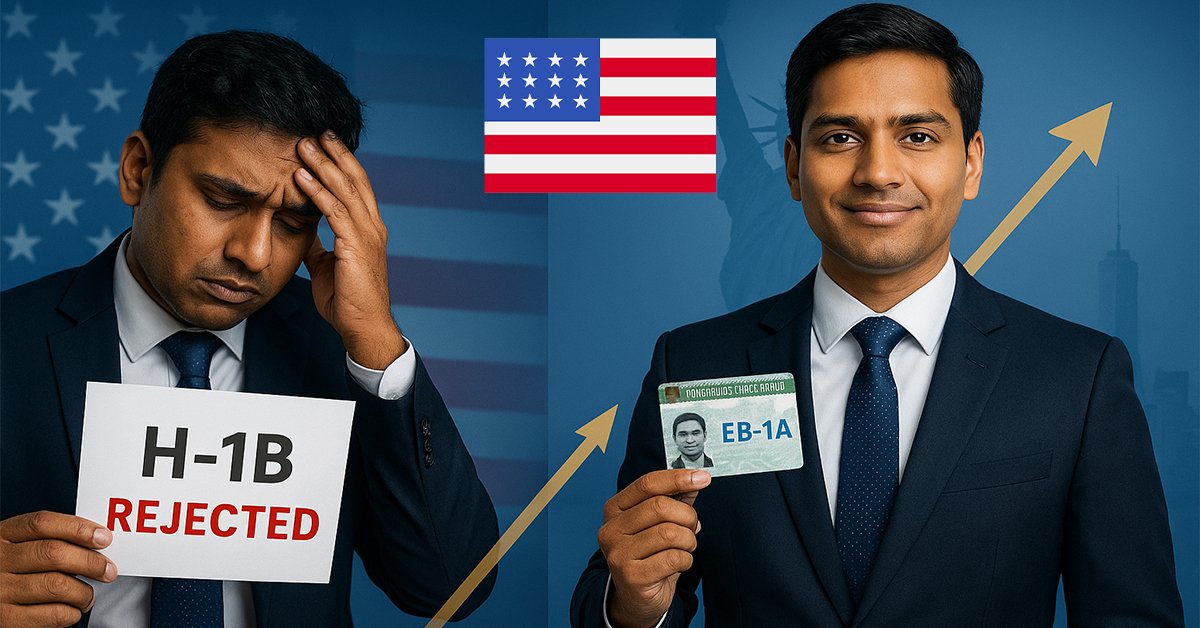

Understanding the Shift from H-1B to EB-1A Visas
As the United States implements stricter immigration policies under the Trump administration, Indian professionals are increasingly exploring alternative pathways to American residency. The EB-1A visa has emerged as a strategic option for high-achieving individuals seeking stability and independence from employer sponsorship.
What Is the EB-1A Visa?
The EB-1A (Employment-Based First Preference, Category A) is an immigrant visa designed for individuals with extraordinary ability in their field. Unlike traditional work visas, it offers a direct path to permanent residency without requiring employer sponsorship or job offers.
Key Features of EB-1A
Self-Petitioning Capability: Applicants can file independently without employer involvement, providing complete control over their immigration status.
No Labor Certification Required: Unlike H-1B and most employment-based green cards, EB-1A bypasses the time-consuming labor certification process.
Faster Processing Times: EB-1A applications typically move through the system more quickly than other employment-based categories, with significantly fewer country-based quota delays.
Direct Green Card Path: Successful applicants receive permanent residency immediately, eliminating the uncertainty of temporary visa renewals.
Why Indian Professionals Are Choosing EB-1A
Recent data shows a dramatic surge in EB-1A applications. The U.S. Citizenship and Immigration Services received approximately 7,300 EB-1A filings in Q1 2025, representing a 56% increase from the previous quarter. Overall, 2025 applications are tracking nearly 50% higher than the previous year.
The H-1B Challenges Driving the Shift
Indian professionals, who comprise over 70% of H-1B visa holders, face mounting obstacles:
Skyrocketing Costs: New H-1B applications cost $100,000 starting September 2025, up from $4,500, making the visa financially prohibitive for many employers and early-career professionals.
Employer Dependency: H-1B holders remain tied to their sponsoring employers, creating vulnerability during economic downturns and layoffs.
Extended Backlogs: EB-2 and EB-3 green card categories face decades-long waiting periods for Indian nationals, with some applicants waiting 13+ years.
Policy Uncertainty: Frequent policy changes and increased scrutiny create an unstable immigration environment.
EB-1A Eligibility Criteria
To qualify for EB-1A status, applicants must demonstrate extraordinary ability by meeting at least three of ten criteria established by USCIS:
- Major Awards: Receipt of nationally or internationally recognized prizes or awards for excellence
- Membership: Membership in associations requiring outstanding achievements
- Published Material: Press coverage about the applicant in major media or trade publications
- Judging: Participation as a judge of others’ work in the field
- Original Contributions: Significant original contributions of major significance to the field
- Scholarly Articles: Authorship of scholarly articles in professional publications
- Exhibitions: Display of work at artistic exhibitions or showcases
- Leading Role: Performance in a leading or critical role for distinguished organizations
- High Salary: Command of high salary or remuneration relative to others in the field
- Commercial Success: Commercial success in the performing arts
What “Extraordinary Ability” Really Means
Immigration experts emphasize that extraordinary ability doesn’t require global fame. The standard focuses on measurable impact and sustained professional achievement. Indian engineers, researchers, product managers, and business leaders increasingly qualify by demonstrating innovation and influence within their industries.
Who Should Consider the EB-1A Route?
The EB-1A pathway is particularly suitable for:
Technology Professionals: Software engineers, data scientists, and AI researchers with patents, publications, or significant contributions to major projects
Academic Researchers: Scientists and scholars with peer-reviewed publications, citations, and collaborative research projects
Business Leaders: Entrepreneurs and executives who have built companies, driven revenue growth, or led industry innovations
Healthcare Experts: Physicians, researchers, and medical professionals with specialized expertise and published research
Creative Professionals: Artists, designers, and content creators with awards, exhibitions, or commercial success
Building a Strong EB-1A Application
Success in the EB-1A category requires strategic preparation and comprehensive documentation:
Document Your Achievements
Gather evidence of professional accomplishments, including publications, patents, awards, media coverage, letters of recommendation from industry leaders, and metrics demonstrating your impact.
Demonstrate Sustained Excellence
Show a pattern of consistent achievement over time, not isolated successes. Your contributions should demonstrate ongoing national or international recognition.
- → 7 Essential Business Strategies Transforming Success in 2024
- → AI and Machine Learning in 2026: Transforming Business Through Intelligent Innovation
- → Canada Immigration Backlog Update 2026: What the Latest IRCC Data Really Means
- → Mass Flight Disruptions Across Asia: 2,186 Delays and 134 Cancellations Hit Major Airports in India, Japan, Thailand, Malaysia, UAE, Singapore, and Qatar
- → $800 CRA Payment in March 2026: Which Canadian Families Qualify and When to Expect Their Direct Deposit
- → $533 GST/HST Credit for March 2026: Payment Dates, Eligibility, and Everything Canadians Need to Know
- → Canada Medical Expense Tax Claims 2026: Everything You Need to Know Before Filing
Prove Future Intent
Clearly articulate how you plan to continue working in your field of extraordinary ability after receiving permanent residency.
Professional Presentation
Work with experienced immigration attorneys who understand EB-1A standards and can present your qualifications effectively to USCIS.
EB-1A vs. Other Immigration Options
EB-1A vs. H-1B
Cost: EB-1A filing fees ($700-$2,500) versus H-1B’s new $100,000 fee Control: Self-petition versus employer-dependent Timeline: Direct green card versus temporary status with uncertain renewal Job Flexibility: Complete freedom versus employer lock-in
EB-1A vs. EB-2 NIW (National Interest Waiver)
Standard: Extraordinary ability versus national interest demonstration Evidence Required: Three of ten criteria versus showing benefit to U.S. national interests Processing: Generally faster for EB-1A Eligibility: More stringent for EB-1A, broader for EB-2 NIW
EB-1A vs. EB-5 Investor Visa
Investment: No investment required for EB-1A versus $800,000-$1,050,000 for EB-5 Basis: Professional achievement versus capital investment Timeline: Similar processing times Risk: No financial risk for EB-1A versus investment risk for EB-5
Current Immigration Landscape for Indians
The Trump administration’s immigration policies have created both challenges and opportunities for Indian professionals:
Policy Changes Impact
Increased Scrutiny: Heightened review of employment-based immigration applications Merit-Based Focus: Preference for highly skilled professionals with demonstrable achievements “Gold Card” Consideration: Discussions of fast-track options for elite professionals align with EB-1A qualifications
Strategic Response
Immigration experts advise Indian professionals to:
Diversify Immigration Strategies: Don’t rely solely on H-1B; explore EB-1A, EB-2 NIW, and O-1 visas
Build Your Profile Proactively: Start documenting achievements early, even before deciding to apply
Stay Informed: Monitor policy changes through official USCIS channels and qualified immigration attorneys
Consider Multiple Pathways: Some professionals pursue H-1B while simultaneously building an EB-1A case
The Role of Legal Representation
Given the complexity of EB-1A applications and the high stakes involved, working with experienced immigration counsel is crucial. Qualified attorneys can:
- Assess whether you meet the extraordinary ability standard
- Identify which of the ten criteria you satisfy
- Gather and organize compelling evidence
- Draft persuasive petition letters
- Navigate USCIS requests for additional evidence
- Maximize approval chances through strategic presentation
Timeline and Processing
Standard Processing: 6-12 months on average Premium Processing: 15-45 days for expedited review (when available) Response to RFEs: Additional 2-3 months if USCIS requests more evidence
Unlike H-1B’s lottery system, EB-1A decisions are merit-based. Strong applications with comprehensive documentation have high approval rates.
Financial Considerations
EB-1A Costs
- USCIS Filing Fee: $700
- Attorney Fees: $5,000-$15,000 (depending on case complexity)
- Premium Processing: $2,500 (if available and desired)
- Document Translation/Preparation: $500-$2,000
ROI Analysis
Compared to H-1B’s $100,000 fee, multiple renewals, and potential green card application costs, EB-1A represents a cost-effective investment in permanent residency.
Common Mistakes to Avoid
Underestimating Your Qualifications: Many qualified professionals assume they don’t meet the extraordinary ability standard when they actually do.
Insufficient Documentation: Failing to provide comprehensive evidence supporting each criterion claimed.
Poor Organization: Submitting disorganized applications that make it difficult for USCIS officers to evaluate qualifications.
DIY Applications: Complex cases benefit significantly from professional legal guidance.
Waiting Too Long: Starting the process early allows time to build additional evidence if needed.
Success Stories and Trends
Indian professionals across various sectors are successfully obtaining EB-1A approval:
- Tech sector employees leveraging patents, open-source contributions, and industry recognition
- Academic researchers highlighting citations, publications, and collaborative projects
- Business leaders demonstrating company growth, revenue impact, and industry innovation
- Healthcare professionals showcasing specialized expertise and published research
Future Outlook
As H-1B restrictions continue and employment-based green card backlogs persist, EB-1A applications from Indian professionals are expected to maintain their upward trajectory. The category offers a viable path for talented individuals seeking immigration stability independent of employer sponsorship.
Immigration policy under the current administration emphasizes merit-based immigration, potentially making EB-1A an increasingly attractive option aligned with policy priorities.
Taking Action
If you’re an accomplished Indian professional considering U.S. immigration options:
- Self-Assessment: Honestly evaluate whether you meet at least three of the ten EB-1A criteria
- Gather Evidence: Start compiling documentation of your achievements systematically
- Consult Experts: Schedule consultations with immigration attorneys specializing in EB-1A cases
- Strengthen Your Profile: Identify areas where additional achievements could bolster your case
- Monitor Developments: Stay informed about policy changes affecting immigration options
Conclusion
The EB-1A visa represents more than just an alternative to H-1B—it’s a strategic pathway offering independence, stability, and direct permanent residency for Indian professionals with extraordinary abilities. As immigration policies continue evolving, understanding all available options empowers professionals to make informed decisions about their American Dream.
While the journey requires careful preparation and substantial documentation, the EB-1A route provides accomplished professionals with a merit-based pathway to U.S. permanent residency that aligns with current policy priorities and offers protection from the uncertainties affecting temporary work visas.
Disclaimer: This article provides general information about EB-1A visas and should not be considered legal advice. Immigration law is complex and constantly evolving. Consult qualified immigration attorneys for advice specific to your situation.
