
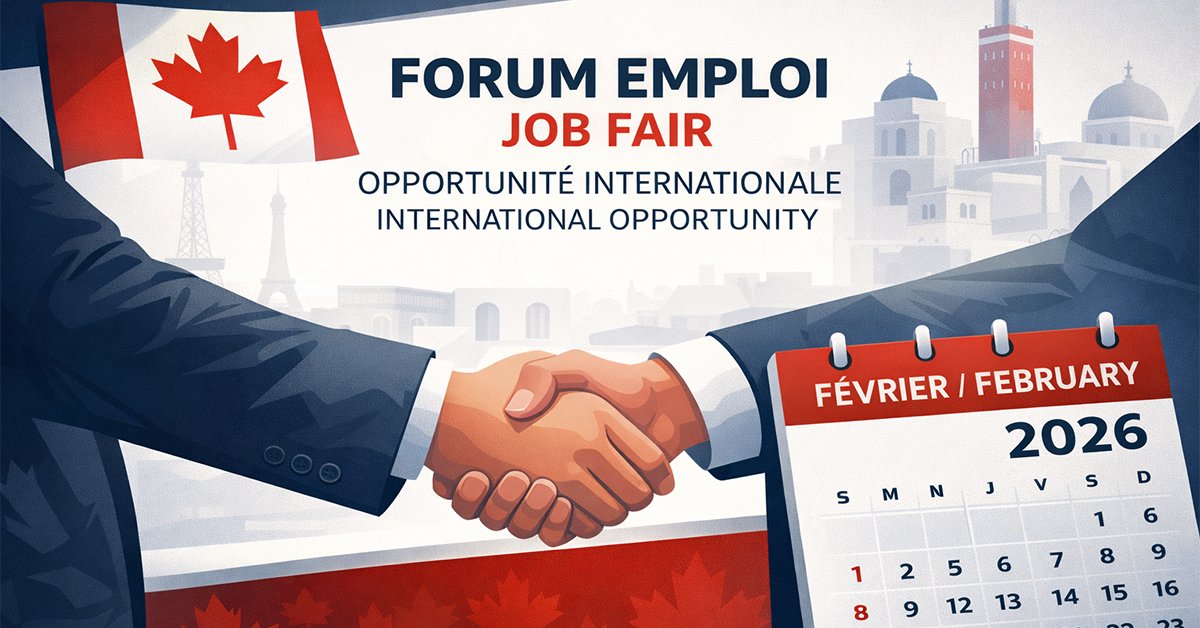

Imagine walking into a room where Canadian immigration officers, employers with open positions, and settlement agencies are all waiting to meet you. No recruitment fees. No application charges. Just you, your skills, and a chance to change your future.
That room exists, and registration just opened.
The Destination Canada Mobility Forum 2026 is accepting applications right now from French-speaking and bilingual professionals worldwide. Whether you’re a nurse in Tunisia, a teacher in France, or a construction worker in Morocco, this government-run event could be your most direct path to working and living in Canada outside Quebec.
But there’s a catch: space is limited, and the registration deadline is firm. If you’re serious about moving to Canada in 2026, here’s everything you need to know about this opportunity—and why missing it could mean waiting another year.
What Makes Destination Canada Different From Other Job Fairs
You’ve probably seen dozens of immigration seminars and job fairs promising connections and opportunities. Most charge registration fees, feature third-party recruiters, or offer vague “networking opportunities” that lead nowhere concrete.
Destination Canada isn’t that.
This is an official Government of Canada event organized by Immigration, Refugees and Citizenship Canada. The people you’ll meet aren’t middlemen—they’re the actual decision-makers, hiring managers, and immigration officials who control pathways into the country.
Three Core Purposes Drive the Forum
Immigration Pathway Clarity – Officers from IRCC explain exactly which programs you qualify for, what documentation you’ll need, and how processing timelines work. You’re getting information directly from the source, not filtered through consultants or online forums.
Direct Employer Recruitment – Canadian companies attend specifically to hire foreign workers. These aren’t “we’ll keep your resume on file” conversations. These are businesses facing real labor shortages who need qualified candidates immediately.
Settlement Support Introduction – You’ll meet representatives from Francophone communities across Canada who can explain what daily life looks like, where French services exist, and how settlement programs work in different provinces.
The forum combines all three elements into a structured, efficient format designed to move you from “thinking about Canada” to “taking concrete next steps.”
When and Where You Can Attend in 2026
The 2026 forum offers both virtual and in-person attendance options, expanding access for candidates regardless of location or travel constraints.
Virtual Forum Dates
February 2, 3, and 4, 2026
The online version runs across three consecutive days, allowing you to participate from anywhere with internet access. Sessions typically include live presentations, virtual employer booths, one-on-one consultations, and Q&A panels.
Virtual attendance works particularly well if you’re employed full-time, have family obligations, or simply prefer to explore opportunities from home before committing to travel.
In-Person Forum Locations
Tunis, Tunisia: February 9, 10, and 11, 2026
The Tunisia forum runs for three full days, providing extensive time for multiple employer meetings, detailed immigration consultations, and community presentations. This location serves Francophone candidates across North Africa and the Middle East region.
Paris, France: February 14, 2026
The Paris forum condenses into a single intensive day, ideal for European candidates who can travel easily to France. Despite the shorter timeframe, attendees still access the full range of employers and immigration resources.
Can You Attend Multiple Sessions?
Yes. You can apply for both the virtual forum and one in-person location, or just choose whichever format suits your circumstances best. Some candidates attend the virtual sessions for initial research, then follow up at an in-person event for deeper employer conversations.
However, receiving an invitation to apply doesn’t guarantee space at your preferred session. If demand exceeds capacity, organizers prioritize based on candidate profiles and employer needs.
Who Should Apply for This Forum
The Destination Canada Forum specifically targets French-speaking and bilingual professionals interested in settling outside Quebec. If you check several of these boxes, you’re likely an ideal candidate:
Language Requirements
You speak French fluently—whether as a native speaker, through education, or professional use. Alternatively, you’re bilingual in French and English, which makes you even more competitive since many Canadian employers value both languages.
The forum isn’t exclusively for native French speakers. If you’ve learned French as a second or third language and can communicate professionally, you meet the language requirement. What matters is functional fluency, not where or how you learned.
Professional Experience
You work in an occupation Canada actively recruits for. While the forum welcomes professionals from various backgrounds, certain sectors dominate employer participation:
Healthcare professionals including nurses, physicians, medical technicians, therapists, and support workers face critical shortages across Canadian provinces. If you work in healthcare and speak French, you’re among the most sought-after candidates.
Skilled trades like electricians, plumbers, welders, carpenters, and heavy equipment operators fill infrastructure and construction needs. Many provinces outside Quebec struggle to find enough French-speaking tradespeople.
Teachers and early childhood educators support French-language school systems and immersion programs. Elementary teachers, secondary subject specialists, and ECE professionals all find strong demand.
Technology and IT professionals with French-language skills help businesses serve bilingual markets. Software developers, network administrators, and cybersecurity specialists increasingly appear at these forums.
Transportation and logistics workers including truck drivers, warehouse supervisors, and supply chain coordinators address ongoing labor gaps in distribution and freight sectors.
You don’t need a job offer before applying. Employers attend specifically to meet candidates who aren’t yet connected with Canadian companies.
Immigration Readiness
You’re prepared to take action after the forum concludes. This might mean:
- Already having an Express Entry profile created (or being ready to create one immediately)
- Holding a valid language test result (TEF, TCF, or similar for French)
- Understanding your National Occupational Classification code
- Having educational credential assessments completed or in progress
- Being open to settling in provinces you might not have initially considered
The forum isn’t an immigration guarantee—it’s a catalyst that accelerates processes you’ll need to complete yourself.
Geographic Flexibility
You’re genuinely open to living outside Quebec. Many Francophone immigrants naturally gravitate toward Quebec, but this forum specifically promotes opportunities in provinces and territories where French-speaking communities need growth.
Strong Francophone communities exist in Ontario (Ottawa, Toronto), New Brunswick (Moncton, Fredericton), Manitoba (Winnipeg, Saint-Boniface), Alberta (Edmonton, Calgary), and British Columbia (Vancouver, Victoria). Smaller but active communities thrive in Saskatchewan, Nova Scotia, and other provinces.
How Employer Recruitment Actually Works at the Forum
Understanding what employers expect helps you prepare effectively and maximize your chances of success.
What Sectors Need Workers Most
The participating employer list changes each year based on current labor market needs, but several sectors consistently face shortages:
Construction and skilled trades require workers at all skill levels, from apprentices to master tradespeople. With major infrastructure projects planned across Canada, demand continues growing.
Healthcare and nursing represents the single largest recruitment focus. Hospitals, clinics, long-term care facilities, and mental health services all actively recruit French-speaking professionals.
Education sectors need both licensed teachers for public schools and early childhood educators for daycare centers and preschools. Some provinces offer expedited licensing for foreign-trained teachers.
Hospitality and tourism includes hotels, restaurants, resorts, and tourism operations in Francophone regions. Seasonal operations often lead to permanent positions for strong performers.
Manufacturing and industrial services cover production workers, quality control specialists, machine operators, and supervisory roles in factories and processing plants.
What Employers Look For
Employers attending Destination Canada aren’t browsing resumes out of curiosity. They’re making hiring decisions, sometimes on the spot.
Legal work authorization potential – Can you obtain a work permit? Do you meet Express Entry criteria? Have you researched Provincial Nominee Programs? Employers want candidates who understand their immigration pathway.
Realistic salary expectations – Research typical Canadian salaries in your field and region. Employers appreciate candidates who’ve done homework rather than stating unrealistic compensation demands.
Genuine interest in their location – Don’t just say you’re open to anywhere. Research specific provinces, understand climate differences, and articulate why you’d thrive in that particular community.
Professional credentials – Bring documentation proving your qualifications. For regulated professions like nursing or engineering, understand licensing requirements in advance.
Communication skills – Your French proficiency matters during these conversations. If you’re bilingual, demonstrate both languages naturally rather than switching awkwardly.
Step-by-Step Registration Process
Registration seems straightforward, but several critical details trip up applicants every year.
The Official Registration Deadline
January 11, 2026 at 17:59 Eastern Time
This deadline is absolute. Late submissions aren’t accepted regardless of circumstances. The registration system closes precisely at this time, so don’t wait until the final day.
How to Complete Your Application
Visit the official Destination Canada website and locate the 2026 forum registration form. You’ll need to provide:
Personal information including full legal name, date of birth, citizenship, and current contact details. Use information exactly as it appears on your passport.
Language proficiency details specifying your French level and any English proficiency. Official test scores aren’t required for registration, but having them strengthens your application.
Education background listing your highest degree, field of study, and institution. For technical or vocational training, include certification details.
Work experience covering your current occupation, years of experience, and specific skills. Focus on roles relevant to Canadian labor market needs.
Immigration status and history indicating any previous Canadian visa applications, visits to Canada, or existing Express Entry profiles.
Forum preferences selecting virtual attendance, in-person location, or both options. You can choose multiple preferences, but space availability varies.
Critical Registration Warnings
The registration system has specific quirks that cause problems if you’re not careful:
No confirmation email is sent – After submitting, you’ll only see a confirmation message on the final page. Screenshot this page as your only proof of submission.
Forms cannot be edited – Once you click submit, that’s it. Review every field multiple times before finalizing. Spelling errors, wrong dates, or incorrect occupation codes cannot be fixed later.
Multiple submissions don’t help – If you submit more than once (thinking it improves chances), only your first submission counts. Subsequent forms are automatically discarded.
Incomplete applications hurt your chances – Leaving fields blank or providing vague answers reduces your likelihood of receiving an invitation. Take time to provide complete, accurate information.
Understanding Invitations and Selection
Registration doesn’t guarantee attendance. Organizers review all applications and issue invitations based on capacity and candidate fit.
How Selection Works
The selection process isn’t random or first-come-first-served. Officials prioritize candidates based on several factors:
Employer demand alignment – If participating employers need nurses and you’re a registered nurse, your chances improve significantly. If your occupation isn’t in high demand, you’re less likely to receive an invitation.
Immigration program eligibility – Candidates who already meet Express Entry criteria or have strong Provincial Nominee Program potential get priority because they can actually convert forum connections into immigration success.
Language proficiency strength – Higher French proficiency increases your chances, especially if you also speak English well.
Geographic flexibility – Willingness to consider multiple provinces improves your prospects over candidates fixated on one specific city.
Application completeness – A thoroughly completed registration form demonstrates seriousness and attention to detail.
What Happens After Registration
After January 11, organizers review applications and begin issuing invitations. If selected, you’ll receive an official invitation email (unlike registration, invitations DO come via email) with:
- Confirmation of which session(s) you may attend
- Instructions for confirming your attendance
- Pre-forum preparation materials
- Technical details for virtual access or venue information for in-person events
You typically need to confirm your attendance within a specific timeframe. Missing this confirmation deadline could forfeit your spot to another candidate.
What the Forum Can and Cannot Do for You
Managing expectations is crucial. The Destination Canada Forum opens doors, but it’s not an automatic immigration approval.
What You Gain From Attending
Direct access to immigration information – Ask IRCC officers specific questions about your situation, get clarification on documentation requirements, and understand processing timelines from official sources.
Employer introductions – Meet hiring managers face-to-face (virtually or in-person), discuss available positions, and sometimes receive job offers or commitments to continue conversations after the forum.
Settlement insights – Learn about housing costs, French-language services, school systems, community organizations, and daily life details you can’t easily research online.
Professional networking – Connect with other candidates, learn from their experiences, and build a support network for your immigration journey.
Provincial program awareness – Discover Provincial Nominee Programs you didn’t know existed or weren’t considering.
What the Forum Does NOT Provide
No guaranteed work permits – Attending doesn’t automatically grant you the right to work in Canada. You still need to go through normal work permit or permanent residence processes.
No guaranteed job offers – Employers may express interest, ask for more information, or promise to follow up, but signed employment contracts aren’t distributed like raffle tickets.
No immigration approvals – IRCC officers provide information and guidance, but they don’t process applications or make immigration decisions at the forum itself.
No fast-track processing – Forum attendance doesn’t move your application to the front of any queue. Standard processing times still apply.
Think of the forum as the most productive day of research and networking you could possibly have—compressed into a structured event with the right people in the room. What you do with those connections afterward determines your success.
Preparing for Maximum Forum Impact
Many attendees waste their opportunity by showing up unprepared. Don’t be one of them.
Before You Register
Research your NOC code – Canada’s National Occupational Classification system categorizes jobs. Know which NOC code matches your occupation because employers and immigration officers use this system constantly.
Take language tests – Even though official scores aren’t required for registration, having recent TEF or TCF results (for French) and IELTS or CELPIP results (for English) strengthens conversations with employers and immigration officials.
Create your Express Entry profile – If you’re eligible, having an active profile demonstrates serious intent. If you’re not eligible, understand why and what you need to change.
Calculate your CRS score – The Comprehensive Ranking System score determines your Express Entry competitiveness. Know your current score and what factors could improve it.
Research Canadian credential recognition – For regulated professions, understand what steps you’ll need to take to practice in Canada. Some provinces have easier recognition processes than others.
If You Receive an Invitation
Prepare your elevator pitch – You’ll have limited time with each employer. Develop a concise, compelling summary of your experience, skills, and why you’re interested in Canada.
Bring documentation – Whether virtual or in-person, have digital copies of your resume, educational certificates, work references, language test results, and professional licenses ready to share.
Research participating employers – If organizers share the employer list before the event, research each company. Understand their business, location, and what positions they typically need.
Dress professionally – Even for virtual attendance, professional appearance matters. First impressions influence whether employers continue conversations after the forum.
Prepare thoughtful questions – Don’t just answer employer questions. Ask about workplace culture, language use on the job, relocation support, and pathways to permanent residence.
During the Forum
Arrive early and stay late – Don’t just attend your scheduled appointments. Participate in presentations, visit multiple employer booths, and maximize your time at the event.
Take detailed notes – You’ll meet many people and receive lots of information. Note names, companies, specific programs mentioned, and follow-up actions required.
- → 7 Essential Business Strategies Transforming Success in 2024
- → AI and Machine Learning in 2026: Transforming Business Through Intelligent Innovation
- → Canada Immigration Backlog Update 2026: What the Latest IRCC Data Really Means
- → Mass Flight Disruptions Across Asia: 2,186 Delays and 134 Cancellations Hit Major Airports in India, Japan, Thailand, Malaysia, UAE, Singapore, and Qatar
- → $800 CRA Payment in March 2026: Which Canadian Families Qualify and When to Expect Their Direct Deposit
- → $533 GST/HST Credit for March 2026: Payment Dates, Eligibility, and Everything Canadians Need to Know
- → Canada Medical Expense Tax Claims 2026: Everything You Need to Know Before Filing
Be honest about your timeline – If you can’t relocate for six months due to personal circumstances, say so. Honesty prevents wasting everyone’s time on unrealistic opportunities.
Collect contact information – Get business cards or email addresses from everyone you speak with. Following up properly after the forum often matters more than the initial conversation.
Attend general information sessions – These presentations cover immigration programs, settlement services, and community resources that individual conversations might miss.
Why 2026 Is a Strategic Year for French-Speaking Candidates
Canada’s commitment to Francophone immigration has never been stronger, and the numbers prove it.
The Government’s Increasing Francophone Targets
The federal immigration levels plan sets clear targets for French-speaking permanent residents outside Quebec reaching 9% in 2026, climbing toward 10.5% by 2028. These aren’t vague aspirations—they’re official government commitments backed by funding and programming.
To put this in context, Canada admitted 4.7% French-speaking permanent residents outside Quebec in 2023. Jumping to 9% in 2026 represents nearly double the volume of Francophone admissions in just three years.
This aggressive increase means more Express Entry invitations for French speakers, more Provincial Nominee Program streams targeting Francophones, and more employer recruitment efforts like Destination Canada.
Why This Growth Matters for You
Express Entry advantages – French-language proficiency draws consistently feature lower Comprehensive Ranking System score cutoffs than general draws. In 2025, French-proficiency draws accounted for the largest number of invitations of any draw type.
Additional CRS points – Strong French proficiency adds up to 50 points to your Express Entry score. Being bilingual (French and English) can add even more, dramatically improving your ranking.
Provincial priority – Ontario, New Brunswick, Manitoba, and other provinces have specific streams targeting French speakers. You’re competing against a smaller candidate pool for these allocations.
Settlement support – The federal government invested $3.6 million in new Francophone immigration programs in 2025, expanding recruitment, promotion, and integration services for French-speaking newcomers.
Community need – Francophone minority communities outside Quebec need population growth to maintain services, schools, and cultural institutions. This demographic reality drives sustained political support for Francophone immigration.
Taking Action After the Forum
The forum is the beginning, not the end. What you do in the weeks following your attendance often determines whether you actually immigrate.
Following Up With Employers
If employers expressed interest during the forum, follow up within one week. Send a personalized email referencing your conversation, attach requested documents, and propose next steps.
Many candidates fail at this stage. They meet interested employers but never send that follow-up email, or they wait so long the employer has filled positions with more responsive candidates.
Advancing Your Immigration Application
Use information gathered at the forum to take concrete immigration steps:
- Complete your Express Entry profile if you haven’t already
- Apply to Provincial Nominee Programs discussed during the forum
- Order educational credential assessments for regulated professions
- Book licensing exams or certification processes
- Retake language tests to improve scores if needed
Connecting With Settlement Services
Organizations you met at the forum can help before you even arrive in Canada. They often provide:
- Pre-arrival orientation sessions
- Housing search assistance
- Job search resources and resume review
- Information about French-language services
- Connections to community groups and social networks
Don’t wait until you land in Canada to engage with these services. Starting relationships early makes your eventual transition much smoother.
Common Mistakes That Waste This Opportunity
Mistake 1: Applying Without Research
Some candidates register because it’s free, not because they’re serious about immigration. They haven’t checked their Express Entry eligibility, don’t know their NOC code, and haven’t researched credential recognition.
This wastes the invitation that could have gone to a prepared candidate.
Mistake 2: Being Too Picky About Location
Canada is enormous and diverse. Refusing to consider any province except Ontario or British Columbia eliminates most opportunities, especially for French speakers.
The strongest Francophone communities outside Quebec exist in less obvious places. Being flexible about location dramatically improves your chances.
Mistake 3: Expecting Instant Results
Immigration processes take time. Even if you receive a job offer at the forum, processing work permits or permanent residence applications can take months.
Candidates who expect to move to Canada within weeks of attending the forum inevitably face disappointment.
Mistake 4: Failing to Follow Up
You had great conversations at the forum, collected business cards, and felt optimistic about your prospects. Then life got busy and you never sent those follow-up emails.
One month later, you wonder why nothing has happened. The answer: you stopped participating in your own immigration process.
Mistake 5: Ignoring Immigration Requirements
Some candidates focus entirely on finding jobs while ignoring whether they actually meet immigration program requirements. A job offer helps, but it doesn’t override Express Entry criteria, Provincial Nominee Program rules, or work permit requirements.
Understanding immigration pathways matters as much as impressing employers.
How This Forum Fits Into Canada’s Broader Immigration Strategy
The Destination Canada Mobility Forum isn’t an isolated event. It’s part of a comprehensive government strategy to increase Francophone immigration and strengthen French-speaking communities across Canada.
Policy Context
The modernized Official Languages Act now requires the federal government to restore and increase the demographic weight of Francophone minority communities. This isn’t optional—it’s legislated.
Immigration represents one of the few ways to reverse declining French-speaking populations in provinces outside Quebec. Natural population growth won’t solve this challenge, so immigration becomes essential.
Long-Term Government Commitment
Canada’s immigration targets explicitly state Francophone admission goals for multiple years ahead. The government hasn’t just committed to 2026 targets—they’ve outlined a path to 12% by 2029.
This multi-year horizon means Francophone immigration advantages will persist well beyond 2026. If you can’t attend the 2026 forum, future editions will continue offering similar opportunities.
Provincial and Community Involvement
The forum works because provinces, employers, and community organizations all participate actively. They’re not attending out of charity—they need French-speaking workers and new community members.
This alignment of interests creates genuine opportunities rather than empty promises.
Making Your Decision
Registration requires only 20-30 minutes, costs nothing, and could open doors to opportunities you won’t find anywhere else.
Ask yourself these questions:
- Do I seriously want to live and work in Canada?
- Can I speak French professionally?
- Am I willing to settle outside Quebec?
- Would I benefit from direct access to employers and immigration officials?
If you answered yes to all four questions, register before the January 11 deadline.
Even if you’re unsure about your immigration timeline or which province interests you most, attending the forum helps you make informed decisions based on real information rather than internet speculation.
The worst outcome? You spend a few hours at the virtual or in-person forum and decide Canada isn’t right for you. The best outcome? You meet an employer who offers you a job, connect with immigration officials who clarify your pathway, and start building the Canadian future you’ve been researching for months or years.
That potential upside makes registration worth your time.
Frequently Asked Questions
Q: Do I need a job offer to register?
No. The forum specifically connects candidates with employers, so you don’t need an existing job offer. However, having relevant work experience in in-demand occupations improves your chances of receiving an invitation.
Q: Can I attend if I only speak basic French?
Professional French fluency is expected. If you can conduct business conversations, explain your work experience, and understand immigration discussions in French, you likely meet the standard. Basic conversational French isn’t sufficient.
Q: What if I can’t travel to Tunisia or France?
Attend the virtual forum held February 2-4, 2026. Virtual participation provides nearly all the same benefits as in-person attendance, including employer meetings and immigration consultations.
Q: Will attending guarantee I get invited to apply for permanent residence?
No. The forum provides information, connections, and opportunities, but immigration approval depends on meeting program requirements and completing applications through normal channels.
Q: Can I bring family members to the in-person forums?
The forums are designed for individual participants. Family members typically aren’t included in invitations, though some presentations may cover family immigration and settlement.
Q: How much does it cost to attend?
Attendance is completely free. However, you’re responsible for your own travel, accommodation, and related expenses if attending an in-person forum.
Q: Do I need to already have an Express Entry profile?
No, but having one demonstrates immigration readiness and makes conversations with employers more productive. If you’re eligible, create your profile before attending.
Q: What happens if I register but don’t receive an invitation?
Not all registered candidates receive invitations due to capacity limits. You can try again at future forums, and registration still helps you organize your thoughts about immigration readiness.
