
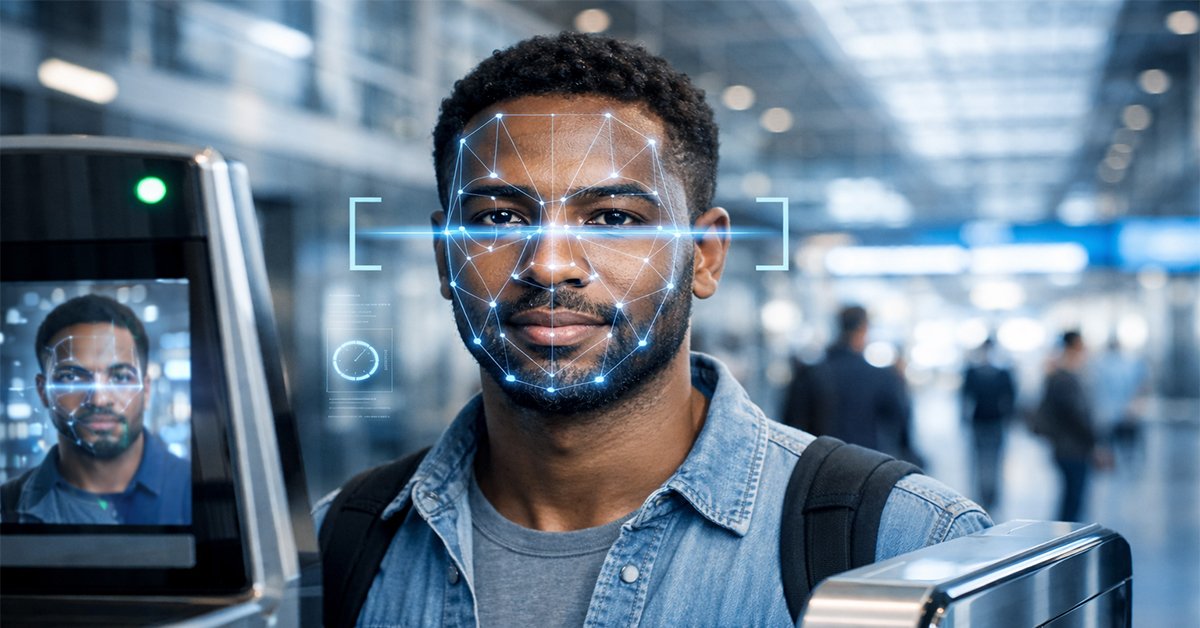

The future of air travel has arrived, and it’s looking right at you—literally. Biometric face scanning has transformed from a futuristic concept into standard procedure at airports around the world. What was once an optional convenience feature has become an integral part of how millions of travelers move through immigration, security, and boarding.
If you’re planning international travel, there’s a good chance your face will be scanned, stored, and verified against government databases. Here’s everything you need to know about where this technology is mandatory and what it means for your privacy.
Why Airports Are Switching to Facial Recognition
The shift toward biometric technology isn’t happening by accident. Airports and governments cite compelling reasons for the change:
Speed matters. Traditional passport checks can take 45-60 seconds per person. Biometric systems cut this down to 10-20 seconds, dramatically reducing queue times during peak travel periods.
Accuracy is impressive. Modern facial recognition systems claim accuracy rates above 97%, with some airports reporting success rates near 99%. This reduces identity fraud and improves border security.
Operational efficiency. Processing times have dropped by 30-50% at airports using biometric systems, allowing facilities to handle growing passenger volumes without expanding physical infrastructure.
But speed and security come with trade-offs. Privacy advocates raise concerns about data retention, government surveillance, and the lack of meaningful consent when these systems become mandatory rather than optional.
The 12 Airports Where Face Scanning Is Now Standard
1. John F. Kennedy International Airport (JFK), New York
Annual Passengers: 62 million
Biometric Gates: 130+
Accuracy Rate: 98%+
- → 7 Essential Business Strategies Transforming Success in 2024
- → AI and Machine Learning in 2026: Transforming Business Through Intelligent Innovation
- → Canada Immigration Backlog Update 2026: What the Latest IRCC Data Really Means
- → Mass Flight Disruptions Across Asia: 2,186 Delays and 134 Cancellations Hit Major Airports in India, Japan, Thailand, Malaysia, UAE, Singapore, and Qatar
- → $800 CRA Payment in March 2026: Which Canadian Families Qualify and When to Expect Their Direct Deposit
- → $533 GST/HST Credit for March 2026: Payment Dates, Eligibility, and Everything Canadians Need to Know
- → Canada Medical Expense Tax Claims 2026: Everything You Need to Know Before Filing
JFK has become one of America’s most biometric-intensive airports. International arrivals face facial comparison as part of standard border processing, with the system matching faces against passport photos in seconds. While technically an opt-out exists, the immigration process effectively requires face capture for the vast majority of passengers.
2. Los Angeles International Airport (LAX)
Annual Passengers: 75 million
Biometric Gates: 40+
Processing Time: 10-15 seconds
LAX has integrated facial recognition throughout both international arrivals and many departure processes. The system connects with passport databases, airline manifests, and exit records, helping authorities track visa compliance. Average verification now takes a fraction of the time compared to traditional document checks.
3. London Heathrow Airport, United Kingdom
Annual Passengers: 80 million
Automated Gates: 250+
Accuracy Rate: 99%
Heathrow relies heavily on biometric e-gates where eligible travelers must present their passport and undergo facial comparison. For many nationalities, using these gates represents the primary legal entry method. The system has dramatically reduced immigration queues that once stretched beyond 40 minutes during busy periods.
4. Singapore Changi Airport
Annual Passengers: 68 million
Automated Lanes: 120+
Processing Time: Under 20 seconds
Changi has pioneered the concept of a complete biometric journey, where your face becomes your passport from immigration through boarding. With hybrid iris-and-face verification and some of the world’s fastest clearance speeds, the airport has created a largely document-free travel experience.
5. Dubai International Airport, UAE
Annual Passengers: 86 million
Biometric Kiosks: 120+
Daily Volume: 240,000+ passengers
Dubai has implemented extensive face-scanning corridors and smart gates across multiple terminals. The system processes travelers in 9-15 seconds with security reliability above 97%. Many residents and frequent visitors are automatically enrolled, making biometric verification a core part of the border control experience.
6. Abu Dhabi Zayed International Airport, UAE
Annual Capacity: 45 million
Accuracy Rate: 97%+
Efficiency Gain: 40%
Abu Dhabi’s new airport was designed with biometrics at its core. Facial recognition checkpoints span check-in, security, immigration, and boarding, reducing the need for traditional boarding passes. The seamless digital identity confirmation occurs at multiple control points throughout the passenger journey.
7. Paris Charles de Gaulle Airport (CDG), France
Annual Passengers: 72 million
Automated Gates: Hundreds
Queue Reduction: From 50+ minutes to under 20
Charles de Gaulle integrates biometric checks within the European border regime, using facial comparison combined with passport chip data. The system builds digital profiles and records entries and exits, making biometric submission essentially required for lawful processing at key control points.
8. Frankfurt Airport, Germany
Annual Passengers: 60 million
Recognition Units: 100+
Accuracy Rate: 98%
Frankfurt has embedded large-scale biometric verification into airport security and border control. International travelers now move through immigration primarily via biometric confirmation rather than manual inspection, making face scanning a structural requirement rather than an optional feature.
9. Amsterdam Schiphol Airport, Netherlands
Annual Passengers: 70 million
Automated Lanes: 90
Accuracy Rate: 97%
Schiphol has positioned biometric control as essential infrastructure. Automated lanes conduct facial comparison against passport data for European entry and exit checks, with frequent flyers often enrolled in programs that allow smooth movement from security to gate.
10. Tokyo Narita Airport, Japan
Annual Passengers: 40 million
Biometric Lanes: 80+
Accuracy Rate: 96%+
Narita uses comprehensive facial recognition for immigration and many boarding points, with processing speeds improving by nearly 30%. Connected databases record entry, exit, and traveler compliance, making biometric scanning deeply embedded in movement control.
11. Toronto Pearson International Airport, Canada
Annual Passengers: 50 million
Kiosks and Lanes: 100+
Accuracy Rate: 97%+
Pearson uses biometric face scanning as central to border inspection for international arrivals. Facial images link to passports and travel declarations, with inspection times cut nearly in half compared to traditional methods. The data integrates into national immigration databases for compliance and identity assurance.
12. Incheon International Airport, South Korea
Annual Passengers: 70 million
Automated Gates: 90+
Efficiency Gain: 35%+
Incheon has invested heavily in biometric face recognition across immigration, security, and boarding. For many passengers, biometric verification now forms the primary identity method, replacing lengthy traditional inspections entirely.
What Happens to Your Facial Data?
This is where things get murky. Different countries have different rules:
United States: U.S. Customs and Border Protection stores facial images of non-citizens for up to 75 years. Images of U.S. citizens are supposed to be deleted within 12 hours, though the system still captures them.
European Union: GDPR provides some protections, but border security databases can retain biometric data for extended periods under national security provisions.
Other Countries: Policies vary widely, with some countries offering little transparency about data retention, sharing, or usage beyond border control.
The key concern isn’t just how long data is stored, but who has access to it and how it might be used beyond the stated purpose of identity verification.
Can You Opt Out?
Technically, yes—but practically, it’s complicated.
In the U.S., citizens can request manual document inspection instead of facial recognition, but this may result in significant delays and additional questioning. Many travelers report that airport staff are unfamiliar with opt-out procedures or actively discourage them.
In the EU, travelers generally have rights under GDPR to refuse biometric processing, but this may not apply at border control points where national security takes precedence.
In other countries, opt-out options are often non-existent or so inconvenient that they’re not realistic alternatives.
What This Means for Future Travel
The expansion of mandatory biometric scanning represents a fundamental shift in how we think about travel and privacy. Consider these implications:
Permanent digital records of your movements across borders are now standard practice at major airports worldwide.
Integration with other systems means your facial data could eventually link to hotel check-ins, rental cars, or other travel services.
Expansion beyond airports is already happening, with facial recognition appearing in train stations, stadiums, and public spaces in some countries.
Limited recourse exists if you’re misidentified or if your data is compromised, as legal frameworks struggle to keep pace with technology.
Practical Tips for Travelers
If you’re concerned about biometric scanning but need to travel:
- Research your rights before you travel. Know what opt-out options exist at your departure and arrival airports.
- Expect delays if you choose to opt out. Budget extra time and be prepared for additional questioning.
- Document your experience if you face pressure to comply with biometric scanning against your wishes.
- Stay informed about privacy policies. Countries and airports frequently update their data retention and sharing practices.
- Use privacy advocacy resources from organizations like the Electronic Frontier Foundation (EFF) or the American Civil Liberties Union (ACLU) for updated guidance.
The Bottom Line
Biometric face scanning at airports has moved from experimental technology to standard infrastructure at the world’s busiest travel hubs. Whether this represents progress or overreach depends largely on your perspective—and your comfort level with governments maintaining permanent digital records of your face and travel patterns.
What’s clear is that this technology isn’t going away. If anything, it’s expanding. Understanding where it’s mandatory, how it works, and what rights you have is now an essential part of international travel literacy.
Before your next trip, take time to understand the biometric policies at your departure and arrival airports. Your face may be your passport, but you should know exactly where that passport is being filed.
