
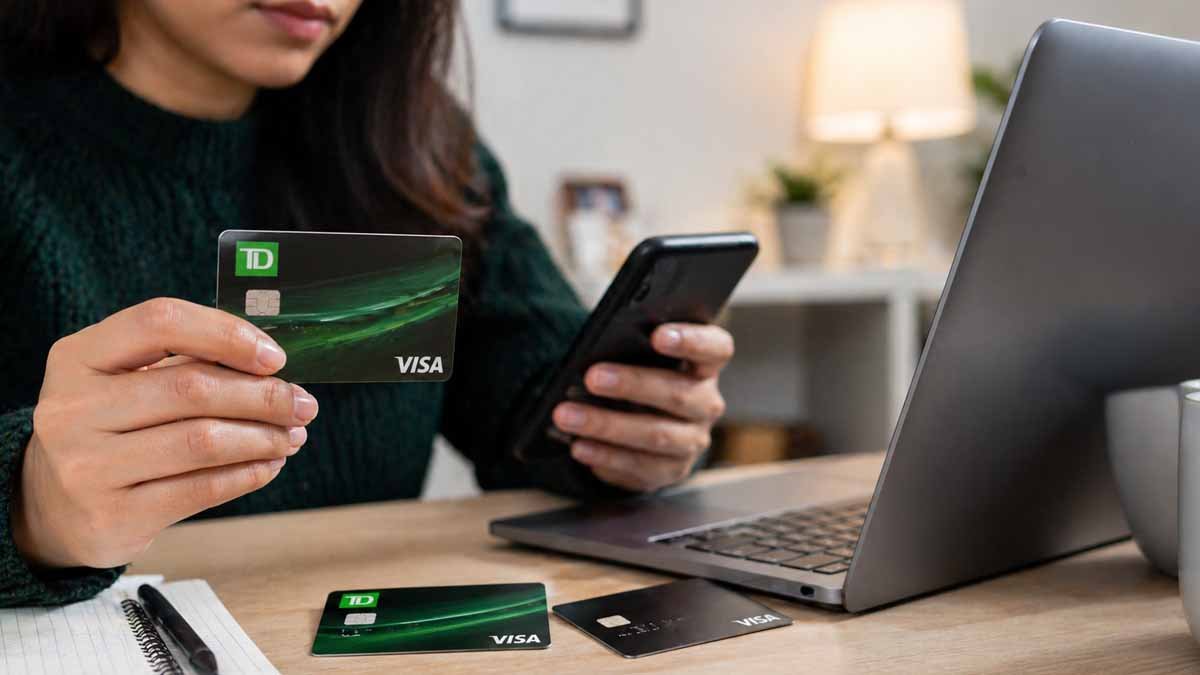

A recent real-life experience with a TD Visa credit card highlights an issue many Canadians may not fully understand: cancelling and replacing your credit card does not always guarantee that future charges will be blocked. This case, based on a detailed timeline of events, customer support interactions, and official responses, raises important questions about how modern payment systems handle recurring transactions and merchant billing connections.
This guide explains what happened, why it matters in 2026, and what every Canadian cardholder should know to protect themselves.
How the Problem Started with a Free Trial
The situation began on April 8, 2026, after signing up for a software service offering a three-day free trial. The process appeared straightforward, but things quickly went wrong.
After entering credit card details, the platform failed to function properly. The onboarding process froze, and there was no way to access an account dashboard or cancel the trial. This turned what should have been a simple subscription into a financial concern.
Recognizing the risk of an upcoming charge, immediate action was taken by contacting both the service provider and TD the same day.
Immediate Action Taken with TD and the Merchant
The service provider was contacted first, but due to limited access to the account, cancellation could not be completed directly.
A call was then made to TD’s credit card support, clearly explaining:
- The free trial structure
- The expected future charge
- The inability to cancel through the website
TD’s solution was to cancel the existing card and issue a replacement with a new number and security code. From a customer perspective, this seemed like a reliable way to prevent the charge.
However, the outcome proved otherwise.
Technical Issue Confirmed by the SaaS Company
Shortly after, the service provider confirmed that a technical bug had caused the onboarding failure. The issue was related to how the platform handled certain inputs during setup.
While the company fixed the problem and offered a fresh trial, the assumption remained that the original card cancellation would block any future charges tied to the initial attempt.
This assumption turned out to be incorrect.
Replacement Card Error Raises Concerns
When the replacement TD Visa card arrived on April 13, it contained an unexpected issue. Instead of displaying the cardholder’s name correctly, the card showed an error message indicating missing information.
This raised serious concerns about card production quality and security. After reporting the issue, TD acknowledged the mistake and later issued a written apology, attributing the problem to a system error.
While concerning, this was only part of the overall issue.
The Charge Still Went Through
Despite cancelling the original card before the trial period ended, the charge was processed on April 17 and posted on April 20.
This raised a critical question: how could a transaction be completed using a card that had already been cancelled?
Initially, the explanation pointed back to the standard advice of cancelling directly with the merchant. However, this did not fully address the situation, as both the merchant and the bank had already been contacted in advance.
The Real Issue: Backend Payment Tokens
On April 30, TD provided a more detailed explanation. The transaction went through because a backend payment token linked to the original card had not been removed.
This token allowed the merchant’s system to continue processing the payment, even after the card was cancelled and replaced.
This detail is crucial. It reveals that modern payment systems often rely on stored credentials, tokens, or “card-on-file” mechanisms that can persist beyond card replacement.
- → Need a Passport Fast? How to Expedite Your U.S. Passport Renewal Step-by-Step
- → Want a $60K+ Salary Without a 4-Year Degree? 15 Certificates You Can Finish in Under a Year
- → Planning a Trip to Europe? 6 Essential Entry Rules to Avoid Denial at the Border
- → Heading to Border Control? Key Immigration Questions You Must Be Ready to Answer
- → Planning a European Trip? What Starkville’s Indian Community Should Know About Schengen Visas
- → 11 Countries Offering Funded Ph.D. Programs for International Students
- → U.S. Dollar Reaches Two-Week High Driven by Middle East Tensions and Fed Policy Outlook
As a result, simply issuing a new card number may not always break the connection between a merchant and your account.
Why Cancelling with the Merchant Was Not Enough
In most cases, cancelling directly with the service provider is the correct approach. However, this situation was different.
The account could not be accessed due to a technical issue. The bank was informed before the charge occurred. The recommended action—card cancellation—was followed.
Yet the charge still went through.
This highlights a gap between consumer expectations and how payment systems actually function behind the scenes.
What Canadians Need to Understand About Card Replacement
Many people assume that replacing a credit card automatically stops all future charges linked to the old card. In reality, payment networks may update merchant billing credentials automatically in some cases.
This is designed to prevent disruptions for legitimate subscriptions, but it can also allow unwanted charges to continue if backend connections remain active.
The key takeaway is that card replacement alone may not be enough to stop recurring or pre-authorized payments.
Important Questions to Ask Your Bank
If you are replacing your credit card to block a specific merchant, you should go beyond requesting a new card.
Ask your bank:
- Has the merchant token been removed or blocked?
- Are any recurring billing credentials still active?
- Can the merchant be prevented from charging again?
- Are there any digital wallet or network token links still connected?
- Can confirmation be provided in writing?
These questions can help ensure that all potential payment pathways are fully disabled.
What to Do If This Happens to You
If a charge appears after replacing your card, take immediate action:
- Contact the merchant and request cancellation and refund confirmation
- Notify your bank and request a detailed explanation of how the charge occurred
- Ask specifically about tokens, recurring billing, and stored credentials
- Keep records of all communication
Canadian consumer protection guidelines state that liability for unauthorized credit card transactions is generally limited, provided the customer was not negligent.
Documenting your actions can strengthen your case if a dispute arises.
Why This Matters in 2026
As digital payments evolve, systems like tokenization and automatic account updating are becoming more common. While they improve convenience, they also introduce new complexities for consumers.
With increasing reliance on subscriptions, online services, and stored payment details, understanding how these systems work is essential for financial safety.
This case shows that traditional assumptions about card security may no longer fully apply in a digital-first environment.
Conclusion
The experience outlined here serves as an important warning for Canadian credit card users. Cancelling and replacing a credit card does not always guarantee that future charges will be stopped, especially when backend payment tokens or stored credentials remain active.
In 2026, protecting yourself requires more than just quick action. It requires asking the right questions, understanding how modern payment systems operate, and ensuring that all connections between your card and a merchant are fully removed.
Being informed and proactive can make the difference between preventing an unwanted charge and dealing with it after the fact.
Frequently Asked Questions (FAQs)
Does cancelling a credit card stop all future payments?
Not always. Some payments may still go through if linked to active tokens or stored credentials.
What is a payment token?
It is a secure digital reference to your card details used by merchants for recurring or stored payments.
Can a merchant still charge a replaced card?
Yes, in some cases, if backend systems update billing information automatically.
Should I always cancel with the merchant first?
Yes, whenever possible. However, additional steps may still be needed with your bank.
What is the safest way to stop a recurring charge?
Cancel with the merchant, notify your bank, and confirm that all tokens and billing links have been removed.
