

Let me be straight with you — if you’re a parent who’s been dodging child support payments, 2026 just got a lot more uncomfortable.
The Trump administration quietly rolled out one of the most aggressive child support enforcement measures in decades, and it has nothing to do with wage garnishment or tax refunds. They’re going after your passport.
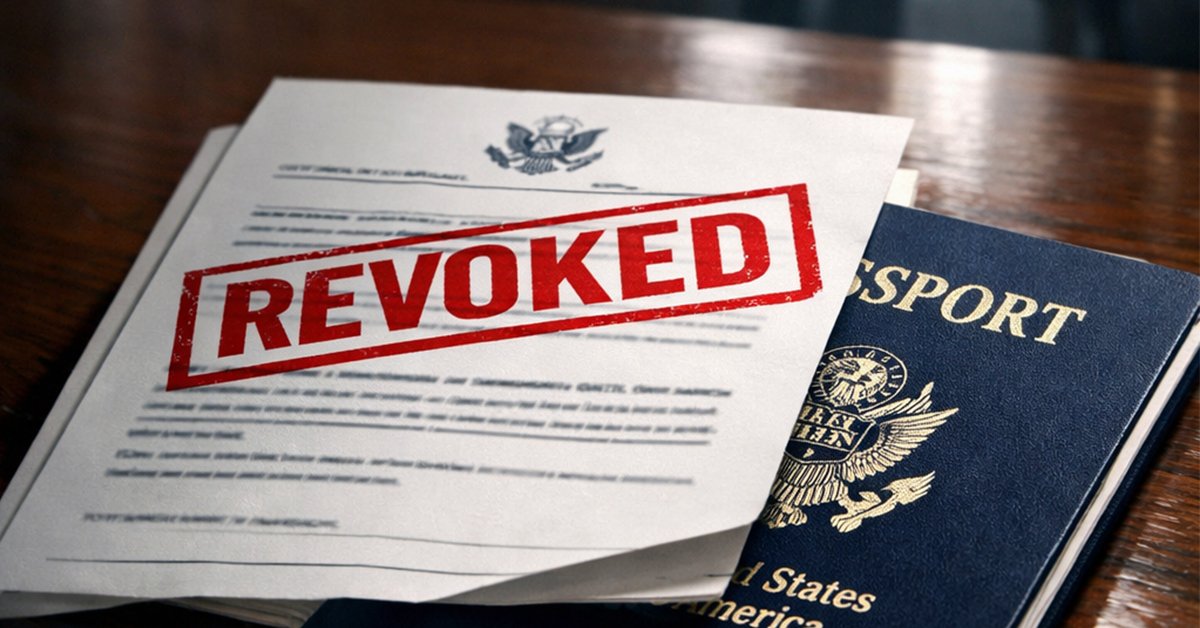
That’s right. The State Department is now actively revoking travel documents from parents who owe substantial amounts in unpaid child support — and they’re not waiting for you to show up at a passport office anymore. They’re coming to you.
What’s Actually Happening Here
Here’s the short version: the federal government has had the legal authority to revoke passports over unpaid child support since 1996. The law — the Personal Responsibility and Work Opportunity Reconciliation Act — has been on the books for nearly 30 years. But for most of that time, enforcement was passive. If you didn’t walk into a consulate or try to renew your passport, you were largely left alone.
That’s over now.
The Trump administration is flipping the script. Instead of waiting for people to come to them, the State Department is now working directly with the Department of Health and Human Services (HHS) to cross-reference data and proactively identify parents who owe child support — and revoke their passports accordingly.
This is a significant shift. It’s the difference between a speed trap that only catches you if you’re speeding past it versus one that sends you a ticket in the mail.
Who Gets Hit First — And How Many People Are We Talking?
Because this affects a large number of Americans, the administration is rolling it out in tiers. Smart move, honestly, from a logistical standpoint.
Tier 1: Parents owing $100,000 or more in back child support. According to officials familiar with the program, fewer than 50 people currently fall into this category. These individuals will be the first to receive notices, and they’ll be given a chance to enroll in a payment plan with HHS to avoid revocation.
As the threshold drops in later tiers, the number of people affected will grow — potentially into the thousands.
Under the existing Passport Denial Program — which this initiative builds upon — parents with as little as $2,500 in unpaid child support can technically have their passport denied or revoked. The new enforcement push isn’t changing the threshold; it’s changing the reach.
The Number That Should Catch Your Attention
Here’s a stat that puts the scale of this problem into perspective: according to the Office of Child Support Services (OCSE), the average amount owed by noncustodial parents is over $19,000.
That’s not a rounding error. That’s a real financial burden sitting on millions of American families — families that depend on those payments to cover rent, groceries, school supplies, and medical bills.
Since the Passport Denial Program launched back in the 1990s, it has helped collect nearly $621 million in overdue child support. Nine individual collections alone have each topped $300,000. The program works. The question has always been how aggressively to apply it.
The answer, as of 2026, is: aggressively.
What Can You Do If You’re Affected?
If you think you might fall into this category, the good news is that passport revocation isn’t automatic and immediate — there’s a process.
Here’s how it generally works:
The Office of Child Support Services forwards names of parents with outstanding balances to the State Department. That agency then sends a Pre-Offset Notice to the parent, which outlines repayment options. At that point, you have choices: set up a payment plan with HHS, make a lump-sum payment, or contest the debt if you believe there’s an error.
- → Need a Passport Fast? How to Expedite Your U.S. Passport Renewal Step-by-Step
- → Want a $60K+ Salary Without a 4-Year Degree? 15 Certificates You Can Finish in Under a Year
- → Planning a Trip to Europe? 6 Essential Entry Rules to Avoid Denial at the Border
- → Heading to Border Control? Key Immigration Questions You Must Be Ready to Answer
- → Planning a European Trip? What Starkville’s Indian Community Should Know About Schengen Visas
- → 11 Countries Offering Funded Ph.D. Programs for International Students
- → U.S. Dollar Reaches Two-Week High Driven by Middle East Tensions and Fed Policy Outlook
Ignoring the notice, however, is where things go sideways fast. If you don’t respond or enroll in a repayment plan, the State Department can move forward with revocation.
If your passport gets revoked and you have international travel planned — for work, a family emergency, or anything else — that becomes your problem to untangle. Courts and consular offices aren’t known for their speed when it comes to emergency reinstatements.
Is This Fair? Here’s the Real Talk
I know some people are going to push back on this. And look, there are legitimate conversations to have about why some parents fall behind — job loss, medical debt, economic hardship. The system isn’t always designed to accommodate life’s curveballs.
But there’s also a harder truth sitting underneath all of that: a lot of children in this country are growing up in households where one parent simply isn’t paying what a court ordered them to pay. And those kids don’t have a lobby. They don’t get to negotiate.
The State Department’s statement on this was blunt: “Deadbeat parents need to pay their child support arrears.” Whether you agree with the administration’s politics or not, it’s hard to argue with that sentence.
Using passport revocation as leverage isn’t cruel — it’s calculated. For a parent who travels internationally for business or pleasure, losing that passport is a real consequence. It creates a pressure that wage garnishment sometimes doesn’t.
The Bottom Line
The 2026 enforcement push is the most significant escalation of child support collection efforts in a generation. It takes a law that’s existed since 1996 and finally gives it real teeth — proactive teeth.
If you owe child support and you have a passport, now is the time to get ahead of this. Reach out to the OCSE, explore your options with HHS, and get into a payment plan if you can’t pay in full. Waiting around to see if they come for you is no longer the strategy it once was.
For the parents and children waiting on those payments? This is long overdue.
Key Facts at a Glance
- Law in effect since: 1996 (Personal Responsibility and Work Opportunity Reconciliation Act)
- Existing threshold for passport denial: $2,500 in unpaid child support
- First enforcement tier: Those owing $100,000+
- Estimated people in first tier: Fewer than 50
- Average child support debt nationwide: $19,000+
- Total collected via Passport Denial Program (lifetime): ~$621 million
- How to avoid revocation: Enroll in HHS payment plan after receiving Pre-Offset Notice
