

Planning to study in Canada this year? You need to read this first.
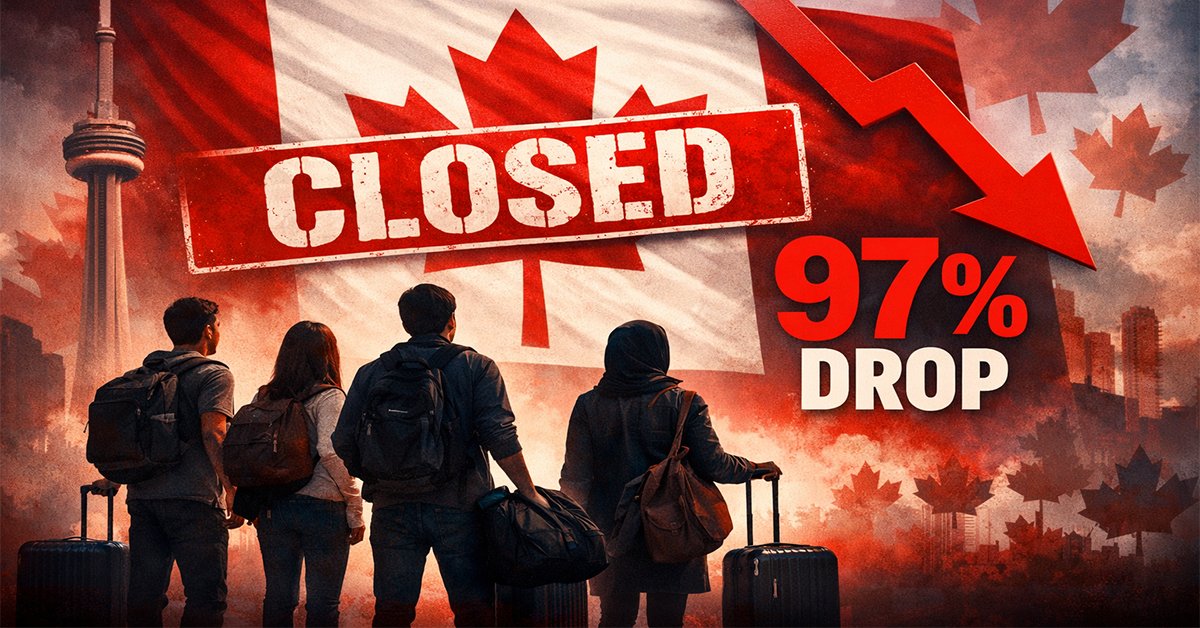
The dream of studying in Canada has hit a brick wall, and the numbers tell a brutal story. According to the latest Immigration, Refugees and Citizenship Canada (IRCC) data released this January, study permit approvals have collapsed by an unprecedented 97 percent.
In November 2025, IRCC issued only 2,485 new study permits—compared to more than 95,000 in December 2023. We’re now in January 2026, and the restrictions are still firmly in place.
This isn’t a temporary blip. It’s a fundamental shift in how Canada views international education.
- → Heading to Border Control? Key Immigration Questions You Must Be Ready to Answer
- → Planning a European Trip? What Starkville’s Indian Community Should Know About Schengen Visas
- → 11 Countries Offering Funded Ph.D. Programs for International Students
- → U.S. Dollar Reaches Two-Week High Driven by Middle East Tensions and Fed Policy Outlook
- → 100-Year-Old Who Still Drives and Lives Alone Shares Her 6 Secrets to Longevity
- → What to Do Immediately If a Family Member Is Detained by ICE in Indiana
- → Flying With Flour or Coffee? TSA’s Powder Rule Could Delay Your Airport Security Screening
Why Canada Pulled the Emergency Brake
The Canadian government isn’t being subtle about its intentions. This dramatic crackdown is part of a deliberate strategy to reduce temporary residents from their current levels to just 5 percent of Canada’s population by 2027.
Between January and November 2025, study permit approvals dropped 60 percent compared to 2024. Immigration Minister Marc Miller has been crystal clear: the system was “out of control,” and these measures are necessary to protect housing availability, healthcare access, and public infrastructure.
With Canada facing a severe housing crisis—rental vacancy rates below 2 percent in major cities like Toronto and Vancouver—international students became an easy political target. Fair or not, that’s the reality we’re dealing with in 2026.
The 2026 Application Landscape: What’s Changed
If you’re applying for September 2026 intake or beyond, here’s what you’re up against:
The provincial cap system is here to stay. IRCC projects approximately 408,000 study permits for all of 2026—down from over 550,000 in pre-cap years. Each province gets an allocation, and popular destinations like Ontario and British Columbia fill up fast.
Financial proof requirements are significantly higher. As of January 2026, you need to demonstrate access to $20,635 CAD for living expenses (beyond tuition) for the first year—and that’s just the minimum. Many visa officers expect to see substantially more.
Provincial Attestation Letters (PALs) are mandatory for undergraduate and college programs. Without one, your application won’t even be processed. Master’s and PhD students at designated public institutions remain exempt.
Quality audits are underway. Colleges and universities with poor graduation rates, questionable employment outcomes, or predatory recruitment practices are being flagged. Some institutions have already lost their Designated Learning Institution (DLI) status.
The Institutions Fighting for Survival
Canadian colleges are in crisis mode.
Smaller public colleges that built their entire financial models around international student revenue—sometimes 40 percent or more of their budgets—are now scrambling. International students typically pay three to four times what domestic students pay, creating massive revenue when volumes were high.
Colleges Ontario, the association representing the province’s 24 public colleges, has warned of “catastrophic” budget impacts. Several institutions have already announced:
- Program suspensions, particularly in business and hospitality
- Staff layoffs affecting hundreds of employees
- Deferred infrastructure projects
- Tuition increases for domestic students to cover shortfalls
Private career colleges face an even grimmer outlook. Many operated on razor-thin margins even during boom times. With the tap now turned off, industry observers predict 30-40 percent won’t survive past 2027.
Your 2026 Strategy: What Actually Works Now
If you’re determined to study in Canada, you need to be strategic. Here’s what’s actually getting approvals in early 2026:
Target graduate programs at public universities. The PAL exemption for master’s and PhD programs is your biggest advantage. Applications for graduate studies are still processing at relatively normal rates.
Choose programs aligned with Canada’s labour needs. Healthcare (nursing, pharmacy, medical lab technology), skilled trades (electrical, plumbing, HVAC), engineering, and computer science programs are prioritized in most provincial allocations.
Demonstrate genuine financial capacity. Visa officers are scrutinizing bank statements like never before. Sudden large deposits, borrowed funds, or inconsistent financial histories will trigger rejections. You need a clean, verifiable financial trail going back at least 4-6 months.
Apply to less competitive provinces. While Ontario and British Columbia quotas fill quickly, provinces like Manitoba, Saskatchewan, New Brunswick, and Nova Scotia still have available allocations and offer pathways to permanent residence.
Consider the January 2027 intake. September 2026 slots are already highly competitive. Starting your program in January 2027 might give you better odds as fewer students apply for winter terms.
The Ripple Effects Nobody’s Talking About
This isn’t just about education—it’s reshaping Canada’s entire economy.
Fewer international students in 2026 means dramatically fewer Post-Graduation Work Permit (PGWP) holders entering the workforce in 2028-2030. Industries that relied heavily on this talent pipeline—retail, hospitality, food service, entry-level tech support, customer service—are already feeling nervous.
Major employers like Tim Hortons, Loblaws, and Shoppers Drug Mart have historically staffed thousands of positions with recent international graduates. That pool is about to shrink dramatically.
Some economists argue this was necessary correction. Others warn Canada is shooting itself in the foot, particularly as competing destinations like Australia, the UK, and Ireland maintain more welcoming policies for international students.
The Bottom Line for 2026
Let’s be honest: studying in Canada as an international student is no longer the accessible pathway it was three years ago.
The 97 percent drop isn’t a statistical anomaly—it’s the new normal. The Canadian government has made a political calculation that reducing temporary residents is worth the economic and reputational cost.
If you’re applying this year, go in with eyes wide open:
- Competition is fiercer than ever
- Financial requirements are substantially higher
- Many popular programs and institutions are effectively full
- Processing times remain unpredictable
- Rejection rates have increased dramatically
But opportunities still exist, particularly for graduate students, those with strong financial backing, and applicants targeting in-demand programs in less saturated provinces.
The Canadian student dream isn’t dead—it’s just gotten a whole lot harder.
Data current as of January 26, 2026. Immigration policies continue to evolve. Always verify current requirements through official IRCC channels before applying.
