
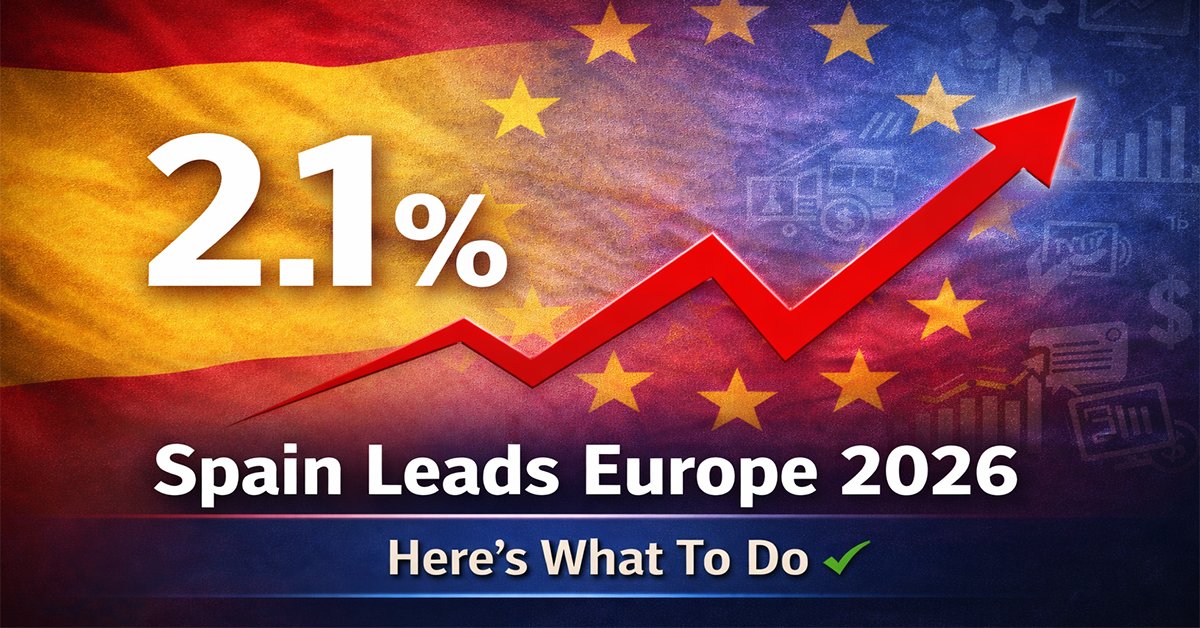

Spain is poised to become Europe’s economic powerhouse in 2026, and the numbers tell a compelling story.
While the rest of the continent struggles to maintain momentum, Spain is expected to achieve a GDP growth rate of 2.1% – nearly double the European average of 1.2%. That’s not just a statistical win; it’s a clear signal that something fundamental is working in Spain’s favour.
The Immigration Advantage
Here’s what many economists overlook: immigration isn’t just about population numbers. It’s about economic dynamism.
Natalia Lechmanova, who heads the Economics division at Mastercard Economics Institute, points out something crucial. “Immigration will support household consumption and help address shortages of skilled labour,” she explains in the Economic Outlook 2026 report.
Think about it. More people means more consumers, more workers filling critical gaps, and more tax revenue flowing into government coffers. Spain has managed to harness this demographic shift in ways that other European nations haven’t quite figured out yet.
Beyond the Beaches: Spain’s Service Sector Evolution
When most people think of Spain’s economy, they picture tourists sipping sangria on Mediterranean beaches. But that’s only part of the picture.
The real story is happening in boardrooms and tech hubs across Madrid, Barcelona, and beyond. Spain’s services sector has quietly transformed itself into a high-value powerhouse, with professional services, financial institutions, and technology companies driving growth that has nothing to do with hotel bookings or restaurant reservations.
This diversification is what separates sustainable growth from a temporary boom.
The European Context: Why Germany Accelerates While Others Lag
The broader European picture reveals stark contrasts. Germany, long considered the sick man of Europe in recent years, is expected to bounce back thanks to aggressive fiscal spending. Meanwhile, France, Italy, and the UK – constrained by tighter budgets and political gridlock – face more modest prospects.
Lechmanova’s assessment is straightforward: “The European economy in 2026 will grow steadily thanks to lower inflation, falling interest rates and a resilient labour market, although performance will vary depending on fiscal policy.”
Translation? Countries willing to invest in their futures will see results. Those playing it safe will get left behind.
Read More : Spain Farm Jobs 2026: Your Complete Guide to Visa Sponsorship & Agricultural Employment
How Spaniards Are Actually Spending Their Money
Dig into the consumer data from Q3 2025, and you’ll spot an interesting pattern that reveals more about human behaviour than any economic theory ever could.
Spaniards are making more small purchases – up 2.1% compared to last year – while pulling back on major expenditures. It’s what I call the “affordable luxury” effect. People aren’t splurging on new cars or home renovations, but they’re absolutely treating themselves to nice dinners, quality coffee, or that new gadget they’ve been eyeing.
Grocery spending remains rock-solid, which tells us that households are managing their essential budgets carefully while still finding room for life’s small pleasures. This isn’t panic-mode spending or reckless optimism – it’s measured confidence.
The Digital Revolution You’re Not Hearing About
Here’s something that deserves more attention: Spain’s small and medium-sized businesses are embracing digital transformation at an impressive pace.
We’re not talking about mom-and-pop shops reluctantly setting up Facebook pages. These businesses are genuinely integrating AI tools, streamlining operations, and competing in ways that would have been impossible five years ago.
Lechmanova notes that “the adoption of AI is moving from experimentation to full integration, driving productivity and growth.” That shift – from playing around with technology to actually using it to run better businesses – is what separates genuine economic transformation from hype.
What This Means for Everyday People
Economic forecasts can feel abstract until you translate them into real life. Spain’s projected growth means more job opportunities, particularly in skilled sectors. It means wages that should, theoretically, keep pace with or exceed inflation. And it means businesses with the confidence to hire, invest, and expand.
For the rest of Europe, Spain’s performance raises an uncomfortable question: what are we doing differently, and what can we learn?
The answer seems to lie in a combination of demographic openness, sectoral diversification, and digital adoption. It’s not rocket science, but it does require political will and economic flexibility that many countries struggle to muster.
Looking Ahead
- → Need a Passport Fast? How to Expedite Your U.S. Passport Renewal Step-by-Step
- → Want a $60K+ Salary Without a 4-Year Degree? 15 Certificates You Can Finish in Under a Year
- → Planning a Trip to Europe? 6 Essential Entry Rules to Avoid Denial at the Border
- → Heading to Border Control? Key Immigration Questions You Must Be Ready to Answer
- → Planning a European Trip? What Starkville’s Indian Community Should Know About Schengen Visas
- → 11 Countries Offering Funded Ph.D. Programs for International Students
- → U.S. Dollar Reaches Two-Week High Driven by Middle East Tensions and Fed Policy Outlook
As 2026 unfolds, Spain’s economy will serve as a test case for whether moderate, balanced growth can be sustained in an uncertain global environment. The fundamentals look solid – rising services, skilled labour integration, and smart consumer behaviour all point in the right direction.
But economics is never just about spreadsheets and forecasts. It’s about real people making real decisions every day. And right now, those decisions in Spain seem to be adding up to something genuinely positive.
