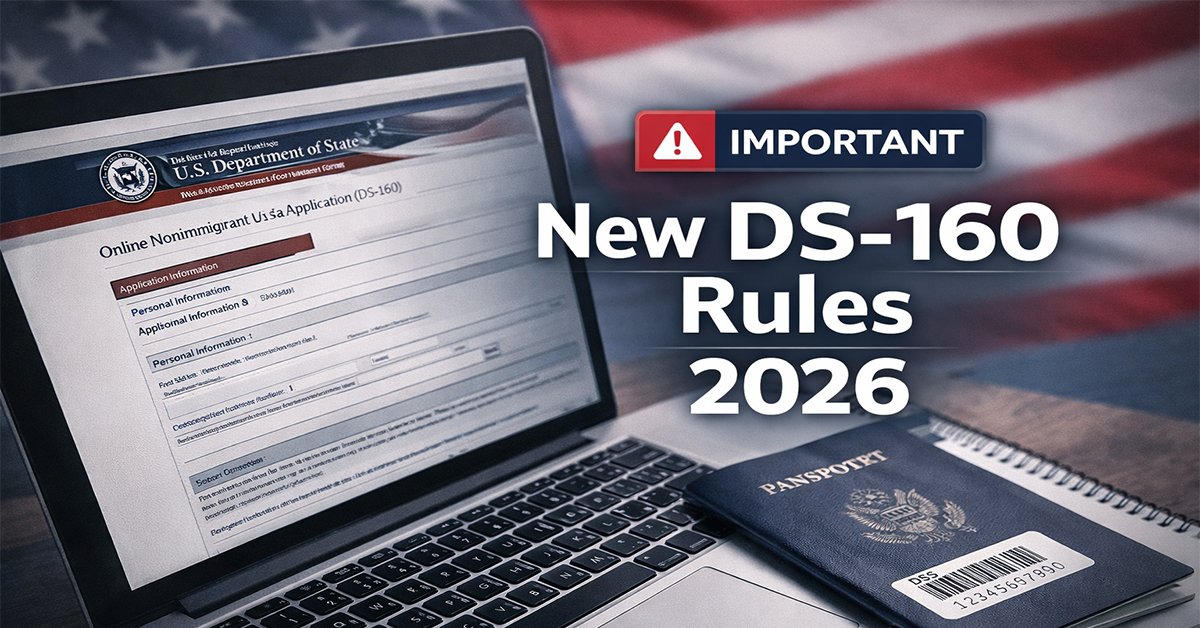

Look, I’m not going to sugarcoat this—if you’re planning to apply for a U.S. visa in 2026, the process just got a whole lot stricter. The State Department has rolled out new DS-160 requirements that are catching people off guard, and if you’re not prepared, you could be looking at delays, rescheduled appointments, or worse.
Let me walk you through what’s changed and, more importantly, how to avoid the mistakes that are tripping up thousands of applicants right now.
The DS-160: Your Gateway to America (Or Your First Roadblock)
If you’ve ever applied for a U.S. visa—whether it’s for tourism, work, or study—you’ve dealt with the DS-160. It’s that ridiculously long online form that asks you everything short of your childhood pet’s name.
For those who haven’t had the pleasure yet, the DS-160 is the mandatory application form for virtually every nonimmigrant visa to the United States. Tourist visa? DS-160. Student visa? DS-160. Work visa? You guessed it—DS-160.
This isn’t just a formality. The information you put on this form directly impacts whether you get that visa stamp in your passport or a rejection letter. Consular officers use it to determine if you’re a genuine visitor or if you’re planning to overstay. They look for inconsistencies, red flags, anything that doesn’t add up.
And now, in 2026, they’ve made the whole process even more unforgiving.
What’s Changed: The New Rules That Are Catching Everyone Off Guard
Here’s where things get interesting—and by interesting, I mean frustrating.
Rule #1: You Must Complete DS-160 BEFORE Booking Your Interview
This used to be more flexible. People would sometimes book their visa appointment first, then leisurely fill out their DS-160 form over the next few days. Not anymore.
Now, you need to complete and submit your DS-160 form before you can even think about scheduling your visa interview. No form, no appointment. Simple as that.
Rule #2: Barcode Numbers Must Match—Or You’re Out of Luck
This is the one that’s really messing people up. Every DS-160 form generates a unique barcode number when you submit it. That number appears on your confirmation page, and you need it to book your visa appointment.
Here’s the catch: The barcode number you use to book your appointment must match the barcode number on your actual DS-160 confirmation. If they don’t match—maybe you filled out multiple forms, or you started over and used an old barcode—the consulate won’t accept it.
And here’s the kicker: Consular staff cannot update or fix barcode mismatches. If you show up to your interview with the wrong barcode, you’re getting turned away. You’ll have to go back to USTravelDocs.com, reschedule your appointment (which could be weeks or months away), and start over.
I’ve seen posts in visa forums from people who flew across their country to a consulate, only to be turned away at the door because their barcode didn’t match. Imagine spending hundreds of dollars on travel, taking time off work, and then being sent home before you even get through security.
Why Is the State Department Doing This?
Look, I get it—these changes seem unnecessarily harsh. But the State Department has their reasons:
Stopping appointment hoarding: Some people were booking multiple visa appointments “just in case,” then not showing up. This clogged up the system and made wait times longer for everyone else.
- → Need a Passport Fast? How to Expedite Your U.S. Passport Renewal Step-by-Step
- → Want a $60K+ Salary Without a 4-Year Degree? 15 Certificates You Can Finish in Under a Year
- → Planning a Trip to Europe? 6 Essential Entry Rules to Avoid Denial at the Border
- → Heading to Border Control? Key Immigration Questions You Must Be Ready to Answer
- → Planning a European Trip? What Starkville’s Indian Community Should Know About Schengen Visas
- → 11 Countries Offering Funded Ph.D. Programs for International Students
- → U.S. Dollar Reaches Two-Week High Driven by Middle East Tensions and Fed Policy Outlook
Speeding up processing: When everything is verified before the appointment, consular officers can move through interviews faster.
Improving accuracy: Forcing people to complete the DS-160 first means fewer errors and inconsistencies at the interview stage.
Enhancing security: In 2026, with global security concerns higher than ever, matching barcodes adds another layer of verification that the person at the interview is the same person who filled out the application.
I’m not saying I agree with how abruptly these changes were implemented, but I understand the logic.
How Long Does This Monster Form Actually Take?
Let’s talk reality here. The State Department claims the DS-160 takes about 90 minutes to complete. And maybe, if you’re some kind of organizational savant who has every document perfectly organized and every detail of your life memorized, that’s true.
For the rest of us? Plan on anywhere from two to four hours, especially if this is your first time.
For complex cases—like if you have extensive travel history, multiple previous visa applications, or you’re applying for a work visa with lots of employment details—this can stretch into multiple days. Not because the form itself takes that long, but because you’ll need to gather documents, verify dates, and make sure everything is absolutely perfect.
And yes, I said perfect. Because there’s no room for error anymore.
Read More : USCIS Drops Bombshell: Green Card Applicants Face New Medical Exam Requirements in 2026
What You Need Before You Even Start
Don’t even open that DS-160 form until you have everything ready. Trust me on this. Here’s your checklist:
1. Valid Passport Not just any passport—it needs to be valid for at least six months beyond your planned stay in the U.S. Check the expiration date right now. If it’s cutting it close, renew it first.
2. Travel Itinerary You don’t need confirmed flights, but you should know your intended travel dates, where you’re going, and where you’ll be staying. Be as specific as possible.
3. Complete U.S. Travel History Every single time you’ve been to the United States. Dates, purposes, how long you stayed. If you can’t remember exact dates from 10 years ago, dig through your old passports or email confirmations. The consular officers can see your entry and exit records—inconsistencies will raise red flags.
4. Employment History Current and previous employers, with addresses and dates. If you’re a student, you’ll need school information instead.
5. Résumé or CV Have a current one ready. You’ll need to reference it for employment dates and details.
6. U.S. Contact Information If you have relatives, friends, or business contacts in the U.S., you’ll need their full names, addresses, and phone numbers.
7. Social Media Handles Yes, really. Since April 2025, U.S. consulates have been asking for five years of social media history. They want your usernames for Facebook, Twitter/X, Instagram, LinkedIn—all of it. And they’re actually checking.
8. A Compliant Digital Photo This is its own headache. The photo requirements are incredibly specific: 2×2 inches, taken within the last six months, white or off-white background, specific head size requirements. Most phone selfies won’t work. Go to a professional photo service that knows U.S. visa requirements.
9. Additional Documents for Students and Workers
If you’re a student: You’ll need your SEVIS ID (from your I-20 or DS-2019 form), school name and address, program details, and funding information.
If you’re on a work visa: You’ll need your approved I-129 petition number, employer details, job description, and salary information.
The Social Media Question: It’s Not Optional Anymore
Let’s talk about this because it’s freaking people out.
Since April 2025, the DS-160 asks for your social media identifiers for the past five years. This includes:
- Twitter/X
- YouTube
- TikTok
- And several other platforms
The form says it’s “optional,” but let me be clear: In 2026, nothing is really optional. If you skip it, you’re raising suspicion. Why would someone hide their social media unless they have something to hide?
But here’s where it gets tricky. Consular officers are now cross-referencing your social media with your DS-160 answers. If your Facebook says you’re in a relationship but your DS-160 says you’re single, that’s a problem. If your LinkedIn shows you working at Company A but your DS-160 lists Company B, that’s a problem.
I know someone who got denied because their Instagram photos showed them living in the U.S. for months at a time on previous tourist visas, contradicting their claim that they were just “visiting” and had no intention to stay long-term.
Your social media is part of your application now. Clean it up, make sure it matches your story, and don’t lie about it.
The Mistakes That Are Getting People Denied
After following visa forums and talking to immigration attorneys, I’ve seen the same mistakes come up over and over. Here are the ones that are killing applications:
Inconsistent Personal Details Your name needs to match your passport exactly. If your passport says “Mohammed” but you go by “Mo” in daily life, use “Mohammed” on the DS-160. Middle names, suffixes, everything needs to be identical.
Wrong Visa Classification People constantly pick the wrong visa type. Going to a conference? That’s B-1 (business), not B-2 (tourist). Doing an unpaid internship? That might require a J-1, not a B-1. Getting this wrong can result in an automatic denial.
Omitting or Lying About Travel History The U.S. has records. They know when you’ve been to the U.S. before. They have databases showing visa overstays, deportations, and denials. Don’t try to hide a previous visa denial or an overstay. They’ll find out, and lying on a federal form is grounds for a permanent ban.
Mismatched Information with Supporting Documents Your DS-160 says you work at XYZ Company. Your employment letter says ABC Company. Guess what? Denial. Everything needs to match perfectly.
Typos in Critical Fields A typo in your passport number or date of birth isn’t just embarrassing—it’s potentially application-ending. Triple-check everything.
Inconsistent Social Media Information As I mentioned before, if your social media tells a different story than your DS-160, you’re toast.
Not Saving Your Application The DS-160 system times out after 20 minutes of inactivity. If you don’t save your progress, you lose everything. Save after every section. Write down your application ID. Don’t learn this lesson the hard way.
What Happens If You Make a Mistake?
Here’s the good news: If you catch a mistake before you submit, you can fix it.
Here’s the bad news: Once you submit the DS-160 and get your barcode, you can’t edit it. If you find an error after submission, you have to fill out an entirely new DS-160 form.
And remember those new barcode rules? If you submit a new DS-160, you get a new barcode, which means you need to reschedule your appointment with the new barcode number. Depending on visa appointment availability in your country, this could set you back weeks or even months.
Some countries—India, Nigeria, Colombia—have visa appointment wait times stretching six months to a year. Making a mistake on your DS-160 in these countries isn’t just inconvenient; it could derail your entire travel or work plans.
My Honest Advice for Getting Through This
After watching countless people struggle with this process, here’s what actually works:
1. Block out a full afternoon or evening. Don’t try to rush through this during your lunch break. Give yourself uninterrupted time.
2. Gather every document first. Seriously, have everything physically in front of you before you start typing.
3. Be brutally honest. Lying or omitting information will come back to haunt you. The short-term benefit isn’t worth the long-term consequences.
4. Use the “Save” button obsessively. After every section, hit save. Write down your application ID and retrieval questions immediately.
5. Have someone proofread it. After you’ve filled everything out but before you submit, have a trusted friend or family member review it with fresh eyes. They’ll catch mistakes you’ve been staring at for too long to see.
6. Consider hiring help for complex cases. If you have a complicated travel history, previous visa denials, criminal records, or any other complicating factors, it might be worth paying an immigration attorney or visa consultant to review your DS-160 before submission. A few hundred dollars now could save you from a costly denial later.
7. Print everything. Once you submit, print your confirmation page, save a PDF, email it to yourself, store it in the cloud. You’ll need that barcode number, and you don’t want to be scrambling to find it when it’s time to schedule your appointment.
The Bigger Picture: Immigration in 2026
These DS-160 changes don’t exist in a vacuum. They’re part of a broader trend of increasingly strict immigration policies in 2026.
With the current administration’s focus on border security and immigration enforcement, every aspect of the visa process is under scrutiny. Wait times are longer. Denial rates are higher. The standards for approval are stricter.
I’m not making a political statement here—I’m just telling you the reality on the ground. If you’re applying for a U.S. visa in 2026, you need to bring your A-game.
The days of casually filling out a visa application and showing up for a quick interview are over. This is serious business now, and the U.S. government is treating it that way.
Final Thoughts
Look, I know this all sounds overwhelming. And honestly, it kind of is. The DS-160 has always been tedious, but these new rules have added extra layers of stress and complexity.
But here’s the thing: thousands of people successfully complete this process every single day. It’s doable. It just requires patience, attention to detail, and careful preparation.
Take it seriously. Don’t rush. Double-check everything. And if you’re unsure about anything—anything at all—seek help before you submit.
Your visa application is too important to mess up. Whether you’re trying to visit family, study at your dream university, or start a new job, the DS-160 is your first hurdle. Clear it properly, and you’re one step closer to your American dream.
Good luck. You’ve got this.
