
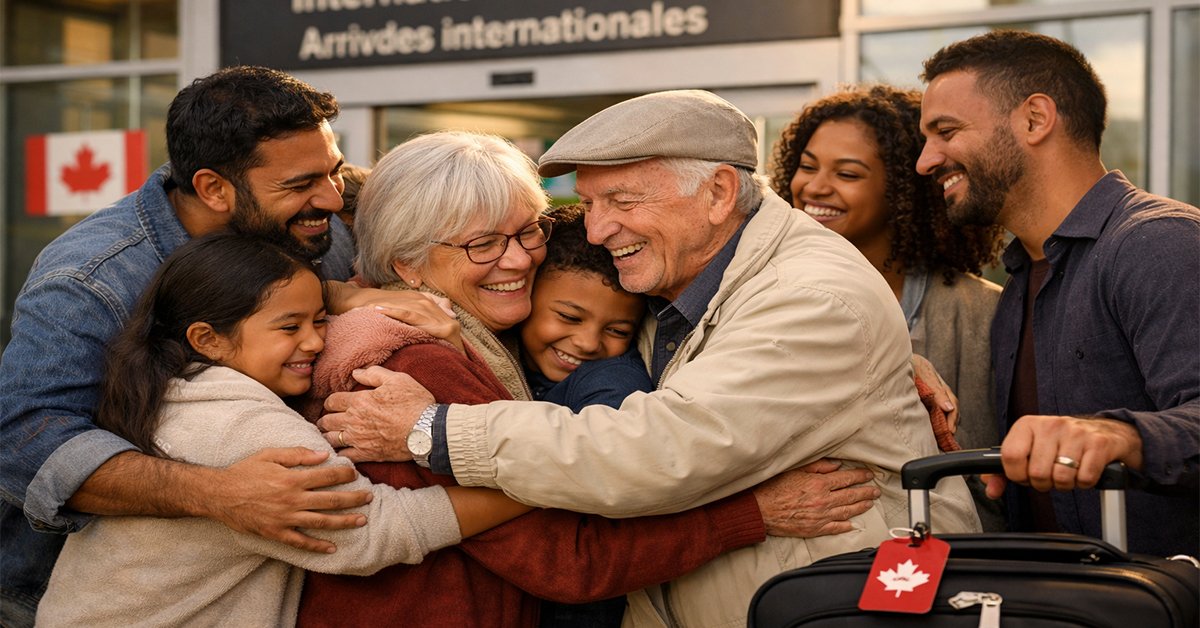

If you’ve been dreaming of bringing your parents or grandparents to Canada permanently, I’ve got some tough news: the door just closed. Again.
As of January 1, 2026, Immigration, Refugees and Citizenship Canada (IRCC) officially confirmed what many families feared—no new applications will be accepted under the Parents and Grandparents Program (PGP) this year. There’s no timeline for when it might reopen. No promises. Just an indefinite pause that’s left thousands of Canadian families in limbo.
For many Canadian immigrants, this isn’t just bureaucratic news—it’s deeply personal. Watching parents age from afar, unsure if they’ll ever be able to make Canada their permanent home, is an emotional burden thousands of families now carry.
But here’s what immigration lawyers and consultants aren’t always quick to tell you: for many families, the alternatives to PGP might actually be better right now. Faster processing. Lower costs. And you can start the process today—not years from now when the program might reopen.
Let me walk you through what’s really happening and what your options actually look like in 2026.
Why Did Canada Close the PGP—Again?
This isn’t the first time Canada has hit pause on parent and grandparent sponsorships. The program has been opening and closing like a revolving door for years, and the reason is always the same: backlogs.
IRCC will only process applications submitted before 2025, with a limited number of cases being accepted. That means if you weren’t one of the lucky few who got an invitation in 2025, you’re completely out of luck for permanent sponsorship right now.
The PGP has always been highly competitive. In 2025, IRCC sent out invitations over a limited window, and thousands of hopeful sponsors didn’t even get a chance to apply.
And now? The program’s on ice with no clear reopening date.
It’s also worth noting that Canada is moving to reduce overall immigration levels, targeting approximately 380,000 new permanent residents in 2026—a four percent cut compared to last year. Family reunification programs like PGP are taking a hit as the government prioritizes economic immigration streams.
So if you’ve been waiting for PGP to reopen, I’ll be honest with you: you could be waiting a very long time. Maybe years.
But that doesn’t mean you’re out of options.
Your Two Real Options for Bringing Parents to Canada
While you can’t sponsor your parents for permanent residence right now, you absolutely can bring them to Canada for extended visits. And for many families, these alternatives are actually more practical than waiting indefinitely for PGP to reopen.
You’ve got two main pathways:
- Parent and Grandparent Super Visa (best for long stays)
- Regular Visitor Visa or eTA (best for shorter visits)
Let’s break down how each one works—and which makes sense for your situation.
Option 1: The Super Visa—Your Best Bet for Long-Term Visits
Think of the Super Visa as the “almost permanent residence” option. It’s not PR, but it gets pretty close in terms of how long your parents can actually stay in Canada.
Here’s what makes it powerful:
Stay Up to 5 Years at a Time If your parents’ application was submitted on or after June 22, 2023, they can stay in Canada for up to five years per entry. That’s not a typo—five years without having to leave.
Valid for 10 Years The Super Visa itself can be valid for up to 10 years, which means your parents can come and go multiple times without reapplying.
Multiple Entries Unlike some visitor visas that only allow one entry, the Super Visa is multiple-entry. Your parents can leave Canada to visit other family or travel, then come back without any issues.
Available Year-Round While PGP only opens occasionally (when it opens at all), you can apply for a Super Visa anytime. No lottery. No waiting for an invitation. Just apply when you’re ready.
The Catch: Higher Requirements
The Super Visa isn’t a free-for-all. There are specific requirements you need to meet—both you as the sponsor and your parents as applicants.
Requirements for You (The Canadian Host):
- Be a Canadian citizen, permanent resident, or registered Indian
- Be at least 18 years old and living in Canada
- Meet the minimum necessary income (this is based on Canada’s Low Income Cut-Off, or LICO, and varies by family size)
- Sign an invitation letter promising financial support during their visit (your spouse or partner can co-sign if they’re eligible)
Requirements for Your Parents/Grandparents:
- Apply from outside Canada
- Be admissible to Canada (no serious criminal history or security concerns)
- Complete an immigration medical exam
- Obtain mandatory private medical insurance
The Insurance Requirement—This is Non-Negotiable
This is where a lot of people get tripped up. Your parents must have private medical insurance that meets IRCC’s specific requirements:
- Valid for at least 1 year from their date of entry
- Covers healthcare, hospitalization, and repatriation
- Provides at least $100,000 in coverage
- Must be fully paid (quotes don’t count)
As of January 28, 2025, IRCC allows Super Visa applicants to purchase insurance from certain companies outside Canada, as long as the insurer meets specific conditions set by the Office of the Superintendent of Financial Institutions (OSFI).
Your parents need to be ready to show proof of this paid insurance when they enter Canada. Border officers will ask for it.
Why the Super Visa Makes Sense for Most Families
Let’s be real: permanent residence is the dream. But here’s the thing—PGP applications, even when the program is open, take years to process. And during that waiting period, your parents are still stuck overseas.
With the Super Visa, your parents can be in Canada now. They can spend extended time with you and their grandchildren. They can be here for important family moments, help with childcare, or just enjoy their retirement years close to family.
Yes, they’ll be visitors, not permanent residents. That means they can’t work or study without separate permits, and they won’t have access to provincial healthcare (hence the mandatory insurance). But for families who just want quality time together, the Super Visa delivers that—fast.
Option 2: Regular Visitor Visa or eTA—The Simpler Route
If your parents don’t need to stay for years at a time, a regular visitor visa or electronic Travel Authorization (eTA) might be the better fit.
What’s the Difference?
- Visitor Visa: Required for travelers from countries that need a visa to enter Canada
- eTA: Available to citizens of visa-exempt countries who are flying to Canada
How Long Can They Stay?
Most visitors are allowed to stay up to 6 months per visit. However, the border officer has discretion and might grant less (or occasionally more) time. They may issue a visitor record with a specific leave-by date.
What’s Required?
The requirements are more straightforward than the Super Visa:
- Valid passport or travel document
- Good health (medical admissibility)
- No criminal or immigration-related convictions
- Proof of ties to their home country and intent to leave Canada at the end of their visit
- Sufficient funds for the trip
- Possibly a medical exam and/or letter of invitation
When to Choose a Visitor Visa or eTA
This option makes the most sense when:
- Your parents only want to visit for a few weeks or months at a time
- Meeting the Super Visa’s income requirements would be difficult
- Obtaining the mandatory medical insurance is a financial strain
- Your parents prefer shorter, more frequent visits rather than one extended stay
The Big Advantage: Speed and Simplicity
Processing times for visitor visas are generally shorter than Super Visas, though this varies significantly depending on which visa office processes the application.
eTAs are even faster—they can be approved in as little as a few minutes after applying online. For visa-exempt country nationals, this is by far the quickest pathway.
Which Option Should You Actually Choose?
Here’s my honest take after seeing how this plays out for real families:
Choose the Super Visa if:
- You want your parents in Canada for extended periods (multiple years at a time)
- You meet the minimum income requirements comfortably
- Your parents can obtain and afford the mandatory medical insurance
- You want the flexibility of multiple entries over a 10-year period
- Long-term caregiving or family support is a priority
Choose a Visitor Visa or eTA if:
- Visits will be shorter (weeks to months rather than years)
- Meeting Super Visa income thresholds is challenging right now
- The mandatory insurance costs are prohibitive
- Your parents prefer the flexibility of shorter, more frequent trips
- You want faster processing and simpler requirements
There’s no wrong choice here. It’s about matching the visa type to your family’s actual needs and financial situation.
The Emotional Reality Nobody Talks About
Look, I’m not going to sugarcoat this: it hurts when the government closes a program you’ve been counting on.
- → New Canada Benefit Payments Arriving This Week in May 2026
- → Canada Bread Settlement Payments Begin Rolling Out Across Canada in 2026
- → Canada Immigration Backlog Update 2026: IRCC Application Inventory Crosses 2.15 Million
- → Canada Expands Visa-Free Travel Access for Citizens of Indonesia and Malaysia in 2026
- → Canada’s 365-Day Maintained Status Work Rule in 2026: What Foreign Workers Need to Know
- → Canada Launches Early Retirement Incentive Program in 2026: Eligibility, Benefits, and Application Process Explained
- → Bringing Your Family to New Zealand on a Work Visa: Complete 2026 Guide
For many Canadian immigrants, bringing parents over was part of the plan from day one. You moved to Canada, established yourself, worked hard, paid taxes—all with the understanding that eventually, you could reunite your family permanently.
And now that pathway is indefinitely closed.
The continued suspension has left families questioning how long they may have to wait for reunification, particularly as parents grow older and travel becomes more difficult.
That’s real. That’s painful. And your frustration is completely justified.
But here’s what I want you to understand: the Super Visa, while not permanent residence, gives you something PGP can’t give you right now—time with your family today.
Not in 2028 when PGP might reopen. Not in 2030 when your application might get processed. Today.
What About the Future of PGP?
Will the PGP reopen? Probably, eventually. But when? Nobody knows.
IRCC has confirmed they’re focusing on clearing the existing backlog of applications submitted in 2025. Once that’s done, they’ll reassess. But given Canada’s plans to reduce overall immigration levels, family sponsorship programs might not be a priority for a while.
Some immigration lawyers think we might not see PGP reopen until 2027 or 2028 at the earliest. Others think it could be even longer.
The honest answer? There’s no clear timeline, and planning your family’s future around a program that might not reopen for years isn’t a great strategy.
Practical Steps You Can Take Right Now
If you’re ready to move forward with bringing your parents to Canada through a temporary pathway, here’s what to do:
1. Assess Your Financial Situation Calculate whether you meet the minimum income requirements for a Super Visa. IRCC publishes updated LICO tables annually—make sure you’re using the current year’s figures.
2. Get Insurance Quotes If you’re leaning toward the Super Visa, get quotes from insurers who meet IRCC’s requirements. This will help you understand the real cost and plan accordingly.
3. Gather Documents Early Both pathways require documentation. Start collecting: passport copies, proof of relationship, proof of funds, invitation letters, and any other supporting documents.
4. Consider Professional Help Immigration applications can be tricky. If you’re unsure about requirements or want to maximize your chances of approval, consulting with a licensed immigration consultant or lawyer is worth the investment.
5. Apply Strategically Don’t rush. A complete, well-prepared application is much more likely to be approved than one thrown together quickly.
The Bottom Line
The closure of PGP in 2026 is disappointing—there’s no way around that. But it doesn’t mean you’re powerless.
The Super Visa offers a genuine solution for families who want extended time together. Visitor visas and eTAs provide flexibility for shorter stays. Neither is perfect, but both are available right now without waiting for government announcements or lottery invitations.
Your parents won’t be permanent residents with these options. They won’t have access to provincial healthcare or the right to work. But they’ll be in Canada, with you, building memories and being part of your daily life.
And honestly? For many families, that’s what matters most.
PGP might reopen someday. Or it might not. But life keeps moving forward, your parents keep getting older, and your kids keep growing up. Don’t let an indefinite government pause rob you of time with the people you love.
The pathways exist. The options are there. All you have to do is take the first step.
