
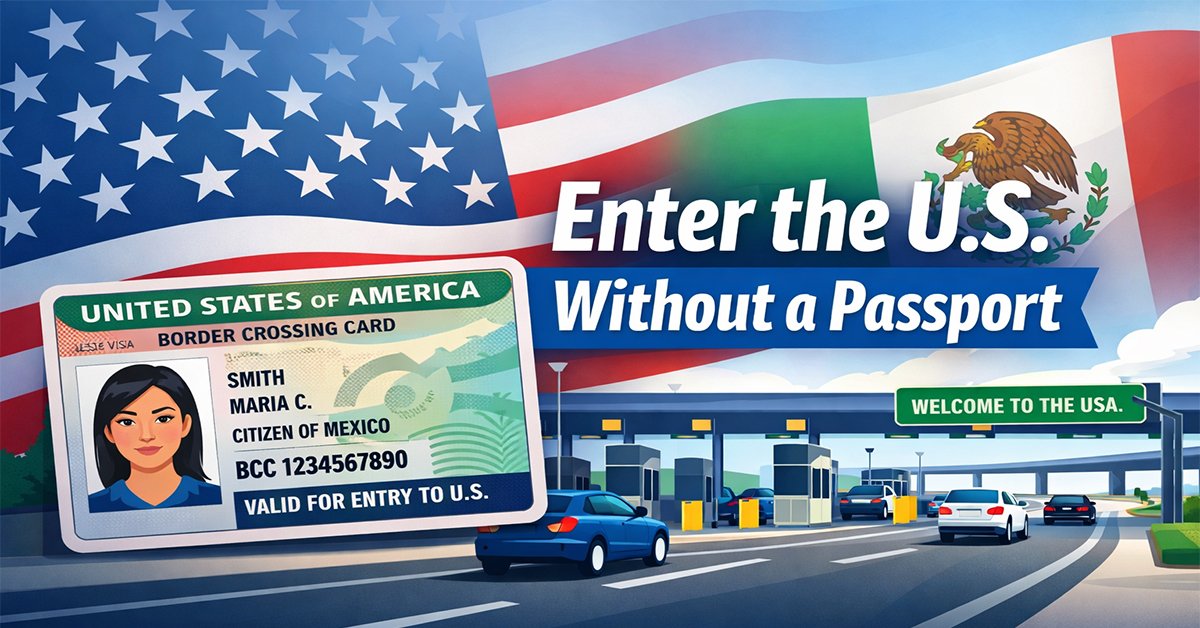

Traveling to the United States typically requires two essential documents: a valid passport and a visa. However, there’s a lesser-known exception that allows eligible Mexican citizens to cross the border legally without either document. This special privilege comes through the Border Crossing Card (BCC), also known as a “laser visa.”
If you’re a Mexican citizen living near the U.S. border or planning frequent short trips, understanding the BCC could save you time and simplify your travel plans. Here’s everything you need to know about this unique document.
What Is a Border Crossing Card (BCC)?
The Border Crossing Card is a wallet-sized document issued by the U.S. Department of State to eligible Mexican citizens. According to U.S. Customs and Border Protection (CBP), this card incorporates advanced biometric technology and security features that allow border officials to quickly verify the cardholder’s identity.
Key features of the BCC:
- Valid for 10 years from the date of issuance
- Allows unlimited border crossings during its validity period
- Designed specifically for short visits related to tourism, shopping, or business meetings
- Contains embedded technology similar to modern passport chips
The BCC serves a dual purpose: it functions as both a B-1/B-2 visitor visa and an entry document for land and sea crossings from Mexico.
When Can You Use Only the BCC?
The BCC alone is sufficient when Mexican citizens enter the United States under these specific conditions:
Travel method matters: You can use just your BCC when crossing by land (car, bus, or walking), pleasure boat, or ferry directly from Mexico. No passport is required for these entry methods.
Air travel requires a passport: If you’re flying into the U.S., you must present both your BCC and a valid Mexican passport, even for short visits within the border zone.
Cruise ship exception: Travelers on cruise ships that visit foreign ports before arriving in the U.S. must also carry a valid passport alongside their BCC.
Understanding the Limitations
While the BCC offers convenient access to the United States, it comes with important restrictions:
Time limit: Cardholders may stay in the U.S. for up to 30 days per visit. This is significantly shorter than the typical 180-day maximum allowed for standard B-1/B-2 visa holders.
- → Slovakia Government Scholarship 2027 for International Students: Master’s and PhD Guide
- → Need a Passport Fast? How to Expedite Your U.S. Passport Renewal Step-by-Step
- → Want a $60K+ Salary Without a 4-Year Degree? 15 Certificates You Can Finish in Under a Year
- → Planning a Trip to Europe? 6 Essential Entry Rules to Avoid Denial at the Border
- → Heading to Border Control? Key Immigration Questions You Must Be Ready to Answer
- → Planning a European Trip? What Starkville’s Indian Community Should Know About Schengen Visas
- → 11 Countries Offering Funded Ph.D. Programs for International Students
Geographic restrictions: BCC holders must remain within designated border zones. These areas vary by state:
- California: Within approximately 25 miles (40 kilometers) of the Mexican border
- Arizona: Up to 75 miles (120 kilometers) from the border
- New Mexico: Up to 55 miles (88 kilometers) or as far north as Interstate 10, whichever extends farther
- Texas: Within approximately 25 miles (40 kilometers) of the border
Traveling beyond these zones without proper documentation violates the terms of the BCC and could result in serious immigration consequences.
Who Qualifies for a Border Crossing Card?
The BCC is available exclusively to Mexican citizens who meet U.S. visa requirements. To be eligible, applicants must:
- Be a citizen of Mexico
- Demonstrate ties to Mexico (residence, employment, family connections)
- Show intent to return to Mexico after each visit
- Have no immigration violations or criminal history that would make them inadmissible
- Pass a visa interview at a U.S. consulate or embassy
Children under 15 can obtain a BCC valid until their 15th birthday, after which they must reapply for an adult card.
How to Apply for a BCC
The application process is similar to applying for a standard U.S. visa:
- Complete the online DS-160 form on the U.S. Department of State website
- Pay the non-refundable application fee
- Schedule an interview appointment at a U.S. consulate in Mexico
- Gather required documents (birth certificate, proof of Mexican citizenship, evidence of ties to Mexico)
- Attend your visa interview
- Provide biometric data (fingerprints and photograph)
If approved, your BCC will be mailed to you or available for pickup at the consulate.
The Bottom Line
The Border Crossing Card represents a valuable travel option for Mexican citizens who live near the border and make frequent short trips to the United States. While it doesn’t replace a passport in all situations, it streamlines the border crossing process for eligible travelers moving by land or sea.
Before relying solely on your BCC, always verify current requirements and ensure your travel plans fall within the card’s limitations. Understanding these rules helps you avoid complications at the border and ensures smooth, legal entry into the United States.
Important reminder: Immigration regulations can change. Always check the official U.S. Customs and Border Protection website or consult with the nearest U.S. consulate for the most current information before traveling.
