
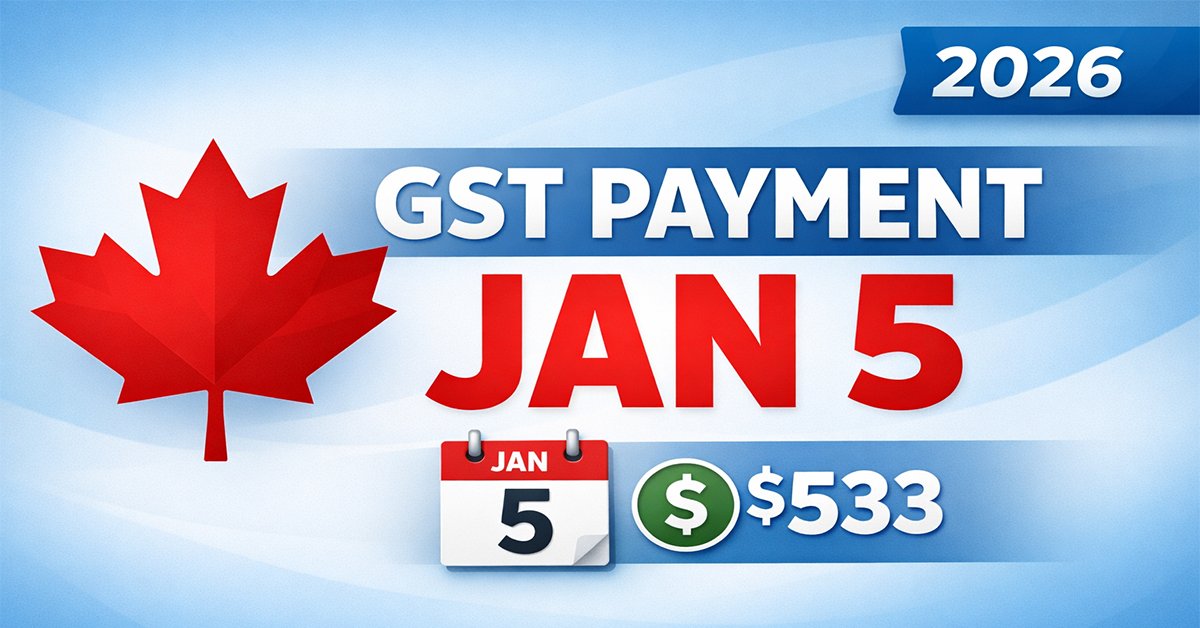

Millions of Canadian households will wake up to a welcome deposit this Monday morning. The Canada Revenue Agency is issuing the first GST/HST credit payment of 2026 on January 5th, putting money back into the pockets of low- and modest-income families right after the holiday season.
If you’re wondering whether you qualify, how much you’ll receive, or when the next payments arrive, this guide covers everything you need to know about the GST credit in 2026.
What Is the GST/HST Credit?
The GST/HST credit is a tax-free quarterly payment designed to help Canadians offset the goods and services tax they pay on everyday purchases. Unlike many benefits that require applications, this credit is automatically assessed when you file your annual tax return.
The payment operates on a benefit year that runs from July to June, with amounts recalculated each summer based on your previous year’s income tax return.
January 5 Payment: What You Need to Know
Payment Timeline
Most eligible Canadians will receive their payment via direct deposit on Monday, January 5, 2026. If you’re registered for paper cheques, expect your payment to arrive by mail within the following days.
How Much Will You Receive?
For the current benefit year (July 2025 to June 2026), the maximum annual amounts are:
- $533 for single individuals
- $698 for couples or common-law partners
- $184 for each child under 19
Since payments are issued quarterly, you’ll receive one-quarter of your annual entitlement on January 5. Keep in mind that these are maximum amounts—your actual payment depends on your household income and family size.
How Your Payment Is Calculated
The January and April 2026 payments are calculated using your adjusted family net income from your 2024 tax return. This is why filing your taxes on time is crucial for receiving uninterrupted payments.
Who Qualifies for the GST Credit in 2026?
Eligibility is straightforward, but there are specific requirements:
You qualify if you:
- Are a Canadian resident for tax purposes
- Are at least 19 years old
If you’re under 19, you can still qualify if:
- You have or had a spouse or common-law partner, OR
- You are or were a parent living with your child
The credit is income-tested, which means it gradually reduces as your household income increases and eventually phases out completely at certain thresholds.
Income Thresholds: Will You Receive Payment?
Your adjusted family net income determines whether you’ll receive the credit. For the 2024 base year (affecting January and April 2026 payments), the credit reduces to zero at these income levels:
Single Individuals:
- No children: $56,181
- One child: $63,161
- Two children: $66,841
- Three children: $70,521
- Four children: $74,201
Married or Common-Law Couples:
- No children: $59,481
- One child: $63,161
- Two children: $66,841
- Three children: $70,521
- Four children: $74,201
If your income falls below these thresholds, you may still receive a payment, though the amount will be reduced based on your specific household income.
Special Situations: Students and Newcomers
Students with Low Income
Many students qualify for the GST credit even with minimal income. Your eligibility is based on your adjusted family net income, which can include employment earnings, taxable scholarships, and other reportable income. File your tax return to find out if you’re eligible.
New to Canada?
Newcomers can qualify once they become Canadian residents for tax purposes. If you arrived after tax filing season, you’ll need to apply for the credit:
- Without children: Use form RC151 (available online)
- With children: Submit form RC66 with required supporting documents
After your first year, the CRA will automatically assess your eligibility when you file your annual tax return.
Important: GST Increase Coming in July 2026
Here’s something many Canadians miss—your GST payment will increase starting July 2026.
The benefit year that began in July 2025 reflected a 2.7% indexation increase. The July 2026 payment will include a new 2% adjustment, bringing maximum annual amounts to approximately:
- $543 for single individuals
- $712 for couples
- $188 per child
This means your July payment will be the first to reflect the higher amounts for the 2026-2027 benefit year.
All GST Payment Dates for 2026
Mark these dates on your calendar:
- January 5, 2026 (this weekend)
- April 2, 2026
- July 3, 2026 (with 2% increase)
- October 5, 2026
- January 5, 2027
Payments arrive by direct deposit on these dates for most recipients, with cheques following by mail for those not enrolled in direct deposit.
- → Need a Passport Fast? How to Expedite Your U.S. Passport Renewal Step-by-Step
- → Want a $60K+ Salary Without a 4-Year Degree? 15 Certificates You Can Finish in Under a Year
- → Planning a Trip to Europe? 6 Essential Entry Rules to Avoid Denial at the Border
- → Heading to Border Control? Key Immigration Questions You Must Be Ready to Answer
- → Planning a European Trip? What Starkville’s Indian Community Should Know About Schengen Visas
- → 11 Countries Offering Funded Ph.D. Programs for International Students
- → U.S. Dollar Reaches Two-Week High Driven by Middle East Tensions and Fed Policy Outlook
What to Do If Your Payment Doesn’t Arrive
If you don’t receive your deposit on January 5, follow these steps:
- Check your CRA My Account to view your payment status
- Verify your information is current (address, banking details, marital status)
- Review potential reasons for stopped or changed payments
Important note: If your quarterly payment is less than $50, the CRA won’t send quarterly deposits. Instead, you’ll receive your full annual amount as a lump sum in July.
Protecting Yourself from GST Scams
Payment dates often trigger a wave of scam messages. Here’s what you need to know:
The CRA will never:
- Ask you to confirm banking details through email or text links
- Request immediate payment to “unlock” your benefits
- Threaten you with arrest for benefit-related issues
If you receive a suspicious message claiming to be from the CRA, don’t click any links. Instead, log into your CRA My Account directly through the official website to check your benefit status.
How to Ensure You Receive Every Payment
Follow these three simple steps to protect your GST payments:
1. File Your Tax Return on Time
Your GST credit is automatically assessed when you file your taxes. Missing the filing deadline can interrupt your payments or reduce your entitlement.
2. Keep Your CRA Information Updated
Notify the CRA immediately when you experience these changes:
- Address changes
- Direct deposit banking information
- Marital status (marriage, separation, divorce)
- Custody arrangements for children
3. Monitor Your CRA My Account
Your online account shows your benefit status, payment history, and upcoming payment amounts. Regular checks help you catch and resolve issues before they affect your payments.
Frequently Asked Questions
Do I need to apply every year?
No. Once you file your tax return, the CRA automatically assesses your eligibility. You don’t need to reapply annually.
Can both parents receive GST credit in shared custody situations?
In shared custody arrangements, the CRA may split child-related benefits between eligible caregivers. Ensure your custody details are correctly reported to avoid payment issues.
What happens if my relationship status changes?
Marital status changes can trigger benefit recalculations since eligibility is assessed at the household level. Update your status with the CRA immediately to avoid overpayments or missed benefits.
Can temporary residents receive the GST credit?
Temporary residents (work permit or study permit holders) may qualify once they’re considered residents for tax purposes. You may need to provide proof of status and residency ties.
The Bottom Line
The January 5, 2026 GST payment provides meaningful financial support for millions of Canadian households at a time when many need it most—right after the holiday season.
With three more payments scheduled throughout 2026 and a 2% increase taking effect in July, this benefit remains one of the most consistent sources of support for low- and modest-income families.
Make sure you’re set up to receive every payment you’re entitled to by filing your taxes on time and keeping your CRA profile current. Your January payment should arrive in your account on Monday morning if you’re enrolled in direct deposit.
