

Introduction: A Game-Changing Opportunity for Canadian Permanent Residency
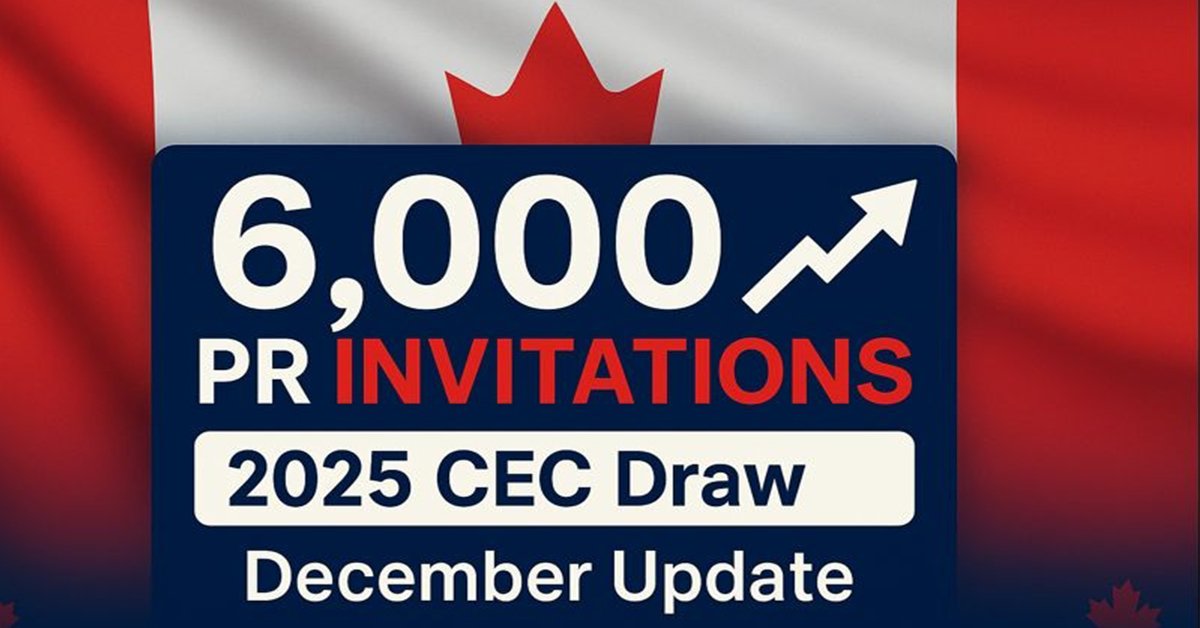
December 10, 2025, marked a pivotal moment for thousands of immigration hopefuls across Canada. Immigration, Refugees and Citizenship Canada (IRCC) issued 6,000 invitations to apply for permanent residency through the Canadian Experience Class (CEC) Express Entry program—the largest such draw in over 16 months and a clear signal of shifting immigration priorities as Canada heads into 2026.
For skilled workers already established in Canada, this represents more than just numbers on a government bulletin. It’s an opportunity to transition from temporary status to permanent residence, with the CRS cutoff dropping to 520 points—11 points lower than the previous CEC draw on November 26.
- → Need a Passport Fast? How to Expedite Your U.S. Passport Renewal Step-by-Step
- → Want a $60K+ Salary Without a 4-Year Degree? 15 Certificates You Can Finish in Under a Year
- → Planning a Trip to Europe? 6 Essential Entry Rules to Avoid Denial at the Border
- → Heading to Border Control? Key Immigration Questions You Must Be Ready to Answer
- → Planning a European Trip? What Starkville’s Indian Community Should Know About Schengen Visas
- → 11 Countries Offering Funded Ph.D. Programs for International Students
- → U.S. Dollar Reaches Two-Week High Driven by Middle East Tensions and Fed Policy Outlook
Understanding the December 10 CEC Draw: Key Numbers and Requirements
The latest Express Entry round targeted candidates who already possess Canadian work experience, a crucial factor as IRCC recalibrates its strategy to prioritize in-Canada applicants.
Draw Highlights:
- Total Invitations: 6,000 ITAs (Invitations to Apply)
- Minimum CRS Score: 520 points
- Tie-Breaking Date: July 15, 2025, at 12:30:46 UTC
- Application Deadline: 60 days from invitation date
This draw not only surpasses all previous 2025 CEC rounds but also breaks a months-long pattern of smaller draws that consistently issued only 1,000 invitations per round. The last comparable CEC event occurred on July 17, 2024, when IRCC issued 6,300 ITAs.
Who Benefits Most from This CEC Draw?
The Canadian Experience Class specifically targets individuals who have gained valuable work experience within Canada’s borders. If you fall into any of these categories, this draw could be your pathway to permanent residency:
Temporary Foreign Workers: Those currently employed in Canada on work permits, especially in sectors facing labor shortages like healthcare, technology, trades, and transportation.
International Graduates: Students who completed Canadian post-secondary education and secured at least one year of qualifying work experience are prime candidates for CEC draws.
Intra-Company Transferees: Professionals transferred to Canadian branches who have built local work experience and established themselves in the Canadian job market.
Working Holiday Visa Holders: Young professionals who used their working holiday permits to gain Canadian experience and now seek permanent status.
Why This Draw Matters: The Strategic Shift Toward 2026
This significant increase in invitations isn’t random—it reflects IRCC’s deliberate policy shift as Canada prepares for its 2026-2028 immigration framework. Several factors are driving this change:
Managing Temporary Resident Volumes: With hundreds of thousands of temporary residents approaching work permit expiration dates, large CEC draws help transition established workers into permanent pathways, reducing pressure on the temporary resident pool.
Addressing Labor Market Demands: Canada continues to face critical skills shortages across multiple sectors. By prioritizing candidates already working in Canada, IRCC ensures these workers can continue contributing to the economy without interruption.
Streamlining Integration: CEC candidates have already demonstrated their ability to integrate successfully into Canadian society. They understand local workplace culture, have established networks, and require less settlement support than overseas applicants.
Policy Alignment: The federal government’s focus on in-Canada applicants aligns with provincial priorities, creating a more cohesive national immigration strategy that addresses both federal and regional labor needs.
Historical Context: What Happened After Previous Large Draws?
History provides valuable insights into what CEC candidates might expect in the coming weeks. Following the major July 17, 2024 draw that issued 6,300 ITAs, IRCC conducted four consecutive biweekly CEC rounds:
- July 31, 2024: 5,000 invitations (CRS 510)
- August 14, 2024: 3,200 invitations (CRS 509)
- August 27, 2024: 3,300 invitations (CRS 507)
- September 19, 2024: 4,000 invitations (CRS 509)
These sustained rounds demonstrated IRCC’s commitment to accelerating pathways for in-Canada workers during periods of strategic policy implementation. While no guarantee exists that the same pattern will repeat, current government priorities suggest continued momentum for CEC-specific draws throughout the remainder of December 2025 and into early 2026.
Complete 2025 CEC Draw History: Tracking the Year’s Progression
Understanding the full year’s draw pattern helps candidates anticipate future opportunities and assess their competitiveness:
| Date | Invitations | CRS Cutoff |
|---|---|---|
| December 10, 2025 | 6,000 | 520 |
| November 26, 2025 | 1,000 | 531 |
| November 12, 2025 | 1,000 | 533 |
| October 28, 2025 | 1,000 | 533 |
| October 1, 2025 | 1,000 | 534 |
| September 3, 2025 | 1,000 | 534 |
| August 7, 2025 | 1,000 | 534 |
| July 8, 2025 | 3,000 | 518 |
| June 26, 2025 | 3,000 | 521 |
| June 12, 2025 | 3,000 | 529 |
| May 13, 2025 | 500 | 547 |
| February 5, 2025 | 4,000 | 521 |
| January 23, 2025 | 4,000 | 527 |
| January 8, 2025 | 1,350 | 542 |
The data reveals distinct periods: larger draws early in the year, a mid-year correction with smaller rounds maintaining high CRS thresholds, and now a strategic expansion as year-end approaches.
What to Do If You Received an Invitation
Congratulations! Receiving an ITA is a major milestone, but the work isn’t finished. Here’s your roadmap for the next 60 days:
Week 1-2: Document Gathering
- Compile employment reference letters detailing job duties, hours worked, and compensation
- Obtain updated language test results (IELTS, CELPIP, or TEF) if your current ones are expiring
- Request police certificates from all countries where you’ve lived for six months or more since age 18
- Gather educational credential assessments (ECA) from designated organizations
Week 3-4: Financial Documentation
- Prepare proof of funds if required (not applicable if currently working in Canada under a valid work permit)
- Organize bank statements, investment records, and other financial documents
- Ensure all documents are translated by certified translators if not in English or French
Week 5-7: Application Assembly
- Complete all forms accurately through your IRCC online account
- Upload high-quality scans of all supporting documents
- Write clear letters of explanation for any gaps or unusual circumstances
- Double-check that all information matches your Express Entry profile
Week 8: Final Review and Submission
- Review your entire application for consistency and completeness
- Have a trusted friend or immigration professional conduct a final check
- Submit your application well before the 60-day deadline to avoid technical issues
- Keep copies of everything for your records
Strategies to Improve Your CRS Score for Future Draws
If you didn’t receive an invitation in this draw, don’t be discouraged. Focus on strengthening your profile for upcoming rounds:
Language Proficiency Enhancement: Retaking language tests and improving your scores can add significant points. Each band level increase in IELTS or CELPIP can boost your CRS score by 6-24 points.
Additional Education: Completing another degree or certificate program in Canada adds points for multiple credentials and provides more Canadian work experience opportunities.
Provincial Nomination: Securing a provincial nomination through programs like Ontario’s Human Capital Priorities Stream or British Columbia’s Skills Immigration adds 600 points to your CRS score, virtually guaranteeing an ITA.
Canadian Work Experience: Each additional year of skilled work experience in Canada increases your score, with maximum benefits achieved at three years or more.
Spousal Factors: If your spouse or partner accompanies you, improving their language scores, education credentials, or Canadian work experience can boost your overall CRS score.
Job Offer Support: While not required for CEC, a valid job offer supported by a Labour Market Impact Assessment (LMIA) can add 50-200 points depending on the position’s NOC category.
Looking Ahead: What to Expect in 2026
As Canada transitions into its new immigration framework, several trends are likely to shape Express Entry draws:
Continued CEC Priority: With federal policy emphasizing in-Canada transitions, CEC draws will likely remain prominent throughout 2026, though sizes and frequency may fluctuate based on overall immigration targets.
Category-Based Selection Expansion: Expect more draws targeting specific occupations in healthcare, skilled trades, STEM fields, and transportation sectors, alongside continued French-language proficiency rounds.
Provincial Partnership Growth: The December 8 PNP draw that issued 1,123 invitations—the largest of 2025—signals growing provincial involvement in selecting immigrants who meet regional labor needs.
TR-to-PR Transition Programs: With 33,000 spaces allocated for work permit holders over the next two years, parallel pathways will complement Express Entry, creating multiple routes to permanent residence for in-Canada applicants.
Realistic Timeline Management: Processing times remain at the six-month standard for complete applications, though volumes may affect this benchmark. Early preparation and complete documentation submission remain crucial.
Frequently Asked Questions
Will there be more large CEC draws before year-end? Based on historical patterns and current policy direction, additional CEC draws are possible before December 31, though IRCC doesn’t announce draw schedules in advance. Candidates should maintain their Express Entry profiles and be ready to respond quickly to any invitation.
How does this draw compare to pre-2024 CEC rounds? This draw represents a return to the larger invitation volumes seen during 2021-2023, when Canada prioritized rapid immigration to address post-pandemic labor shortages. However, the CRS cutoff of 520 remains relatively high compared to those years, reflecting increased competition.
Can I apply to multiple immigration programs simultaneously? Yes! Many successful applicants pursue both Express Entry and Provincial Nominee Programs concurrently. Some also explore family sponsorship or other pathways, maximizing their chances of securing permanent residence.
What happens if I decline my ITA? Declining an invitation doesn’t prevent you from receiving future ITAs. Your profile remains in the Express Entry pool as long as it’s valid. However, carefully consider your decision, as opportunities vary with each draw.
Do international graduates have good chances in CEC draws? Absolutely! International graduates who have gained at least one year of Canadian work experience form a significant portion of successful CEC candidates. Their combination of Canadian education and work experience creates strong profiles.
Conclusion: Seizing Your Canadian Immigration Opportunity
The December 10, 2025 CEC draw represents more than just another Express Entry round—it’s a clear indication that Canada values the contributions of those already working and living within its borders. With 6,000 invitations issued and a CRS cutoff of 520, thousands of skilled workers now have a concrete pathway to permanent residency.
Whether you received an invitation in this draw or are preparing for future rounds, the key to success lies in understanding the process, maintaining an optimized profile, and staying informed about policy changes. As Canada continues evolving its immigration strategy through 2026, opportunities will emerge for candidates who remain prepared and persistent.
For those who received ITAs, the next 60 days are critical—gather your documents, complete your application thoroughly, and take this important step toward making Canada your permanent home. For those still waiting, use this time to strengthen your CRS score, explore provincial pathways, and position yourself for success in upcoming draws.
Canada’s immigration system rewards those who invest in their future here. This draw proves that opportunities exist for dedicated professionals who have already begun building their Canadian story.
