

Introduction
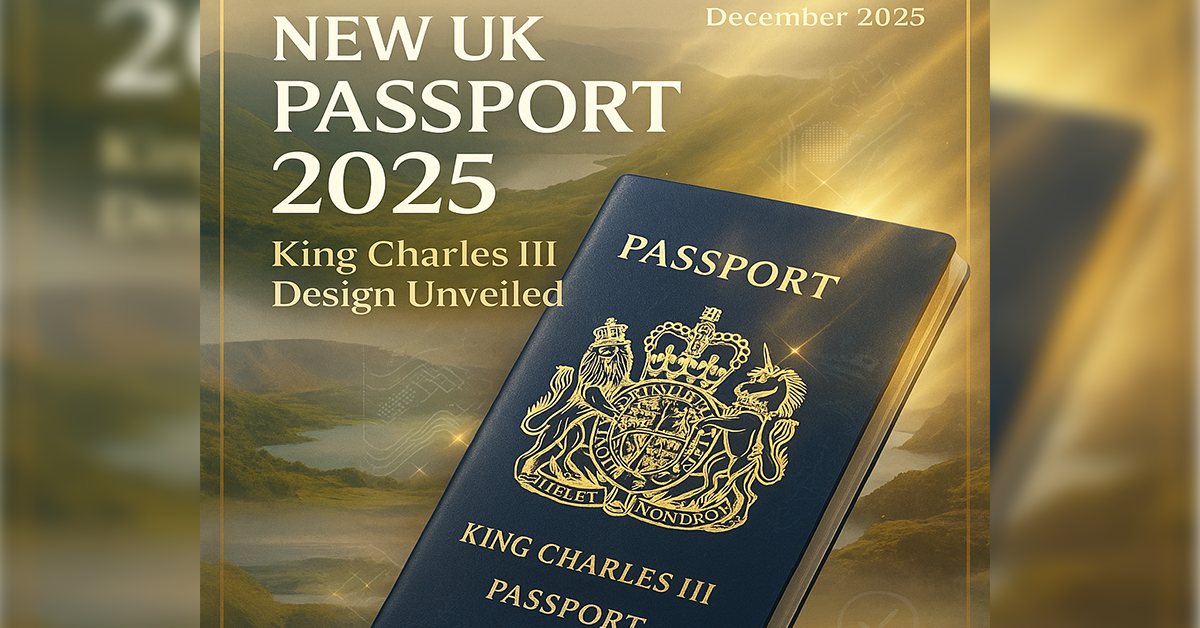
The United Kingdom has unveiled its first passport redesign since 2020, marking a historic transition as British passports now feature King Charles III’s Coat of Arms for the first time. Starting December 1, 2025, all newly issued British passports showcase this updated royal emblem alongside enhanced security features that officials describe as making it the most secure British passport ever produced.
This comprehensive guide covers everything UK travelers need to know about the 2025 passport redesign, from visual changes and security enhancements to renewal costs, post-Brexit travel rules, and how the new document affects your international travel plans.
What’s New in the 2025 UK Passport Design?
The Royal Transition: King Charles III’s Coat of Arms
The most immediately noticeable change appears on the passport’s front cover. The late Queen Elizabeth II’s Coat of Arms has been replaced with King Charles III’s official coat of arms, marking the first British passport to bear the new monarch’s crest.
Key Design Differences:
- The Crown: King Charles’s design features the rounded Tudor Crown, replacing the St Edward’s Crown used during Queen Elizabeth II’s reign
- Size Adjustments: The lion and unicorn supporting the shield are slightly smaller
- Subtle Changes: While maintaining the traditional heraldic format, the overall proportions have been refined
The dark blue cover introduced after Brexit in 2020 remains unchanged—only the royal emblem has been updated.
Inside Pages: Celebrating British Natural Heritage
Open the new passport and you’ll discover a departure from the geometric patterns of previous designs. The four nations of the UK are now represented through images of four UNESCO-protected natural landscapes: Ben Nevis, the Lake District, Three Cliffs Bay, and the Giant’s Causeway.
The Four Featured Landscapes:
- Ben Nevis (Scotland) – Britain’s highest mountain at 1,345 meters, located in the Scottish Highlands
- Lake District (England) – A UNESCO World Heritage site featuring England’s largest lakes and dramatic fells
- Three Cliffs Bay (Wales) – A stunning coastal formation on the Gower Peninsula with distinctive limestone cliffs
- Giant’s Causeway (Northern Ireland) – An iconic natural wonder consisting of approximately 40,000 interlocking basalt columns
These watermarked landscape images replace the previous abstract geometric patterns, creating what officials describe as a more meaningful representation of British identity and natural heritage.
Royal Connection to the Landscapes
The selected locations hold personal significance for King Charles III:
- He trekked in the foothills of Ben Nevis with the Lochaber Mountain Rescue Team in 1987
- He visited the Giant’s Causeway in June 1996, famously photographed sitting on the basalt columns
- He has made almost annual visits to the Lake District since 2001, maintaining a special relationship with Cumbria
Enhanced Security Features: The Most Secure British Passport Ever
Beyond aesthetic changes, the 2025 passport incorporates cutting-edge anti-forgery technology designed to stay ahead of sophisticated counterfeiting attempts.
Advanced Security Measures
Polycarbonate Bio-Data Page:
- Embedded personal information that’s virtually impossible to alter
- Laser-engraved passport numbers that cannot be erased or tampered with
- Multiple layers of protective coating
Holographic Elements:
- Complex holographic features that change appearance when tilted
- Multi-dimensional images visible only at certain angles
- Color-shifting elements that are extremely difficult to replicate
Translucent Features:
- See-through security windows with embedded designs
- Overlapping patterns that align perfectly when viewed against light
- Hidden images visible only under specific lighting conditions
UV-Responsive Components:
- Security features visible only under ultraviolet light
- Hidden patterns that appear during border control verification
- Multi-color UV reactive inks
Advanced Watermarks:
- The UNESCO landscape images function as sophisticated watermarks
- Multiple depth layers creating 3D effects
- Seamless integration of security and design elements
These features make passports easier to verify and even harder to forge or tamper with, significantly improving border security while maintaining quick processing times for legitimate travelers.
Why Security Upgrades Matter
The enhanced security features serve multiple purposes:
- Prevent Identity Theft: Making it virtually impossible to alter personal information
- Combat Human Trafficking: Stopping criminals from using forged documents
- Streamline Border Control: Enabling faster verification through automated systems
- Maintain International Standards: Ensuring UK passports meet or exceed global security benchmarks
- Protect National Security: Preventing unauthorized entry to the UK and other countries
When Will You Receive the New Passport Design?
Rollout Timeline
The new British passports are being issued from December 1, 2025. From this date forward:
- New Applications: Anyone applying for their first passport will receive the new design
- Renewals: All passport renewals will automatically be issued with the King Charles III design
- No Mandatory Upgrade: Existing passports with Queen Elizabeth II’s Coat of Arms remain fully valid until their expiration date
You Don’t Need to Rush to Renew
Current passport holders should understand that passports issued with the Coat of Arms of Queen Elizabeth II remain valid until the expiry date. There is absolutely no need to renew early simply to obtain the new design—doing so would forfeit any remaining validity on your current document.
When You Should Consider Early Renewal:
- Your passport has less than 6 months validity remaining
- You’re planning European travel and need to meet the 10-year issuance rule
- Your passport is damaged or has insufficient blank pages
- You’ve changed your name and need documentation to match
Processing Times
In the first 6 months of 2025 over 3.8 million passports were issued, with 99.7% of applications where no further information was required being processed within 3 weeks. This efficiency rate exceeds the government’s target of 98.5%.
Typical Processing Windows:
- Standard Application: 3 weeks (for straightforward applications)
- Complex Applications: 4-6 weeks (when additional information is required)
- First-Time Applicants: 4-6 weeks (may include interview requirements)
- Overseas Applications: 6-8 weeks (longer for some countries)
Premium Services Available:
- Fast Track (1 week): Available at select Post Office branches
- Premium (1 day): Available at selected passport offices by appointment
Cost of the New UK Passport
The 2025 passport redesign does not come with a price increase. Renewal costs remain the same as earlier in 2025.
Current Passport Fees (December 2025)
| Application Type | Online Cost | Postal Cost | Premium 1-Day |
| Adult (16+) Passport | £94.50 | £107.00 | £222.00 |
| Child (Under 16) | £61.50 | £74.00 | £189.00 |
| 50+ Page (Frequent Traveler) | Add £22.00 | Add £22.00 | Add £22.00 |
Money-Saving Tip: Always apply online when possible. The £12.50 savings over postal applications adds up, especially for families renewing multiple passports.
Fee History Context
Passport fees increased by approximately 25% in 2024 compared to 2022 rates. While there’s no confirmation of future fee changes, UK travelers should budget for potential increases when planning multi-year travel.
Post-Brexit Travel Rules: What UK Passport Holders Must Know
The new passport design doesn’t change post-Brexit travel requirements, but understanding these rules is crucial for European travel.
European Union & Schengen Area Rules
Since leaving the European Union, UK passport holders are classified as “third-country nationals” when traveling to Europe. This classification brings specific requirements that didn’t exist during EU membership.
Passport Validity Requirements for European Travel
Your UK passport must meet both of these conditions for travel to EU/Schengen countries:
1. 10-Year Issuance Rule Your passport must have been issued less than ten years before your arrival date to the EU destination.
Example: If your passport was issued on January 15, 2016, it cannot be used for travel to the EU after January 14, 2026, even if the expiration date is later.
2. Three-Month Validity Rule Your passport must be valid for at least three months after the day you plan to leave the EU or Schengen area.
Example: If you plan to depart France on June 1, 2026, your passport must remain valid until at least September 1, 2026.
Common Mistakes to Avoid
“Extra Months” Confusion: Before Brexit, UK citizens could add up to 9 months of extra validity when renewing early. These “bonus months” no longer count toward the 10-year rule for European travel. Only use the original issue date when calculating eligibility.
Checking Only Expiration Date: Many travelers only check their passport’s expiration date without considering the 10-year issuance rule. Both conditions must be met—failing either results in denied boarding or entry refusal.
The 90/180 Day Rule
UK citizens can stay within the Schengen Area for up to 90 days in any 180-day period. This rule applies whether you visit one country or multiple Schengen nations.
How It Works:
- Calculate backwards 180 days from today
- Count all days spent in the Schengen Area during that period
- If you’ve used 90 days, you cannot return until enough time has passed to bring you under the 90-day limit
Example:
- You spent 60 days in Spain (January-February 2026)
- You have 30 days remaining within your 180-day window
- By mid-August 2026, your January days will fall outside the 180-day rolling window, adding back to your available days
Coming Soon: ETIAS Authorization
Starting in late 2026, UK travelers will need to obtain ETIAS authorization before traveling to Europe. This electronic travel authorization is similar to the US ESTA system.
ETIAS Key Details:
- Cost: €7 (approximately £6)
- Validity: 3 years or until passport expiration
- Processing Time: Usually instant, but can take up to 4 days
- Application Method: Online only
- Required For: All UK nationals entering the Schengen Area
ETIAS is not a visa—it’s a pre-travel screening authorization that links to your passport electronically.
Entry/Exit System (EES)
The Entry/Exit System requires non-EU citizens to register at the EU border by scanning their passport and having their fingerprints and photograph taken. This system began phased implementation in October 2025 and will be fully operational by April 2026.
First-Time Registration:
- Passport scan
- Fingerprint capture (all fingers)
- Facial photograph
- Process takes 1-2 minutes per person
Subsequent Entries:
- Quick passport scan
- Either fingerprint or photo verification
- Significantly faster than initial registration
Registration Validity: 3 years or until passport expiration, whichever comes first
Countries Exempt from EU Rules
Ireland: Due to the Common Travel Area (CTA) agreement, UK citizens can travel to Ireland without ETIAS and without the 90/180-day limit. Free movement continues as it did before Brexit.
Cyprus: Not part of the Schengen Area—different rules apply
How to Apply or Renew Your UK Passport
Online Application (Recommended)
Step-by-Step Process:
- Gather Required Documents:
- Current passport (if renewing)
- Digital passport photo (follow strict guidelines)
- Credit or debit card for payment
- Visit GOV.UK:
- Navigate to gov.uk/apply-renew-passport
- Select whether you’re applying for a first passport or renewing
- Complete Digital Application:
- Enter personal information exactly as it appears on official documents
- Upload digital passport photo (or use photo code from participating photo booths)
- Provide referee details if required (first-time adult applications)
- Submit and Pay:
- Review all information carefully
- Pay £94.50 (adult) or £61.50 (child) online
- Save your application reference number
- Send Old Passport:
- You’ll receive instructions to send your old passport via secure delivery
- Use the tracking service provided
- Receive New Passport:
- Delivered by secure courier within 3 weeks for most applications
- Your old passport will be returned canceled alongside your new one
Postal Application
If you prefer paper applications or cannot access online services:
- Download and print Form C1 (renewals) or Form OS (first-time/overseas)
- Complete all sections with a black pen
- Obtain compliant passport photos from a professional photographer
- Include required supporting documents
- Send with postal order or check for £107 (adult) or £74 (child)
- Post to the address specified on the form
Processing Time: 4-6 weeks for postal applications
Photo Requirements
Passport photos must meet strict specifications:
- Size: 45mm high × 35mm wide
- Background: Plain light grey or cream (no white)
- Expression: Neutral (mouth closed, no smile)
- Eyes: Open and visible (glasses allowed only if necessary)
- Head Coverage: Only for religious or medical reasons (face must be fully visible)
- Recent: Taken within the last month
Photo Code Option: Many UK photo booths offer a passport photo code service, allowing you to upload your photo digitally during online application.
Traveling with Old vs. New Passport Designs
Both Designs Are Equally Valid
Whether your passport features Queen Elizabeth II’s or King Charles III’s Coat of Arms makes no difference to its validity or acceptance internationally.
What Matters for Travel:
- Sufficient validity remaining
- Passport in good condition (no tears, water damage, or separation of pages)
- Sufficient blank pages (at least 2-3 for most countries)
- Meets specific country entry requirements (like the EU’s 10-year rule)
Burgundy Passports Still Valid
Some UK citizens still hold burgundy-colored passports issued before the 2020 Brexit redesign. These remain valid until their expiration date. The color doesn’t affect usability—only the validity dates matter.
When Your Passport Expires
Adult Passports: Valid for 10 years from issue date Child Passports: Valid for 5 years from issue date
Plan Ahead: Many countries require 6 months validity beyond your travel dates. Don’t wait until the last minute to renew.
Special Considerations for Frequent Travelers
Jumbo Passport Option
Frequent travelers can request a 50-page passport (instead of the standard 34 pages) for an additional £22.
Who Should Get the Jumbo:
- Business travelers visiting multiple countries monthly
- Digital nomads staying abroad for extended periods
- Anyone who filled their previous passport before expiration
Application Process: Simply select the 50-page option when applying online or tick the appropriate box on postal applications.
Fast Track and Premium Services
When time is critical, expedited services are available:
Fast Track Service:
- Cost: £142 (adult) / £122 (child)
- Processing: 1 week from appointment
- Availability: Select Post Office branches nationwide
- Booking: Must book appointment online in advance
Premium Service:
- Cost: £222 (adult) / £189 (child)
- Processing: Same day or next day
- Availability: London, Belfast, Durham, Glasgow, Newport, Peterborough passport offices
- Requirements: Must attend appointment in person with all documents
When to Use Expedited Services:
- Emergency travel within 2 weeks
- Urgent business trips
- Unexpected family situations abroad
- Last-minute holiday bookings (though not recommended)
Common Questions About the New UK Passport
Do I need to renew my passport to get the new design?
No. Your current passport remains valid until its expiration date regardless of the design. Only renew when required for validity reasons or if traveling to countries with specific passport requirements.
Will the new passport cost more?
No. The 2025 redesign does not include a fee increase. Standard adult renewal remains £94.50 online or £107 by post.
Can I travel to Europe with Queen Elizabeth II’s Coat of Arms on my passport?
Yes, absolutely. The royal emblem doesn’t affect validity. What matters is meeting the EU’s 10-year issuance rule and 3-month validity requirement.
How long does it take to receive the new passport?
Currently, Brits can expect to receive a new UK passport within three weeks for straightforward applications. Complex cases may take 4-6 weeks.
Will my old passport be returned?
Yes. When you renew, your expired passport will be canceled (with a corner cut off) and returned with your new passport. This preserves any visa stamps or travel history you want to keep.
Can children have the new passport design?
Yes. All passport applications from December 1, 2025 onward—including children’s passports—feature the new King Charles III design with UNESCO landscape images.
What if I lose my passport abroad?
Contact the nearest British embassy or consulate immediately. They can issue emergency travel documents to get you home, though these have limited validity and may not be accepted for onward travel.
Do I need a visa to travel to Europe now?
Not currently. UK citizens can still visit Schengen Area countries for up to 90 days in any 180-day period without a visa. However, starting late 2026, you’ll need ETIAS authorization (not a visa) before traveling.
Can I use ePassport gates with the new passport?
Yes. The new UK passport contains the same biometric chip technology as previous versions, allowing use of automated ePassport gates at many international airports.
What happens if my passport is damaged?
Damaged passports may not be accepted for travel. Common damage includes water damage, torn pages, separated covers, or significant wear. If your passport is damaged, apply for a replacement rather than risk being denied boarding.
Essential Travel Checklist for UK Passport Holders
Before Booking Travel (6+ Months Out)
- Check passport expiration date
- Verify passport was issued within the last 10 years (for EU travel)
- Ensure at least 6 months validity beyond travel dates
- Confirm sufficient blank pages (minimum 2-3)
- Inspect passport for damage (tears, water damage, loose pages)
- Consider renewal if validity is marginal
3 Months Before Travel
- Research entry requirements for all destinations
- Check visa requirements (if traveling beyond Europe)
- Apply for ETIAS when available (late 2026 for Europe)
- Purchase travel insurance
- Make copies of passport bio page (physical and digital)
- Photograph all travel documents and store securely online
1 Month Before Travel
- Verify all travel authorizations received
- Double-check passport meets destination requirements
- Save emergency contact numbers (embassy, consulate)
- Inform bank of travel plans to avoid card blocks
- Check health requirements (vaccinations, health forms)
1 Week Before Travel
- Place passport in easily accessible hand luggage
- Add paper copies of important documents to checked luggage
- Download offline maps and important documents
- Verify flight times and check-in requirements
- Confirm accommodation bookings
Day of Travel
- Passport in hand luggage (never checked baggage)
- Arrive early for EES biometric registration (if first EU visit since October 2025)
- Have supporting documents ready (return tickets, accommodation proof)
- Ensure passport accessible throughout journey
The Evolution of British Passport Design
Historical Context
British passports have evolved significantly since the first modern passport was introduced in 1915. Key milestones include:
1915: First modern-style British passport introduced 1972: First security feature (watermark) added 1988: Machine-readable passports introduced 1998: Digital photographs replace glued photos 2006: Biometric passports with embedded chips launched 2010: Security features including UV-reactive elements 2020: Return to blue covers after Brexit 2025: King Charles III Coat of Arms and UNESCO landscapes
Each redesign typically occurs every 5 years, incorporating the latest anti-forgery technology while maintaining Britain’s passport heritage and international standards.
- → New Canada Benefit Payments Arriving This Week in May 2026
- → Canada Bread Settlement Payments Begin Rolling Out Across Canada in 2026
- → Canada Immigration Backlog Update 2026: IRCC Application Inventory Crosses 2.15 Million
- → Canada Expands Visa-Free Travel Access for Citizens of Indonesia and Malaysia in 2026
- → Canada’s 365-Day Maintained Status Work Rule in 2026: What Foreign Workers Need to Know
- → Canada Launches Early Retirement Incentive Program in 2026: Eligibility, Benefits, and Application Process Explained
- → Bringing Your Family to New Zealand on a Work Visa: Complete 2026 Guide
Why Passport Security Matters
Passport fraud remains a significant global security concern. Enhanced security features in the 2025 design help:
- Prevent illegal immigration through forged documents
- Combat identity theft and fraud
- Protect national security
- Maintain UK passport integrity globally
- Ensure British travelers face minimal scrutiny at borders
The Home Office’s investment in cutting-edge security technology ensures British passports remain among the most trusted and secure travel documents worldwide.
Brexit Impact: What Changed and What Didn’t
What Changed for UK Travelers
Lost Privileges:
- No access to EU/EEA passport queues at borders
- Must use “All Passports” or “Non-EU” lanes
- 90/180-day limit on Schengen Area visits
- Passport stamping required (until EES fully operational)
- May be questioned about trip purpose and plans
- No automatic right to work or study in EU without visa
New Requirements:
- Passport must meet stricter validity rules
- ETIAS authorization needed from late 2026
- Biometric registration for EES system
- More stringent border checks
Lost Automatic Rights:
- Free movement throughout EU
- Ability to live in EU without visa/permit
- Automatic right to work in EU countries
- Access to EU healthcare with EHIC (replaced by GHIC)
What Didn’t Change
Preserved Rights:
- Visa-free travel to EU for up to 90 days per 180-day period
- ePassport gate access at many airports
- Common Travel Area with Ireland (unrestricted travel)
- Standard tourist and business visit privileges
- Access to most European countries without visas
Ireland Exception
Due to the Common Travel Area agreement (predating EU membership), UK-Ireland travel remains unchanged:
- No passport checks for most journeys
- No time limits on stays
- Freedom to live and work in each other’s countries
- Reciprocal healthcare rights
- No ETIAS requirement
Conclusion: Embracing the New Era of British Passports
The 2025 UK passport redesign represents more than a cosmetic update—it symbolizes Britain’s transition into a new royal era while embracing cutting-edge security technology. The King Charles III Coat of Arms and stunning UNESCO landscape imagery create a travel document that celebrates British identity, heritage, and natural beauty.
For UK travelers, the practical implications are minimal. Your current passport remains valid, costs haven’t increased, and processing times remain efficient. The enhanced security features work quietly in the background, making border crossings smoother while protecting against fraud and identity theft.
Key Takeaways:
- The new passport design launched December 1, 2025
- No need to renew early—old passports remain valid until expiration
- Renewal costs unchanged at £94.50 online (adult)
- Enhanced security makes it the most secure British passport ever
- Post-Brexit travel rules apply to all UK passport designs
- ETIAS authorization required for Europe from late 2026
As you plan future travels, stay informed about evolving entry requirements, particularly ETIAS implementation and EES registration. The world remains accessible to UK passport holders—you simply need to plan ahead and understand the requirements.
Your Next Steps:
- Check your passport’s expiration date and 10-year issuance date
- Set a reminder to renew 6-9 months before expiration
- Research specific entry requirements for planned destinations
- Budget for upcoming ETIAS fees (£6) when traveling to Europe
- Stay updated on travel requirements through gov.uk
The new UK passport isn’t just a travel document—it’s a symbol of British resilience, adaptation, and forward-thinking security in an interconnected world. Whether yours features Queen Elizabeth II’s or King Charles III’s royal emblem, it remains your key to exploring our remarkable planet.
Additional Resources
Official Government Resources
- UK Passport Application: gov.uk/apply-renew-passport
- Travel Advice: gov.uk/foreign-travel-advice
- ETIAS Information: travel-europe.europa.eu/etias
- EES Information: gov.uk (search “Entry Exit System”)
Useful Tools
- Passport Check Service: gov.uk/check-a-passport-travel-europe
- 90/180 Calculator: schengenvisainfo.com/visa-calculator
- Travel Alerts: gov.uk/foreign-travel-advice
Emergency Contacts
- Passport Office: 0300 222 0000 (UK) / +44 300 222 0000 (abroad)
- Passport Advice Line: Operating hours 8am-8pm Monday-Friday, 9am-5:30pm weekends
- Emergency Travel Documents: Contact nearest British embassy/consulate
