
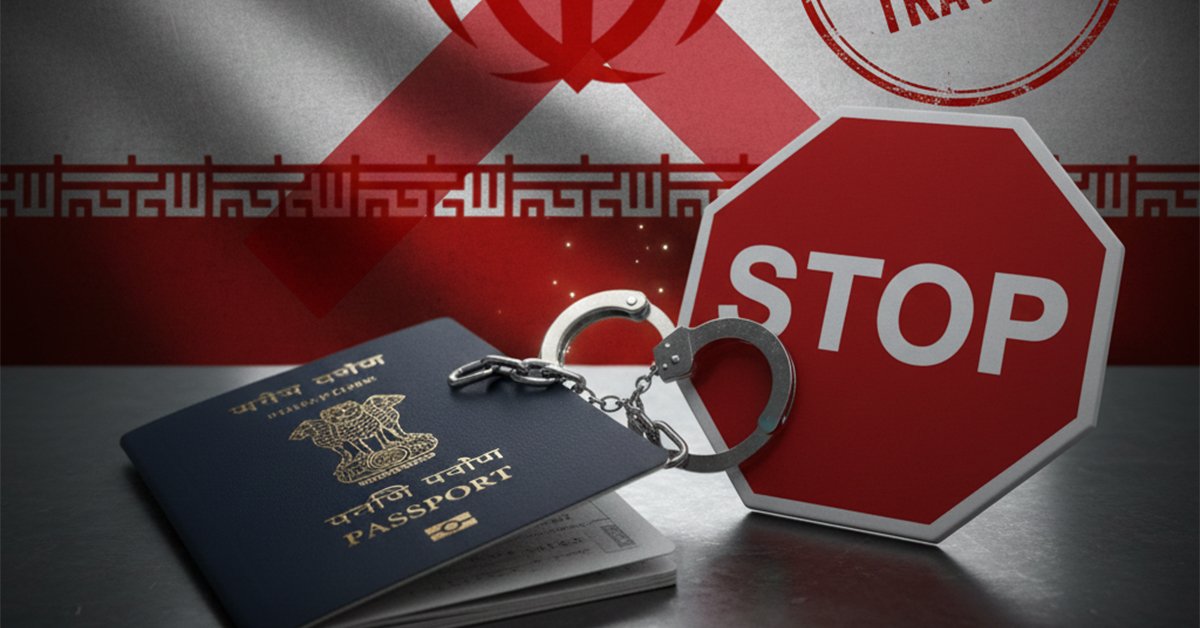

Visa-Free Entry Ends: Iran Responds to Surge in Criminal Exploitation
In a significant policy reversal impacting thousands of travellers, the Government of the Islamic Republic of Iran has formally suspended the visa waiver facility previously available to ordinary Indian passport holders. This measure, which takes effect from November 22, 2025, marks the end of a relatively short-lived open-door policy primarily designed to boost tourism.
The abrupt suspension was triggered by a disturbing rise in the misuse of the visa waiver facility by organized criminal networks, which have been preying on vulnerable Indian citizens. The Ministry of External Affairs (MEA) of India announced the change, stating that the Iranian government’s decision is intended specifically “to prevent further misuse of the facility by criminal elements.”
The Disturbing Pattern: False Promises, Trafficking, and Ransom
The decision follows a detailed review of numerous incidents involving the exploitation of Indian nationals. The MEA disclosed on Monday, November 17, 2025, that its attention had been drawn to a pattern of deceit and danger:
- → New Canada Benefit Payments Arriving This Week in May 2026
- → Canada Bread Settlement Payments Begin Rolling Out Across Canada in 2026
- → Canada Immigration Backlog Update 2026: IRCC Application Inventory Crosses 2.15 Million
- → Canada Expands Visa-Free Travel Access for Citizens of Indonesia and Malaysia in 2026
- → Canada’s 365-Day Maintained Status Work Rule in 2026: What Foreign Workers Need to Know
- → Canada Launches Early Retirement Incentive Program in 2026: Eligibility, Benefits, and Application Process Explained
- → Bringing Your Family to New Zealand on a Work Visa: Complete 2026 Guide
- False Lures: Indian nationals were being actively lured to Iran under the guise of two main false premises: lucrative employment opportunities or the assurance of easy, visa-free onward transit to desirable third countries, such as in the Gulf, Central Asia, or even Europe/Australia.
- Exploitation of Visa Waiver: These criminal elements, often in collusion with unscrupulous Indian agents, encouraged victims to use the visa waiver—which was strictly for tourism and short stays (typically 15 days once every six months)—to begin their journey.
- Kidnapping for Ransom: The most alarming revelation from the MEA is that “On arrival in Iran, many of them were kidnapped for ransom.” The visa-free route was effectively being used by traffickers and criminal gangs as a gateway to lure, trap, and hold Indian citizens hostage, demanding substantial sums (in some reported cases up to ₹50 lakh or more) from their families back home for their safe release.
Recent cases, including diplomatic interventions to rescue victims kidnapped and held in regions like Chabahar, underscored the urgency of the matter, forcing both New Delhi and Tehran to act decisively.
MEA’s High-Alert Advisory: Stay Vigilant and Shun Unauthorised Agents
The immediate consequence of Iran’s suspension is a major shift in travel requirements for all Indian passport holders.
The New Mandate (Effective November 22, 2025):
- Visa Required for Entry: Indian nationals with ordinary passports would be required to obtain a visa to enter Iran.
- Visa Required for Transit: Crucially, a visa will now also be required to transit through Iran, meaning travellers cannot even fly via an Iranian airport without appropriate documentation.
In response to the gravity of the situation, the MEA has issued a strongly worded travel advisory, urging the highest degree of caution.
“All Indian nationals intending to visit Iran are strongly advised to remain vigilant and avoid agents offering visa-free travel or onward transit to third countries via Iran.”
This warning aims to educate the public that any agent continuing to promise visa-free passage after November 22 is either misinformed or, more likely, part of the fraudulent networks responsible for the trafficking and kidnapping incidents.
Context: The Rise and Fall of the Visa Waiver
The now-suspended visa waiver facility for Indian citizens was part of a broader diplomatic and economic strategy launched by Iran in early 2024. The initiative aimed to boost the country’s tourism sector, strengthen people-to-people ties, and increase revenue from short-term visits for citizens of over 30 countries, including India.
For legitimate Indian tourists drawn to Iran’s rich cultural heritage, including the ancient sites of Isfahan and Shiraz or the pilgrimage centres like Qom and Mashhad, the waiver offered seamless travel. However, the lack of stringent screening associated with the visa-free status created a major vulnerability that criminal networks quickly exploited to bypass conventional immigration checks.
The MEA has consistently reminded citizens that the visa waiver was exclusively for tourism purposes and did not permit employment. Unfortunately, this distinction was intentionally blurred by fraudulent agents seeking to exploit the desperation of Indian job-seekers aiming for lucrative overseas work.
The decision to withdraw the facility, while complicating travel for genuine tourists and business visitors, is viewed as a necessary evil to safeguard the lives of Indian citizens from transnational organized crime.
Practical Implications for Indian Travellers
The swift implementation date of November 22, 2025, means that travellers, airlines, and travel agents must adjust immediately.
- Airlines Instruction: Airlines operating flights to or through Iran have been formally instructed to enforce strict visa verification at the departure airport. Passengers without a valid visa may be denied boarding, detained upon arrival, or repatriated at their own expense.
- Travel Planning: Any Indian national who had planned a trip to Iran relying on the visa-free provision must now immediately apply for the appropriate category of visa (e.g., Tourist, Business, or Transit) through the Iranian Embassy or Consulate well in advance of their travel date.
- Prioritize Official Channels: The advisory serves as a firm reminder that all employment-related travel must be strictly vetted through authorized, official channels, and that overseas job offers should be carefully scrutinized to avoid falling prey to well-organized trafficking rackets.
The suspension underscores the challenges governments face in balancing open diplomatic relations and economic initiatives like tourism promotion with the imperative to secure borders and protect citizens from exploitation and grave security risks
