
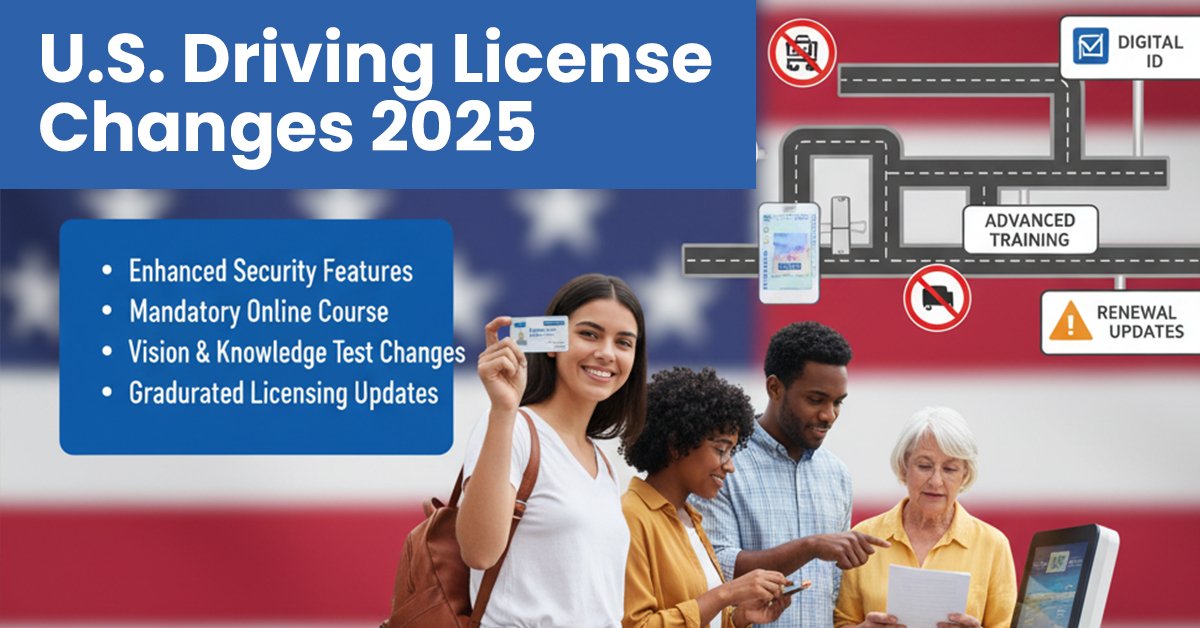

The United States is moving toward one of the most significant upgrades to its identification and driver documentation system in nearly two decades. With the nationwide enforcement of REAL ID scheduled for October 7, 2025, millions of Americans will soon need to verify whether their driver’s license meets the new federal standards. These updates affect not just drivers, but anyone who travels domestically, visits federal facilities, or depends on government-issued identification for daily activities.
At the same time, a wave of misinformation circulating online has caused confusion—particularly regarding rumored new rules for senior citizens aged 70+. Viral posts claim upcoming federal tests, medical checks, and stricter license renewal requirements. Yet most of this information is inaccurate and not supported by any federal agency.
This comprehensive guide explains the real changes happening in 2025, debunks misleading claims, and provides a detailed understanding of what drivers—citizens, immigrants, and foreign nationals—should expect from late 2025 onward. Whether you travel frequently, are renewing your license soon, or simply want to stay compliant, this guide will help you prepare with confidence.
Understanding REAL ID: The Foundation of the 2025 License Changes
REAL ID is not a new law, but its enforcement has been delayed multiple times since its introduction in 2005. Congress passed the REAL ID Act to enhance security of state-issued IDs by preventing fraud, identity theft, and the use of fake identification.
As part of federal security tightening, REAL ID-compliant licenses require states to verify documents more thoroughly before issuing an ID or driver’s license. Although Americans have been hearing about REAL ID for years, the final nationwide enforcement date is set for October 7, 2025.
From that date onward:
- A REAL ID or passport will be required to board domestic flights
- A REAL ID or passport will be needed to enter certain federal buildings, nuclear facilities, and military bases
- A REAL ID will not be required to drive, vote, access hospitals, or receive federal benefits.
A REAL ID-compliant license features a gold star in the upper right corner. If your current license lacks that star, it is not REAL ID compliant.
Why REAL ID Is Being Enforced Now
Security guidelines have evolved considerably since the early 2000s. The federal government is now standardizing how states confirm a person’s identity, residency, and immigration status.
Key goals of REAL ID enforcement include:
- Strengthening national security
- Reducing identity fraud
- Creating uniform standards across all U.S. states
- Ensuring consistent verification practices
After years of delays due to state readiness and COVID-19 logistical challenges, the 2025 enforcement date is unlikely to be postponed further.
What Changes for Drivers Starting November 2025?
While REAL ID enforcement officially begins in October 2025, states will begin adjusting driver’s license issuance practices as early as November 2025. These changes generally include:
1. More Document Requirements During License Renewal
Renewing a driver’s license may involve additional verification steps. DMV offices will require:
- Proof of identity (passport, birth certificate)
- Proof of Social Security number
- Two proofs of residency
- Lawful presence documents (for non-citizens)
2. Longer Processing Times at DMV Offices
Because verification is more strict, license approval may take longer.
3. No Change to Driving Privileges
Your ability to drive within the U.S. does not depend on REAL ID status. Even a non-REAL-ID license remains valid for road use.
4. Domestic Air Travel Requirements Will Change
Starting October 2025:
- TSA will not accept non-REAL-ID licenses for U.S. domestic flights.
- Alternative documents like passports or DHS-approved IDs will be required.
5. States May Update License Designs
Some states are redesigning their licenses to meet higher security standards.
Senior Driver Rules 2025: Rumors vs. Facts
In 2025, senior drivers became the center of a major misinformation storm. Viral posts across Facebook, TikTok, and Instagram claimed:
- Mandatory cognitive testing for drivers 70+
- Compulsory annual medical check-ups
- Reduced license validity periods
- Federal-level driving assessments
These claims spread rapidly, especially among older Americans worried about losing independence. However, fact-checkers—including Snopes—confirmed that these posts are false.
The Truth: No New Federal Rules for Senior Drivers
As of 2025:
- The U.S. federal government has not introduced nationwide testing for senior drivers.
- No new federal law targets drivers aged 65, 70, 75, or above.
- Driver assessments for older adults remain state-level decisions only.
Current Rules Senior Drivers Must Follow
Some U.S. states have their own senior license rules, such as:
- More frequent in-person renewals
- Mandatory vision tests
- Shorter license validity periods
Examples:
- Illinois requires vision tests for drivers 75+.
- California requires in-person renewals for seniors.
- Texas shortens renewal periods for drivers over 85.
These state policies aim to support road safety—not restrict independence.
Advice for Senior Drivers in 2025
- Check your state DMV website regularly
- Keep vision and medical documents updated
- Renew your license early
- Avoid believing viral posts without official confirmation
Documents Required for REAL ID in 2025
To upgrade your license to REAL ID, you must bring specific documents. DMVs will not accept incomplete applications.
Required Documents Include:
1. Proof of Identity (One Document Required)
- Valid U.S. passport
- Birth certificate
- Consular birth report
- Permanent resident card
- Employment Authorization Document (EAD)
2. Proof of Social Security Number (One Document Required)
- Social Security card
- W-2 form
- 1099 form
- Paystub with full Social Security number
3. Proof of Residency (Two Documents Required)
Documents must show your name and address:
- Utility bill
- Rental/lease agreement
- Mortgage document
- Bank statement
- Insurance policy
4. Proof of Lawful Presence (For Non-U.S. Citizens)
- Valid visa
- Immigration documents (I-94, I-20, DS-2019)
- Employment authorization
Applications without the necessary documents will be rejected, causing delays and return visits—so preparing in advance is essential.
REAL ID Rules for Foreign Nationals and Immigrant Residents in 2025
Foreign nationals—especially Indian-origin residents, international students, and temporary visa holders—must follow the same REAL ID application rules as U.S. citizens, with an additional requirement: proof of lawful presence.
Who Can Apply for REAL ID?
Eligible applicants include:
- Permanent residents (Green Card holders)
- Visa holders (H-1B, F-1, L-1, J-1, etc.)
- Refugees and asylees
- Conditional residents
- DACA recipients (depending on state laws)
Documents Foreign Nationals Should Bring:
- Valid passport
- Active U.S. visa
- I-94 arrival record
- USCIS notices (I-797, I-20, DS-2019, etc.)
- Proof of residency and Social Security (if applicable)
Important for International Travelers
Until you obtain a REAL ID:
- Your passport remains your primary document for domestic flights.
- A regular driver’s license without a star is not valid at TSA checkpoints starting October 2025.
Tips for Immigrant Drivers
- Keep immigration papers updated
- Bring originals, not photocopies
- Check DMV requirements specific to your state
- Avoid last-minute license applications before travel
Why These 2025 License Changes Are Important
The REAL ID rollout represents more than just a license upgrade—it is a major shift in how America handles identity verification.
Key Benefits of REAL ID Implementation:
1. Enhanced Security Nationwide
With stronger verification and uniform standards, fraudulent IDs will be harder to produce.
2. Streamlined Airport Security
TSA agents will be able to verify identities faster and more accurately, reducing security risks.
3. Better Coordination Between States and Federal Agencies
Data consistency ensures safer travel and stronger national security.
- → Need a Passport Fast? How to Expedite Your U.S. Passport Renewal Step-by-Step
- → Want a $60K+ Salary Without a 4-Year Degree? 15 Certificates You Can Finish in Under a Year
- → Planning a Trip to Europe? 6 Essential Entry Rules to Avoid Denial at the Border
- → Heading to Border Control? Key Immigration Questions You Must Be Ready to Answer
- → Planning a European Trip? What Starkville’s Indian Community Should Know About Schengen Visas
- → 11 Countries Offering Funded Ph.D. Programs for International Students
- → U.S. Dollar Reaches Two-Week High Driven by Middle East Tensions and Fed Policy Outlook
4. Increased Public Awareness of Identification Requirements
Millions of Americans will improve documentation habits, reducing identity theft risks.
What Drivers Should Do Before November 2025
To ensure smooth compliance:
1. Check Your Current License
Look for the gold star. If it’s missing, you need a REAL ID if you plan to fly domestically.
2. Gather All Required Documents
Make a folder with identity, residency, Social Security, and immigration documents.
3. Schedule Your DMV Appointment Early
2025 is expected to see heavy DMV traffic—book early to avoid delays.
4. Avoid Relying on Social Media for Updates
Use official sources such as:
- State DMV websites
- TSA.gov
- DHS.gov
5. Consider Getting or Renewing Your Passport
A valid U.S. passport or passport card can serve as an alternative to REAL ID for flights.
Conclusion: Preparing for U.S. Driving License Changes in 2025
The driving license and identification changes rolling out in 2025 mark an important moment in America’s efforts to enhance security and modernize ID systems. While REAL ID will soon become a necessity for travel and federal access, it does not affect anyone’s legal ability to drive. Furthermore, despite widespread rumors, there are no new federal restrictions on senior drivers in 2025.
Both citizens and immigrant residents are advised to prepare early by gathering documents, verifying DMV requirements, and avoiding misinformation. Understanding these changes now will help ensure a smooth transition before the October and November 2025 deadlines.
REAL ID is not just a bureaucratic update—it is a step toward stronger identity protection, safer travel, and a more secure national identification system. Staying informed and proactive is the best way to stay compliant and avoid last-minute complications.
