
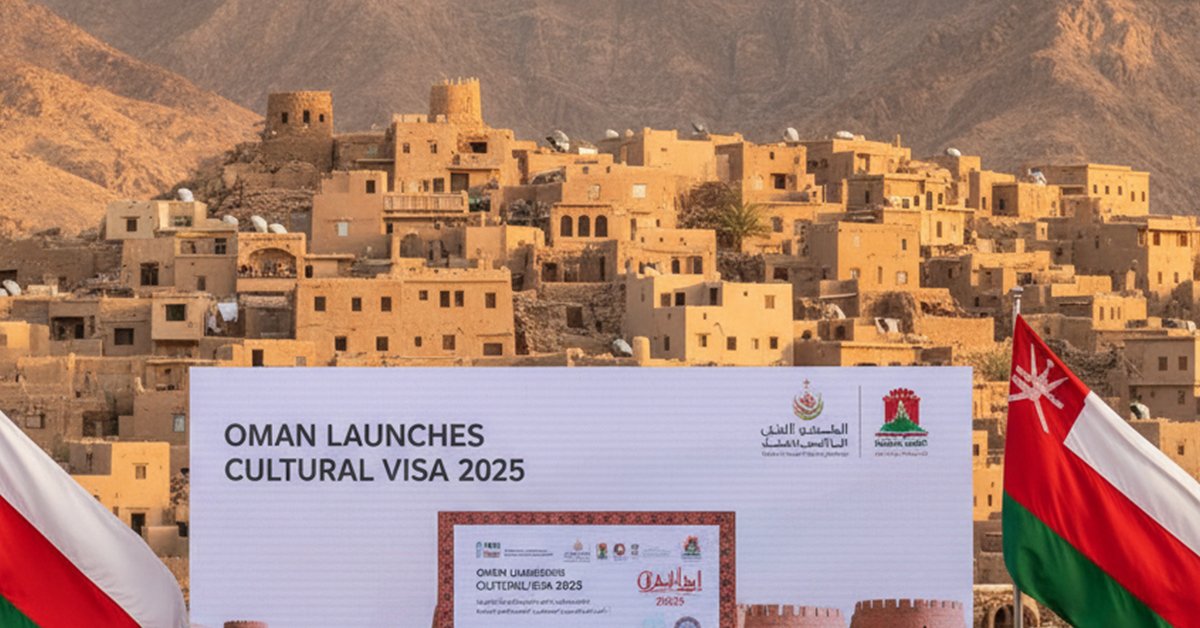

Oman has officially launched its Cultural Visa program on November 10, 2025, establishing itself as an emerging hub for artists, researchers, and creative professionals in the Middle East. Under Decision No. 156/2025, this groundbreaking initiative offers flexible long-term residency options ranging from one to ten years, making it one of the region’s most accessible visa programs for cultural workers.
The new visa framework directly supports Oman Vision 2040, the country’s strategic plan to diversify its economy beyond oil and gas while positioning the Sultanate as a regional center for arts, culture, and academic research. For global creative professionals seeking opportunities in the Gulf region, this represents a significant alternative to higher-cost programs in neighboring countries.
- → New Canada Benefit Payments Arriving This Week in May 2026
- → Canada Bread Settlement Payments Begin Rolling Out Across Canada in 2026
- → Canada Immigration Backlog Update 2026: IRCC Application Inventory Crosses 2.15 Million
- → Canada Expands Visa-Free Travel Access for Citizens of Indonesia and Malaysia in 2026
- → Canada’s 365-Day Maintained Status Work Rule in 2026: What Foreign Workers Need to Know
- → Canada Launches Early Retirement Incentive Program in 2026: Eligibility, Benefits, and Application Process Explained
- → Bringing Your Family to New Zealand on a Work Visa: Complete 2026 Guide
Understanding the Cultural Visa: Key Features and Benefits
The Cultural Visa distinguishes itself through remarkable flexibility and affordability, two factors that set it apart from comparable programs in the UAE, Saudi Arabia, and other Gulf nations.
Flexible Validity Options
Applicants can select from three residency durations based on their professional needs:
One-Year Visa: Ideal for short-term projects, festival participation, academic research studies, or temporary artistic residencies. This option suits professionals testing the market or engaged in specific time-limited collaborations.
Five-Year Visa: Designed for multi-phase creative projects, university teaching positions, or extended cultural collaborations. This medium-term option provides stability for professionals establishing deeper connections with Oman’s cultural ecosystem.
Ten-Year Visa: The longest-term option targets individuals planning to establish cultural institutions, lead major research programs, or commit to long-term artistic development within Oman. This unprecedented validity period demonstrates the government’s commitment to attracting sustained creative investment.
Remarkably Affordable Fee Structure
Cost remains one of the Cultural Visa’s most attractive features, especially when compared to similar programs across the Gulf region:
- Main Applicant: RO 50 annually (approximately $130 USD), regardless of whether selecting one, five, or ten-year validity
- Family Members (1-Year): RO 10 annually (approximately $26 USD)
- Family Members (5 or 10-Year): RO 50 annually (approximately $130 USD)
This transparent, low-cost structure makes cultural residency accessible to independent artists, early-career researchers, and creative professionals who might find higher-cost programs prohibitive.
Family-Inclusive Residency
The Cultural Joining Visa allows spouses and first-degree relatives to accompany visa holders, acknowledging that creative professionals often make relocation decisions based on family considerations. This family-friendly approach encourages longer-term settlement and deeper community integration.
Eligibility Requirements: Who Qualifies for the Cultural Visa?
Oman has intentionally maintained broad eligibility criteria to encompass diverse creative and academic disciplines. The program welcomes professionals across multiple fields who can contribute to the country’s cultural development.
Qualifying Professions
Literary Arts: Writers, authors, poets, lyricists, and literary scholars can apply, supporting Oman’s rich tradition of Arabic literature and contemporary creative writing.
Performing Arts: Musicians, singers, instrumentalists, actors, theatre artists, and performers of all disciplines qualify. This category encompasses both traditional and contemporary performance art.
Visual and Media Arts: Visual artists, designers, filmmakers, photographers, and media artists can pursue residency, enabling the development of Oman’s creative industries sector.
Academic and Research: Academic researchers, scholars, and educators contribute to knowledge production and cultural understanding. This category supports both humanities and cultural studies research.
Cultural Leadership: Curators, archivists, cultural institution leaders, and heritage professionals help develop Oman’s museums, galleries, and cultural infrastructure.
Event and Festival Management: Cultural event organizers and festival contributors can establish programming that enhances Oman’s cultural calendar and international visibility.
The Sponsorship Requirement: How It Works
All Cultural Visa applicants must secure sponsorship from a recognized Omani cultural entity. This requirement ensures alignment between individual projects and national cultural objectives while maintaining program integrity.
Approved Sponsoring Organizations
Government Bodies: The Ministry of Heritage and Tourism and other cultural ministries can sponsor applicants whose work aligns with national priorities.
Academic Institutions: Universities and research centers sponsor scholars, visiting professors, and researchers engaged in academic projects.
Cultural Organizations: Accredited cultural foundations, museums, heritage centers, and research organizations sponsor artists and cultural workers.
Festival and Event Bodies: Organizers of established cultural festivals and events can sponsor participating artists and creative professionals.
The sponsor is responsible for confirming the applicant’s cultural contribution and submitting the visa application to relevant authorities. This collaborative approach ensures visa holders engage in genuine cultural projects supporting Vision 2040 objectives.
Strategic Opportunities for Indian Creative Professionals
India’s position as a global creative powerhouse makes this visa particularly relevant for Indian artists, researchers, and cultural workers. The program offers several distinct advantages for Indian applicants.
Competitive Advantages
Extended Duration: Unlike many short-term cultural exchange programs, the ten-year option enables sustained professional development and project completion.
Regional Access: Oman’s strategic location provides access to Gulf markets, African cultural networks, and Asian creative communities.
Cost Effectiveness: Annual fees significantly undercut comparable programs in Dubai, Abu Dhabi, or Riyadh, making it accessible to mid-career professionals and independent artists.
Growing Cultural Ecosystem: As Oman develops its cultural infrastructure under Vision 2040, early participants can help shape institutions and establish leadership positions.
Family Relocation: The family joining provision allows Indian professionals to relocate with spouses and children, facilitating genuine settlement rather than temporary assignment.
Alignment with Oman Vision 2040
The Cultural Visa directly supports multiple Vision 2040 pillars, demonstrating how immigration policy serves broader economic transformation goals.
The program aims to diversify tourism beyond beach resorts and heritage sites by developing cultural tourism attractions including festivals, exhibitions, and performances. It strengthens international exchange by facilitating collaboration between Omani and international creative professionals, enriching local cultural life while building global networks.
Investment in heritage preservation brings international expertise to conservation projects, museum development, and archival work. The program also supports creative industry development by helping establish the infrastructure, training programs, and professional networks necessary for sustainable creative economies.
Application Timeline and Important Details
Successful applicants must enter Oman within three months of visa issuance to activate their residency status. This requirement ensures timely project commencement and prevents indefinite visa holding without actual residency.
The Ministry of Heritage and Tourism oversees program administration, working with sponsoring organizations to evaluate applications and ensure cultural contributions align with national objectives.
Conclusion: A New Chapter for Cultural Residency
Oman’s Cultural Visa represents a significant shift in how Gulf nations approach creative talent attraction. By offering long-term, affordable residency with family inclusion, the program acknowledges that meaningful cultural contribution requires time, stability, and community integration.
For artists, researchers, and creative professionals worldwide—particularly from major creative economies like India—this program opens unprecedented opportunities for Middle Eastern engagement, cross-cultural collaboration, and long-term professional development in an emerging cultural hub.
