
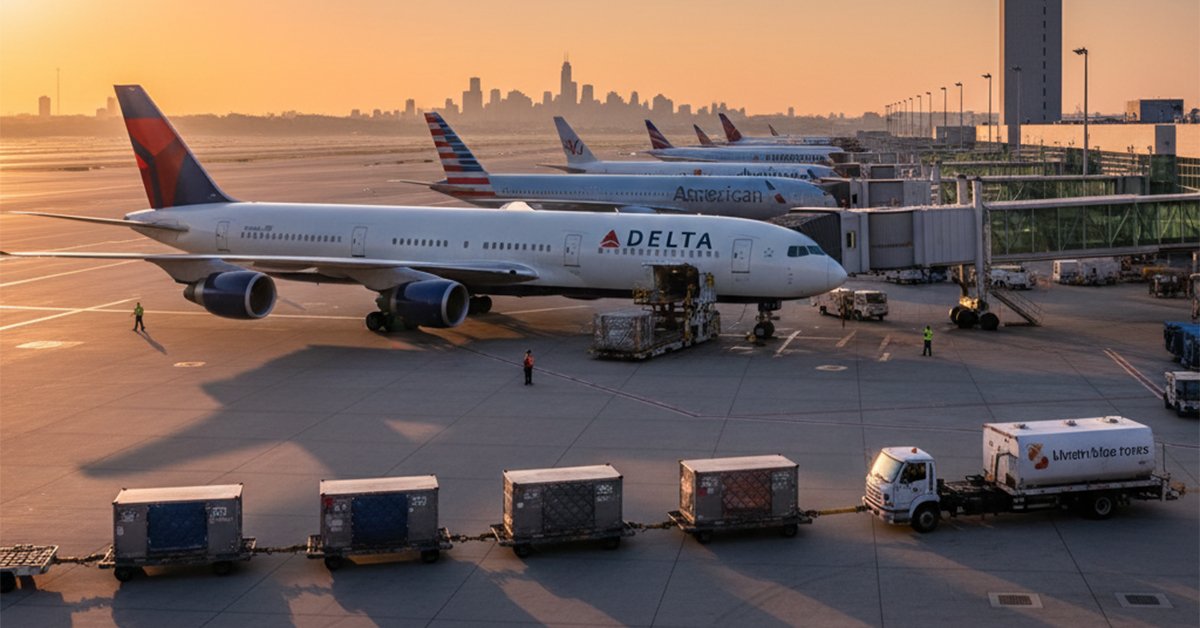

American air travelers are finally seeing light at the end of the tunnel as flight operations begin stabilizing following the end of a historic 43-day government shutdown. After weeks of mounting chaos, canceled flights, and frustrated passengers, the aviation industry is showing measurable signs of recovery that could arrive just in time for the busy Thanksgiving travel season.
The shutdown, which began on October 1, forced thousands of air traffic controllers to work without compensation, creating unprecedented strain on the nation’s aviation system. As operations normalize and controllers return to paid status, the question on every traveler’s mind is: Will the system recover in time for the holidays?
Understanding the Crisis: How Bad Did It Get?
The impact of the government shutdown on air travel reached catastrophic levels in recent days, with Sunday representing the worst day of disruptions since flight cuts began. The numbers tell a stark story of an aviation system pushed to its breaking point.
Peak Disruption Statistics
On Sunday alone, approximately 2,630 flights were canceled, representing a staggering 10.2% of all scheduled flights across the United States. This single-day figure affected hundreds of thousands of passengers and created a ripple effect throughout the entire air travel network.
Monday saw a slight improvement with 2,240 cancellations (8.7% of flights), followed by 1,200 cancellations on Tuesday (5.2%). By Wednesday, as the government officially reopened, cancellations had dropped dramatically to approximately 830 flights, or just 3.6% of scheduled departures.
These improvements represent more than statistical progress—they translate to tens of thousands of travelers reaching their destinations as planned rather than being stranded in airports or forced to reschedule their trips.
The Staffing Crisis Behind the Numbers
The Federal Aviation Administration implemented a sophisticated tracking system using “staffing triggers” to monitor understaffed facilities across the country. These triggers serve as early warning indicators when air traffic control centers lack adequate personnel to safely manage traffic volumes.
At the peak of the crisis on Saturday, an alarming 81 staffing triggers were activated nationwide, signaling widespread critical shortages. This number gradually decreased to 11 on Tuesday, four on Wednesday, and reached zero by Thursday morning—a clear indication that the staffing situation is stabilizing as controllers return to work with restored pay.
On-Time Performance: A Critical Recovery Metric
Beyond cancellations, on-time departure rates provide crucial insight into the health of the aviation system. The recovery in punctuality has been equally dramatic and perhaps more important for travelers’ overall experience.
Dramatic Improvement in Departure Times
Wednesday marked a turning point, with approximately 90% of flights departing within 15 minutes of their scheduled time. This exceptional performance represented a complete reversal from the dismal rates seen earlier in the week, when nearly 60% of flights on Sunday and Monday departed late.
Tuesday showed promising improvement with 83% on-time performance, which aviation analytics company Cirium characterized as “above to above average” for normal operations. Even the challenging days of Friday and Saturday, with 77% and 71% on-time performance respectively, demonstrated gradual system stabilization.
These metrics matter significantly for travelers. A flight departing 15 minutes late typically arrives close to schedule, while the cascade of delays that characterized the worst days of the shutdown often meant hours-long waits and missed connections.
FAA’s Strategic Response: Reducing Flight Cut Requirements
The Federal Aviation Administration announced a critical policy adjustment on Friday that signals growing confidence in the system’s recovery. Starting November 15, the FAA reduced the required flight cuts at 40 major airports from 6% to 3% of scheduled operations.
This 50% reduction in mandatory cuts represents more than administrative tweaking—it reflects measurable improvements in air traffic control staffing and system capacity. Airlines can now restore more flights to their schedules, providing travelers with greater options and flexibility.
The 40 airports affected by these requirements include the nation’s busiest hubs, meaning the policy change impacts the majority of American air travelers. From Atlanta’s Hartsfield-Jackson to Los Angeles International, from Chicago O’Hare to New York’s JFK, capacity is returning to more normal levels.
Innovative Solutions: The Private Jet Ban
One of the more unconventional measures implemented during the crisis was the government’s decision to temporarily bar private jets from flying into 12 major airports. This controversial but effective policy provided critical breathing room in the nation’s most congested airspace.
Private aviation, while representing a small fraction of total flights, occupies significant air traffic control resources because each aircraft requires individual handling and routing. By temporarily restricting private jet access to major hubs, controllers could focus their limited capacity on commercial flights carrying the vast majority of passengers.
This pragmatic approach demonstrated the severity of the staffing crisis while prioritizing the needs of the traveling public. As the system recovers, these restrictions are being gradually lifted, though the policy highlighted the delicate balance required to manage complex airspace with limited resources.
What Travelers Can Expect: The Recovery Timeline
While the immediate improvements are encouraging, aviation experts caution that full recovery won’t happen overnight. The aviation system is complex, and the disruptions created cascading effects that will take time to fully resolve.
Expert Analysis on Recovery Duration
Henry Harteveldt, president and aviation strategist at Atmosphere Research Group, provided a realistic assessment of the recovery timeline, estimating that operations may require seven to 14 days to return to normal. His observation that “this is not a rubber band, so it’s not going to snap back” highlights the systematic nature of aviation recovery.
This gradual recovery process involves multiple interconnected factors:
Aircraft Positioning: Planes displaced by cancellations must return to their proper positions in airline route networks. An aircraft stuck in Dallas when it should be in Boston creates a domino effect of schedule adjustments.
Crew Scheduling: Pilots and flight attendants work under strict duty time regulations. The chaos of recent days disrupted crew schedules, requiring careful rebalancing to ensure regulatory compliance while maximizing flight operations.
Maintenance Schedules: Regular aircraft maintenance was postponed or rescheduled during the crisis. Airlines must now catch up on these critical safety procedures while restoring normal flight operations.
Passenger Rebooking: Hundreds of thousands of passengers affected by cancellations still need to reach their destinations. Airlines are working through a massive backlog of rebookings and accommodations.
Airline Responses: Industry Commitment to Recovery
Major carriers have issued statements expressing confidence in their recovery capabilities, though each airline faces unique challenges based on their specific operational decisions during the crisis.
Delta Air Lines indicated it looks forward to recovering operations, emphasizing its focus on returning to normal service levels as quickly as safely possible. The carrier’s hub-and-spoke network model means that improvements at key hubs like Atlanta and Minneapolis will rapidly benefit the entire system.
American Airlines expressed confidence that it is “well-positioned to recover quickly because of our operational decisions to minimize disruption.” The airline’s proactive approach during the shutdown, including preemptive flight reductions and strategic schedule adjustments, may indeed facilitate faster recovery.
Airlines for America, the trade group representing major carriers including United, Southwest, and others, cautioned in a Monday statement that “there will be residual effects for days,” setting realistic expectations for travelers.
Thanksgiving Travel Outlook: Reasons for Optimism
With Thanksgiving approximately two weeks away from the shutdown’s end, the timing of the recovery is fortuitous for the millions of Americans planning holiday travel. Thanksgiving consistently ranks as one of the busiest travel periods of the year, and the prospect of facing both holiday crowds and shutdown-related disruptions was genuinely concerning.
Current Status as of Thursday Morning
Data from FlightAware showed approximately 1,000 cancellations as of Thursday morning—more than Wednesday’s improved numbers but still representing significant progress from the weekend’s chaos. This fluctuation is normal as the system stabilizes, and the overall trend remains positive.
What Holiday Travelers Should Know
Book Early and Monitor Closely: While conditions are improving, travelers should book Thanksgiving flights as soon as possible and monitor their flight status closely in the days leading up to travel.
Build in Buffer Time: Consider arriving at airports earlier than usual and allowing extra time for connections. While delays are decreasing, building in flexibility provides peace of mind.
Choose Direct Flights When Possible: Direct flights minimize connection risks, which remain slightly elevated as airlines work through the recovery process.
Travel Insurance Considerations: Given recent disruptions, travelers may want to review travel insurance options that cover flight cancellations and delays.
Flexible Booking Options: Look for tickets with flexible change policies, as the recovery, while underway, is not yet complete.
- → New Canada Benefit Payments Arriving This Week in May 2026
- → Canada Bread Settlement Payments Begin Rolling Out Across Canada in 2026
- → Canada Immigration Backlog Update 2026: IRCC Application Inventory Crosses 2.15 Million
- → Canada Expands Visa-Free Travel Access for Citizens of Indonesia and Malaysia in 2026
- → Canada’s 365-Day Maintained Status Work Rule in 2026: What Foreign Workers Need to Know
- → Canada Launches Early Retirement Incentive Program in 2026: Eligibility, Benefits, and Application Process Explained
- → Bringing Your Family to New Zealand on a Work Visa: Complete 2026 Guide
The Human Factor: Air Traffic Controllers’ Dedication
Perhaps the most remarkable aspect of this crisis was the dedication of air traffic controllers who continued reporting for duty despite receiving zero paychecks during the 43-day shutdown. These professionals managed one of the world’s most complex air traffic systems while facing personal financial hardship.
Their commitment to safety and professionalism prevented an even worse crisis and ensured that when the government reopened, the system could begin immediate recovery rather than starting from a complete breakdown.
Looking Forward: Lessons and System Resilience
This shutdown exposed vulnerabilities in the aviation system while also demonstrating remarkable resilience. The rapid recovery now underway suggests that when properly staffed and funded, American air traffic control remains among the world’s most capable.
For travelers, the message is increasingly positive: Normal operations are returning, and Thanksgiving travel, while always busy, should face only the regular challenges of crowds and weather rather than the exceptional disruptions of recent weeks.
Conclusion: A System Recovering Just in Time
The dramatic improvement in flight operations following the government’s reopening provides tangible relief for American travelers. From Sunday’s catastrophic 10.2% cancellation rate to Wednesday’s manageable 3.6%, the progress is undeniable and accelerating.
While experts caution that full recovery requires another one to two weeks, the trajectory is clear and positive. Thanksgiving travelers have genuine reason for optimism that their holiday plans won’t be derailed by system-wide disruptions—though the usual advice to arrive early, pack patience, and prepare for crowds remains as relevant as ever.
The aviation system is proving its resilience, controllers are back at work with compensation, and the skies above America are gradually returning to their normal choreographed complexity. For the millions planning to fly this holiday season, that’s genuinely good news.
