

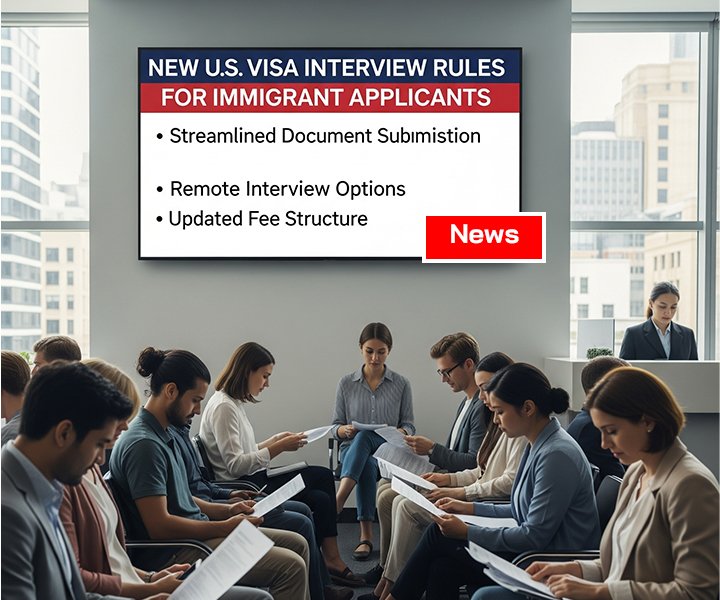
Starting November 1, 2025, the U.S. Department of State will enforce stricter rules for immigrant visa interviews. Applicants must attend interviews in their country of residence or nationality, with limited exceptions. Learn how these changes impact immigrant and non-immigrant visa applicants worldwide.
Introduction: Major Shifts Ahead in U.S. Visa Processing
Immigrating to the United States has never been a simple process. From paperwork and background checks to consular interviews, every step requires planning, patience, and precision. But starting November 1, 2025, the U.S. Department of State is introducing a significant policy change that will directly affect where immigrant visa applicants must attend their consular interviews.
Until now, many applicants had some flexibility to choose alternate interview locations, especially when they lived in countries without a U.S. embassy or consulate providing routine visa services. But under the new rules, that flexibility is narrowing. The Department of State has announced that immigrant visa applicants will now be required to interview in the consular district where they live, or if requested, in their country of nationality— with only limited exceptions.
This change, though administrative in nature, carries real-world consequences for thousands of applicants, from Diversity Visa winners to family-based green card hopefuls. It also comes alongside new rules for non-immigrant visa applicants, who will see stricter in-person interview requirements starting September 2025.
In this blog, we’ll break down the details of these new rules, why they’re happening, who will be most affected, and what steps applicants should take now to prepare.
What Exactly is Changing?
The U.S. Department of State has clarified that:
- Effective Date: November 1, 2025.
- Who it Affects: All immigrant visa applicants, including family-sponsored, employment-based, and Diversity Visa (DV-2026) program winners.
- Rule: Applicants must attend their interview in the consular district of their current place of residence. Alternatively, they may request to interview in their country of nationality.
- Exceptions: Very limited. Applicants living in countries without functioning U.S. visa services (due to suspension, closure, or political issues) will be assigned to designated immigrant visa processing posts.
Previously, applicants sometimes had the option to select other posts for convenience, especially in neighboring countries with faster scheduling. Under the new rule, this “forum shopping” will be much harder.
Why Did the Department of State Make This Change?
Although no single reason has been given, immigration experts believe the move is aimed at:
- Streamlining Case Management
By limiting applicants to specific consular districts, the National Visa Center (NVC) can manage appointments more efficiently and avoid duplication of work across posts. - Addressing Security Concerns
Having applicants interview in the region tied to their residence or nationality helps consular officers verify documents, conduct background checks, and assess credibility more easily. - Reducing Backlog Manipulation
Some applicants were previously choosing faster-processing consulates, causing uneven workload distribution. The new policy prevents applicants from bypassing their primary consulate. - Preparing for Increased Demand
With U.S. visa demand rising in 2025, especially after post-pandemic slowdowns, the government appears to be standardizing operations to handle larger volumes.
Key Impact on Immigrant Visa Applicants
1. Increased Travel Burden
Applicants living in countries without U.S. visa services—such as those in conflict zones—will need to travel to designated processing posts. This adds extra travel, accommodation costs, and logistical challenges.
2. Less Flexibility
Applicants can no longer request interviews in countries simply because appointment wait times are shorter. The NVC will automatically schedule interviews in the applicant’s residential consular district.
3. Special Cases: Diversity Visa Lottery Winners
For Diversity Visa (DV-2026) applicants, this rule is particularly important. Since the DV program is time-sensitive, winners must carefully plan travel to ensure they don’t miss the deadline.
4. Residents of Suspended Countries
If visa operations are paused in your country (for example, Afghanistan or Syria in past years), you’ll be assigned a specific processing post such as in Turkey, Qatar, or another designated location.
Example Scenarios
- Case 1: Indian Applicant Living in UAE
A skilled worker from India living in Dubai must now interview in Abu Dhabi (UAE consular district) instead of choosing New Delhi for convenience. - Case 2: Nigerian Applicant Living in Ghana
A Nigerian national living in Ghana may request to interview in Nigeria (country of nationality) but otherwise will default to Accra (residence). - Case 3: Afghan Applicant in Pakistan
Since Afghanistan does not have routine U.S. visa operations, Afghan applicants living in Kabul will be directed to their designated processing post, most likely Islamabad or Doha.
These scenarios highlight how the policy directly affects planning, travel, and even approval timelines.
What About Non-Immigrant Visa Applicants?
Alongside immigrant visa changes, the State Department also announced that from September 2, 2025, most non-immigrant visa applicants will again be required to attend in-person interviews.
During and after the pandemic, many applicants benefited from interview waiver programs for renewals and certain visa categories. Starting September 2025, this flexibility will be drastically reduced.
- Affected: Student visas (F, J, M), temporary workers (H, L, O), tourists (B1/B2), and business visitors.
- Result: Applicants should expect longer appointment wait times and more backlogs.
This return to stricter in-person requirements signals a broad tightening of U.S. visa policy across categories.
What Should Applicants Do Now?
If you are planning to apply for a U.S. immigrant visa in late 2025 or 2026, here’s what you should keep in mind:
- Confirm Your Consular District
Check whether your case will be handled in your country of residence or nationality. Don’t assume you can interview elsewhere. - Prepare for Extra Travel
If you live in a country without U.S. visa services, start budgeting and preparing for travel to your designated processing post. - Stay Updated with the NVC
- All interview scheduling and transfer requests must go through the National Visa Center (NVC).
- You cannot contact the consular section directly.
- Use the official NVC Public Inquiry Form for communication.
- Requesting Transfers
If you believe an exception applies (e.g., genuine residence in another consular district), the NVC may ask for documents such as utility bills, rental agreements, or residence permits. - Don’t Panic About Existing Appointments
The Department of State has confirmed that existing appointments will generally not be rescheduled or cancelled. The new rules apply mainly to future appointments. - File Your Documents Early
With new restrictions, delays are likely. Ensure all paperwork is uploaded and complete to avoid administrative processing setbacks.
Expert Tips to Avoid Delays
- Keep Your Passport Valid: A passport nearing expiration could delay your visa issuance. Renew well in advance.
- Plan for Medical Exams Early: Schedule your medical examination at an authorized clinic in your designated consular district.
- Budget Extra Time: International travel for interviews can add weeks of planning. Don’t wait until the last moment.
- Track DV Deadlines Closely: Diversity Visa winners have strict deadlines. Missing your assigned interview location could mean losing eligibility.
- Check for Updates: The U.S. Department of State often updates its guidance. Bookmark the Visa Bulletin and official travel.state.gov announcements.
Why This Matters for Future Immigration
For many families and individuals, these changes add another layer of complexity to an already challenging process. However, they also reflect the U.S. government’s effort to bring more structure, security, and efficiency to visa processing.
By linking applicants to their residence or nationality, consulates can handle local caseloads more predictably, reducing confusion about where a case will be heard. But for applicants in regions with limited services, it undeniably means extra hurdles.
Final Thoughts
The upcoming U.S. visa interview rule changes—effective November 1, 2025 for immigrant visas and September 2, 2025 for non-immigrant visas—mark a turning point in how the United States manages global visa demand.
While the policy aims to improve fairness and streamline case distribution, it also places heavier responsibility on applicants to plan carefully, budget for travel, and remain patient through potential delays.
If you are preparing for an immigrant visa—whether through family sponsorship, employment, or the Diversity Visa program—the key takeaway is simple: be proactive, confirm your assigned consular district, and stay in close communication with the NVC.
By understanding the new rules now and preparing early, you can reduce the stress of surprises later. Immigration is always a journey, and with the right preparation, you can stay on track despite changing policies.