

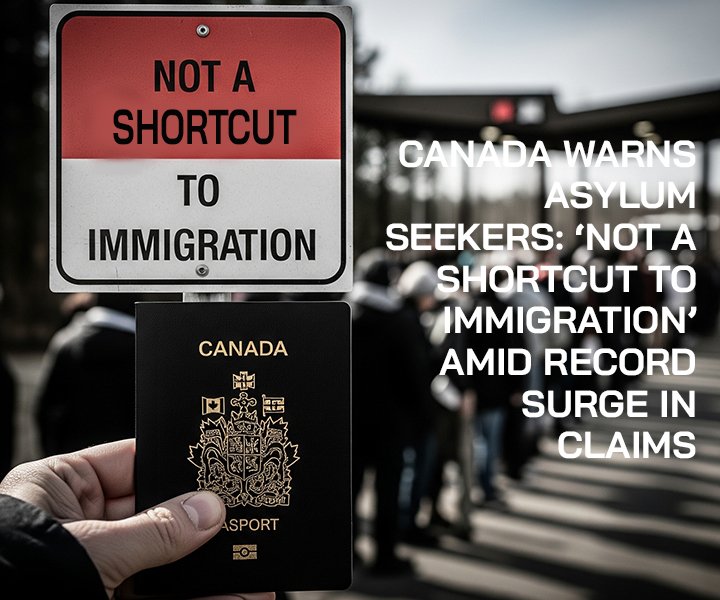
Applying for asylum in Canada does not guarantee permanent residence – and Canadian authorities are issuing a strong warning to those considering it.
On Wednesday, Immigration, Refugees and Citizenship Canada (IRCC) reiterated that asylum is not a way to bypass regular immigration rules.
“Canada’s asylum system is designed to protect those fleeing persecution, not as a shortcut to immigration,” IRCC stated.
The message comes amid a sharp rise in asylum claims, including international students seeking refugee protection.
What is Asylum in Canada?
Asylum, often referred to as refugee protection, allows individuals to seek safety in Canada if they face a real risk of persecution in their home country.
To qualify, claimants must prove they are at risk of:
- Torture
- Loss of life
- Cruel or unusual treatment or punishment
Economic reasons – such as wanting a better job, higher wages, or improved education – do not qualify for refugee protection.
Recent Crackdown: 44 Asylum Seekers Arrested at Quebec Border
The warning follows a high-profile incident in Stanstead, Quebec, where 44 asylum seekers, including children, were intercepted by the Royal Canadian Mounted Police (RCMP) on Sunday night.
According to Canada Border Services Agency (CBSA) official Miguel Bégin, the group was transported to a CBSA office for processing.
This comes as U.S. President Donald Trump continues to link illegal border crossings to his administration’s trade policies, further intensifying scrutiny of migration at the Canada-U.S. border.
Key Facts About Canada’s Asylum Process
1. No Automatic Acceptance
- Each claim is individually assessed under Canadian and international law.
- False claims can result in permanent bans and impact future family sponsorships.
2. Rigorous Screening Process
- Health, criminal, security, and background checks are mandatory.
- Applicants must provide biometrics, undergo a medical exam, and submit evidence of persecution.
- All representatives or agents assisting with the claim must be declared.
3. Safe Third Country Agreement (STCA)
Those entering Canada from the U.S. are subject to the Safe Third Country Agreement, meaning:
- Asylum seekers must apply in the first safe country they enter.
- Unauthorized crossings into Canada from the U.S. typically result in return to the U.S..
4. Risks and Penalties
- Paying smugglers or illegal agents can lead to detention, deportation, and re-entry bans.
- Fraudulent claims carry long-term immigration consequences.
Surge in Asylum Claims: What the Numbers Show
Canada is witnessing an unprecedented rise in asylum applications:
- 761 asylum claims were filed at Saint-Bernard-de-Lacolle in the first six days of July 2025 – a 400% increase year-over-year.
- June 2025 saw a 128% increase in claims compared to June 2024.
- Overall claims are up 82% since the start of 2025.
International Students Turning to Asylum
Interestingly, a growing number of international students in Canada are applying for asylum:
- 5,500 student asylum claims were filed in the first quarter of 2025.
- In 2024, students submitted 20,245 claims, nearly double 2023 figures and six times higher than in 2019.
Top countries of origin for student asylum claims (2024):
- India
- Nigeria
- Guinea
- Ghana
- Democratic Republic of Congo
Immigration analyst Darshan Maharaja notes that some Indian students may see asylum as a last resort, citing Canada’s political climate and supportive advocacy groups as factors encouraging claims.
Canada’s Message: Asylum is for Protection, Not Opportunity
The Canadian government emphasizes that asylum is meant to protect those fleeing genuine danger, not as an alternative pathway to settle in Canada:
“Asylum claims are not a fast track to immigration,” IRCC stressed. “If your claim is refused, you will be removed from Canada.”
For those considering Canada, authorities strongly recommend pursuing legal immigration routes such as study permits, work permits, or Express Entry for permanent residency.
Key Takeaways for Potential Asylum Seekers
- Understand the risks – fraudulent claims can ruin your immigration prospects.
- Apply through official immigration programs – asylum is for those truly in need of protection.
- Stay updated on rules and border agreements – especially the Safe Third Country Agreement.
Final Word: Know Before You Decide
Canada remains a compassionate destination for genuine refugees, but authorities are cracking down on misuse of the asylum system. If you’re planning to move to Canada, research the correct visa options and seek professional guidance before making life-changing decisions.
For official information, visit IRCC’s Asylum and Refugee Protection page.