

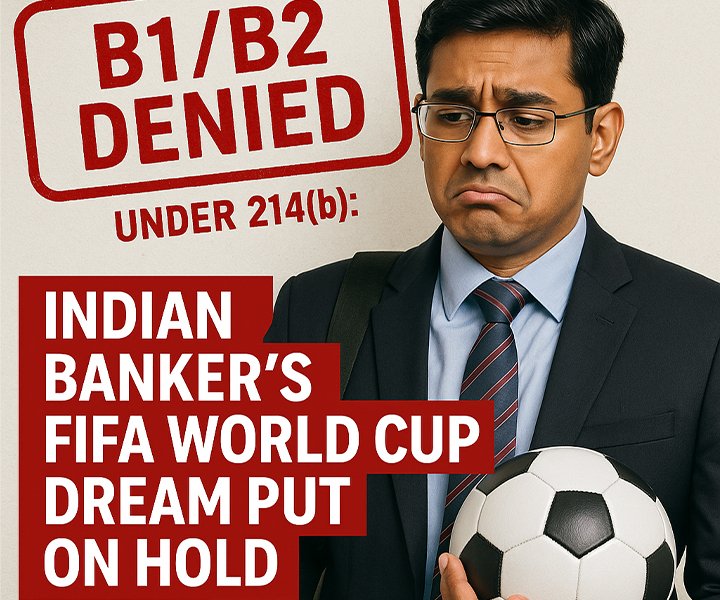
A young Indian professional’s U.S. visa rejection under Section 214(b) has gone viral online, sparking debate about interview mistakes, red flags, and lessons for future B1/B2 visa applicants. Here’s a deep dive into his story and what travelers can learn from it
Introduction: A Dream Shattered at the Visa Counter
For millions of football fans around the world, attending the FIFA World Cup is a once-in-a-lifetime dream. For a 25-year-old investment banker from Mumbai, that dream was nearly within reach. He had already traveled to Qatar with his father for the 2022 World Cup, and this time he wanted to experience the electrifying atmosphere of the 2026 FIFA World Cup in the United States.
With his finances in order, an impressive monthly salary of ₹2 lakh post-tax, and a meticulously planned itinerary, he believed his chances of securing a B1/B2 tourist visa were strong. But in less than a minute, his hopes were dashed. The U.S. consular officer rejected his application under Section 214(b)—a common clause used when the officer is not convinced the applicant will return home.
His case has since sparked a storm of debate online, with netizens dissecting his answers and pointing out the “red flags” that might have led to the denial. This blog explores his story, what went wrong, and the critical lessons for anyone planning to apply for a U.S. B1/B2 visa in 2025 and beyond.
The Applicant’s Background
The applicant was a young banker, based in Mumbai, earning a handsome salary of ₹2 lakh per month after tax. His trip was meant to be special—not just as a football fan, but also as a father-son tradition.
- Purpose of Travel: Attend FIFA World Cup matches in the U.S. and travel with his father.
- Intended Duration of Stay: Four weeks initially, reduced to three weeks after his boss declined extended leave.
- Itinerary: Flexible and dependent on which match tickets he could secure.
- Support System in the U.S.: A childhood friend living in Seattle, a U.S. citizen.
- Financial Plan: His father would sponsor his airfare, while he would cover his living expenses.
On paper, it looked like a solid case. He had a strong job, good earnings, family ties in India, and prior international travel history. But what unfolded in the interview highlighted how crucial communication and perception are in U.S. visa applications.
The Interview: Less Than a Minute
Here’s how the interview reportedly went:
- VO (Visa Officer): Purpose of visit?
- Applicant: Huge football fan, went to Qatar in 2022 with dad, and now since the World Cup is in the U.S., I want to go again.
- VO: How long do you plan to stay?
- Applicant: I wanted four weeks, but my boss didn’t agree, so I’ll go for three weeks.
- VO: Which cities?
- Applicant: Depends on what match tickets I can get, so it’s up in the air.
- VO: Do you know anyone in the U.S.?
- Applicant: A childhood friend in Seattle who is a U.S. citizen.
- VO: Who is sponsoring your trip?
- Applicant: My father is paying for my airfare, I’ll cover the rest.
- VO: Where do your parents live, and where do you stay?
- Applicant: Parents are in Delhi, I live in Mumbai for work.
- VO: I’m sorry, you are rejected.
That was it. The interview lasted less than a minute, and the outcome was a denial under 214(b).
Why Was His Visa Rejected?
Section 214(b) of the U.S. Immigration and Nationality Act is one of the most common reasons for visa refusals. It essentially means:
The officer was not convinced that the applicant has sufficient ties to their home country and may overstay in the U.S.
In this banker’s case, online observers quickly identified several red flags in his answers:
1. Uncertain Plans
- Saying his itinerary was “up in the air” made his trip look poorly planned.
- He didn’t specify which matches he would attend or which cities he’d visit.
2. Length of Stay
- A 3–4 week trip for just watching football seemed excessive to the officer.
- Long stays without fixed plans often raise suspicion of hidden intentions.
3. Financial Sponsorship
- Despite earning ₹2 lakh per month, he mentioned his father would pay for his airfare.
- Officers expect young professionals with high income to be fully financially independent. Mentioning parental support undermined his case.
4. Mentioning a U.S. Citizen Friend
- Declaring that he had a close friend in the U.S. (a citizen in Seattle) raised doubts about whether he might stay with or depend on that person.
- For officers, U.S. ties can sometimes be viewed as potential “immigration intent.”
5. Over-Explaining
- Instead of sticking to simple answers like “tourism” or “World Cup matches,” he gave long-winded responses.
- Consular officers conduct interviews quickly. Any unnecessary details can hurt rather than help.
Netizens React: “You’re a Walking Red Flag”
The rejection quickly spread online, and social media users dissected his answers:
- “Four weeks stay, no fixed plans, friend in the U.S., and dad sponsoring your airfare? If I was the officer, I’d reject too.”
- “Purpose of visit is tourism. Keep it short. Don’t explain your life story.”
- “Why say four weeks when your boss only gave you three? Just say three weeks.”
- “Never bring up your dad’s sponsorship when you’re earning 2 lakh a month.”
- “Mentioning a U.S. citizen friend in Seattle was unnecessary. Just say you’ll meet some friends.”
The general consensus was that while his financial background was strong, his communication style and details raised too many doubts.
Lessons for Future Visa Applicants
This story is more than just one person’s rejection—it’s a valuable case study. Here are the biggest takeaways for anyone preparing for a B1/B2 visa interview:
1. Keep Answers Simple and Clear
- If the officer asks your purpose of visit, say “tourism” or “attending the World Cup.” Avoid long personal stories.
2. Have a Concrete Itinerary
- Even if you don’t have tickets, mention a few cities you plan to visit (e.g., New York, Los Angeles, Dallas).
- Show that you’ve researched and planned your trip.
3. Avoid Mentioning U.S. Citizens Unless Essential
- Having family or close friends in the U.S. can sometimes raise concerns about immigration intent.
- If asked, keep it vague: “I may meet some friends.”
4. Demonstrate Financial Independence
- If you earn well, show that you can cover the trip yourself.
- Avoid saying your parents are sponsoring any part of it.
5. Stay Confident and Consistent
- Don’t contradict yourself (e.g., saying four weeks then changing to three).
- Present a clear and believable travel plan.
6. Understand 214(b)
- A refusal under 214(b) doesn’t mean you can never get a visa.
- It simply means you failed to convince the officer this time. You can reapply, ideally with stronger documentation and clearer answers.
Why 214(b) Refusals Are So Common
Over 70% of B1/B2 visa refusals worldwide fall under Section 214(b). That’s because U.S. law assumes every visitor intends to immigrate unless they prove otherwise.
To overcome this presumption, applicants must show:
- Strong ties to home country (family, job, property, etc.).
- Financial ability to support themselves abroad.
- Clear intent to return after the trip.
Even highly qualified applicants can face denial if their answers don’t reflect these factors convincingly.
Preparing for Your Own Interview
If you’re planning to apply for a U.S. B1/B2 visa, here’s a checklist:
- ✅ State your purpose of visit in one sentence.
- ✅ Prepare a basic itinerary (cities, matches/events, tourist sites).
- ✅ Show financial stability with bank statements, salary slips, and clear answers.
- ✅ Keep sponsorship details simple—if you can fund yourself, say so.
- ✅ Be confident, polite, and concise.
Remember: Interviews are short. Every word counts.
Final Thoughts: A Costly Lesson
For the young Mumbai banker, the rejection was heartbreaking. His dream of attending the FIFA World Cup in the U.S. with his father was suddenly out of reach. But his story has become a learning moment for thousands of others preparing for visa interviews.
The lesson is simple: having money and good intentions isn’t enough. What matters is how you present your case in those crucial few minutes.
By keeping answers short, clear, and confident, applicants can avoid the pitfalls that cost him his visa. While Section 214(b) refusals are common, they can often be prevented with better preparation.
For now, his dream is on hold—but for others, this case may provide the clarity they need to turn their U.S. visa hopes into reality.