

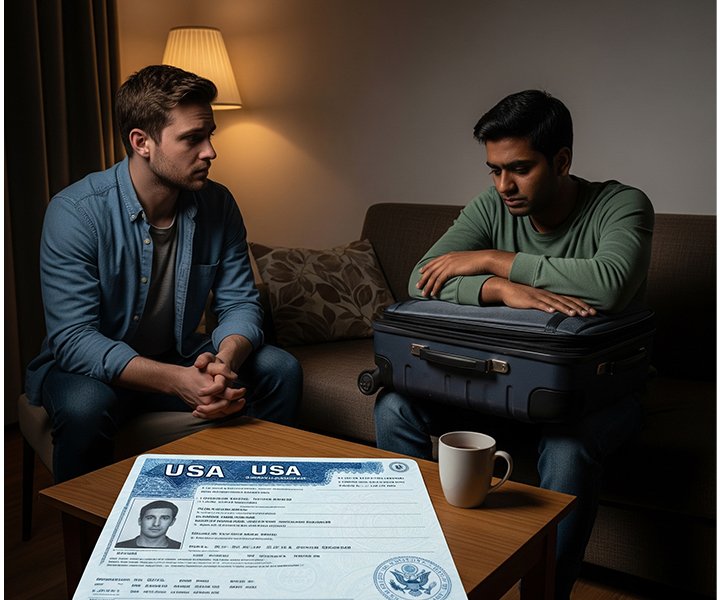
The H-1B visa policy in the United States has once again come under fire, this time from an American professional who openly criticized the rules after his close friend from India was forced to return home. The incident sheds light on how the 60-day grace period for H-1B holders can disrupt lives, careers, and communities built over years.
An Indian Woman’s Journey Cut Short
Nathan Platter, a Minneapolis-based data scientist, shared on LinkedIn how his friend had to leave the U.S. despite dedicating years to her education and work there.
- She spent eight years in the U.S.: four years completing her undergraduate studies, two years in graduate school, and two years working full-time.
- After losing her job, she started applying for new positions but could not secure one that sponsored her H-1B visa within the limited 60-day grace period.
- With no other option, she had to return to India, leaving behind her community and career in Austin, Texas.
The Harsh Reality of the H-1B Grace Period
Under current rules, if an H-1B worker loses their job, they have just 60 days to either:
- Find another employer willing to sponsor their visa, or
- Leave the country.
While intended to maintain immigration compliance, this short window often proves impractical, especially in a competitive job market.
Platter described the policy as “arbitrary” and said it was heartbreaking to see a talented professional uprooted after years of contributing to the U.S. economy.
“We Let Her Work, Pay Taxes, and Then Sent Her Away”
In his viral LinkedIn post, Platter expressed frustration at the system:
“We let her study here. Work here. Pay taxes here. And now we’re kicking her out? She worked 14-hour days, added value to her team, and yet she’s being sent away because of a rigid policy.”
He added that the U.S. is essentially educating and training bright international minds only to hand them over to global competitors when visa restrictions force them out.
The Call for Change in the H-1B System
Platter’s story resonated with many who believe the U.S. should do more to retain international talent. Skilled workers like his friend contribute to innovation, pay taxes, and integrate into communities—yet visa restrictions limit their long-term opportunities.
He argued that the country needs a reformed H-1B system that offers flexibility, especially during economic downturns or layoffs.
Why This Matters
The incident highlights a growing debate: Should the U.S. continue enforcing such strict rules when global competition for skilled professionals is rising? With countries like Canada and Australia offering friendlier immigration pathways, many fear the U.S. may lose its edge in attracting top international talent.
Final Thoughts
The story of this Indian woman isn’t unique. Thousands of H-1B holders face the same uncertainty each year when job losses put their legal status at risk. As Nathan Platter rightly pointed out, the U.S. invests years in educating international students but fails to retain them when they are most needed in the workforce.
Until meaningful reforms are made, talented professionals will continue leaving, taking their skills, innovation, and contributions elsewhere.