
For decades, Canada has been one of the most popular destinations for international students. Known for its world-class universities, welcoming culture, and promising post-study work opportunities, the country has consistently ranked among the top choices for students from India, China, Vietnam, and many other countries.
But in 2025, the tide has turned. Canada’s immigration department—Immigration, Refugees and Citizenship Canada (IRCC)—has reported a sharp rise in student visa rejections. The numbers are staggering: nearly 62% of student visa applications were denied this year, a steep jump from 52% in 2024 and far higher than the 40% rejection average seen in earlier years.
For many aspiring students, these figures highlight more than just tougher paperwork. They point to a fundamental shift in how Canada manages its global education system—and Indian students are among those hit the hardest.
Why Are Visa Rejections Rising in Canada?
Until recently, Canada was known as one of the friendliest countries for students. But with record-high international student numbers, mounting concerns over housing shortages, and questions about the integrity of some academic programs, the government has decided to hit the brakes.
In 2024, Canada hosted over one million international students—second only to the United States. Of these, about 41% were Indian, making India by far the largest source country. However, the sheer scale of this intake has triggered concerns around infrastructure, job competition, and exploitation by substandard private colleges.
To restore balance, IRCC has adopted stricter visa screening measures and new rules for post-study work rights. The result? More rejections and fewer study permits being issued overall.
Indian Students Among the Worst Affected
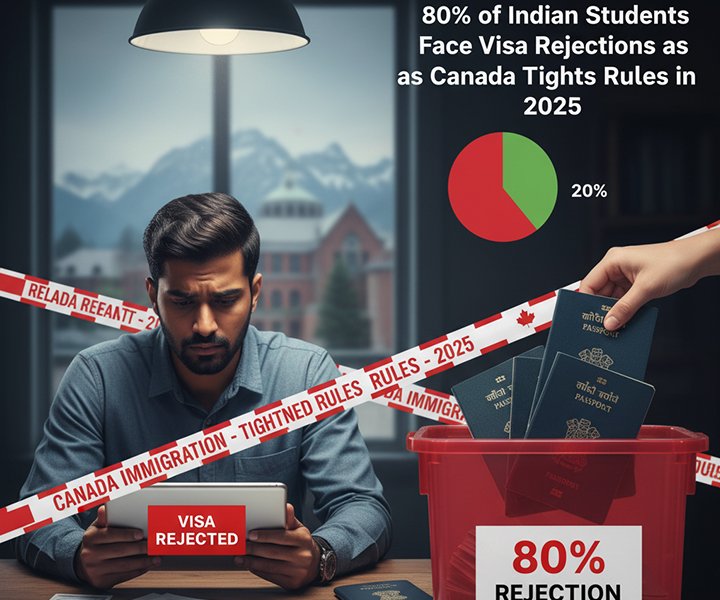
While the overall rejection rate has climbed to 62%, reports suggest that Indian students are facing even higher levels of refusal. In fact, as many as 8 out of 10 applications from India have been denied in 2025.
Although Canada does not release an official country-by-country breakdown, the impact is clear. With Indians making up nearly half of Canada’s international student population, a higher rejection rate in this group reflects the government’s intent to slow down intake from countries with overwhelming demand.
This is not just a bureaucratic change—it’s a life-altering setback for thousands of Indian families who invest heavily in the Canadian dream of global education, international exposure, and permanent residency opportunities.
The Numbers Behind Canada’s 2025 Student Visa Cap
Canada has introduced new quotas that limit how many study permits will be issued this year:
- Total permits in 2025: Around 437,000, down nearly 10% from 2024.
- School pupils and renewals: 120,000.
- Undergraduates and other programs: 243,000.
- Postgraduate students: 73,000.
By issuing fewer permits and applying stricter filters, Canada is signaling a move toward quality over quantity in its international education strategy.
Stricter Rules for Post-Graduation Work Permits (PGWP)
For years, the Post-Graduation Work Permit (PGWP) program has been one of the strongest attractions for international students in Canada. It allows graduates to gain valuable work experience and often serves as the first step toward permanent residency.
But starting in 2025, the rules have changed:
- Language Requirements:
- University graduates must now demonstrate B2 level proficiency (upper-intermediate) in either English or French.
- College graduates must meet at least B1 level proficiency.
- Course Restrictions:
Students who switch to unapproved or ineligible courses during their study period will automatically lose their right to a post-study work permit. - Tighter Oversight of Institutions:
Only graduates from recognized, government-approved programs will qualify for PGWP, making it harder for diploma-mill colleges to lure international students with false promises.
These rules are designed to ensure that only students who are genuinely capable of contributing to the Canadian workforce will stay after graduation.
Why Is Canada Doing This?
Several factors have contributed to Canada’s tough new stance on international students:
- Overwhelming Demand
With more than a million foreign students in 2024, demand has far outstripped Canada’s housing, healthcare, and labor resources. - Housing Shortages
Student inflows have added pressure to an already tight housing market, fueling affordability issues across major cities like Toronto, Vancouver, and Montreal. - Quality Concerns
Reports of underregulated private colleges admitting students with minimal academic support or career prospects have pushed the government to crack down. - Labor Market Balance
Canada wants to ensure that international graduates are skilled, language-proficient, and job-ready, rather than competing for low-wage or temporary work. - Public Pressure
Growing concerns among Canadian citizens about resource allocation have pressured the government to adopt policies that appear more selective.
What This Means for Indian Students
For Indian students—who represent the largest share of international applicants—the new rules create both challenges and opportunities:
- Higher Bar for Entry: Securing a Canadian study permit now requires stronger academic credentials, financial proof, and language proficiency.
- Reduced Dependence on “Easier” Colleges: Students applying to low-tier or unregulated institutions are more likely to be rejected. Applying to well-known universities and government-approved programs has become essential.
- Greater Importance of Language Tests: IELTS, TOEFL, or other recognized tests will play a much bigger role in securing both study permits and PGWPs.
- Planning and Transparency: Families will need to carefully plan budgets and study goals, avoiding shortcuts or dubious agents who promise guaranteed visas.
What Are the Alternatives?
For those who find Canada’s new rules too restrictive, there are other countries increasingly attracting Indian students:
- United States: Still the world’s top destination, especially with OPT (Optional Practical Training) pathways.
- United Kingdom: Strong post-study work options under the Graduate Route visa.
- Australia: Currently competing aggressively for international students with generous work rights.
- European Countries: Germany, Ireland, and France are emerging as cost-effective, high-quality destinations.
While Canada remains attractive, the competition is heating up.
Final Thoughts
Canada’s decision to tighten its student visa rules in 2025 marks a turning point in its international education strategy. With rejection rates climbing to 62% overall and as high as 80% for Indian students, the country is clearly sending a message: it wants fewer students, but higher-quality ones.
For Indian aspirants, this is both a challenge and an opportunity. Yes, the road has become tougher, but those who prepare carefully—choosing reputed institutions, demonstrating strong financial and language skills, and planning transparently—can still achieve their Canadian education dream.
The days of easy access are gone. The new era is about quality, preparedness, and resilience.