
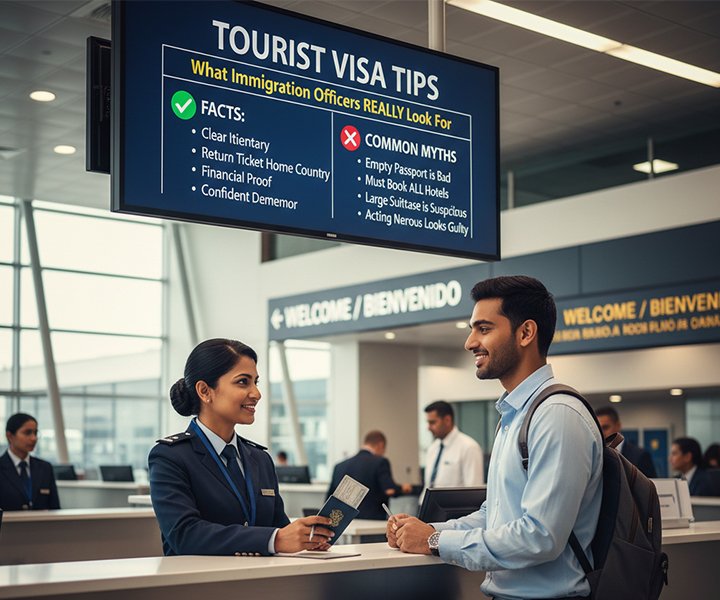
Getting a tourist visa can feel nerve-wracking. You gather your documents, practice polite smiles, and hope the immigration officer doesn’t look at you like you’re hiding a secret. But here’s the truth: immigration officers aren’t out to get you. Their job is simple — separate genuine travelers from those who may misuse the visa system.
Unfortunately, there’s a lot of myth and misinformation floating around about what really matters during the visa process. People rely on half-baked advice from friends, relatives, or online forums, which often leads to unnecessary rejections.
This blog pulls back the curtain on what tourist visa officers actually look for, debunks common myths, and shares actionable tips that can increase your chances of approval.
Whether you’re planning a vacation in Europe, a family visit to the US, a honeymoon in Canada, or a solo backpacking trip to Southeast Asia, this guide covers everything you need to know.
Why Tourist Visa Applications Get Rejected
Before diving into what officers look for, it’s important to understand the biggest reasons tourist visa applications fail. According to global immigration data, common rejection reasons include:
- Lack of proof of return to the home country.
- Insufficient financial resources.
- Inconsistent information between documents and interviews.
- Poor travel history or past overstays.
- Fake or suspicious documents.
- Vague travel plans with no supporting evidence.
If you’ve ever heard of someone being denied despite “having all documents,” it’s usually because something didn’t convince the officer that the traveler was genuine and temporary.
Now let’s break down what they really focus on.
1. A Clear Reason for Travel
This is the foundation of any tourist visa application. Officers want to know:
👉 Are you visiting for a genuine purpose?
👉 Do you have a clear plan?
👉 Do you know when and why you’re leaving?
It’s not just about saying, “I’m going for a vacation.” It’s about demonstrating credibility through your travel plan.
Tips to strengthen this:
- Be specific: Instead of saying “sightseeing,” mention places — Eiffel Tower in Paris, Grand Canyon in the US, or Marina Bay in Singapore.
- Show bookings: Even if refundable, return flight tickets and hotel reservations add weight.
- Highlight events: Weddings, conferences, exhibitions, or festivals show you have a real reason to travel.
Pro tip: Immigration officers are more concerned about why you’ll return than why you’re leaving. Your itinerary should make it clear that your trip has a defined end date.
2. Strong Ties to Your Home Country
This is the #1 factor officers evaluate. They need reassurance that you’ll go back after your trip.
Strong ties include:
- A stable job with approved leave.
- Enrollment in a university.
- Family obligations (spouse, children, elderly parents).
- Property ownership or rental agreements.
- Running a business.
How to prove ties effectively:
- Employment letter: A signed letter from your employer confirming your position, salary, and approved leave dates.
- University documents: Enrollment certificate, exam schedule, or ID card if you’re a student.
- Property documents: Title deeds, rental contracts, or utility bills in your name.
- Family proofs: Marriage certificates, children’s birth certificates, or dependent details.
The stronger your ties, the more confidence officers have that you won’t overstay.
3. Financial Stability
No country wants tourists who may run out of money and become a burden. Immigration officers assess whether you have enough funds to cover your stay.
Key things they check:
- Bank statements (last 3–6 months).
- Tax returns (ITR) for the last 1–2 years.
- Salary slips for employees.
- Business financials for entrepreneurs.
- Sponsorship letters if someone else (family/friend) is funding your trip.
Common mistakes applicants make:
- Submitting fake or inflated bank balances (easily caught).
- Showing sudden large deposits just before applying (looks suspicious).
- Not having enough funds for the duration of stay.
Pro tip: As a rule of thumb, show at least USD $100–150 per day of stay (varies by country). For example, a 10-day trip to Europe should reflect at least $1,000–$1,500 in accessible funds.
4. Travel History
Your passport tells a story. Officers check if you’ve traveled before and whether you respected visa rules.
- If you’ve visited countries like UK, US, Canada, Schengen states, Japan, Australia, and returned on time, it adds huge credibility.
- If you’re applying for your first-ever visa, don’t worry. Many first-time travelers get approvals if other aspects are strong.
- If you have a history of overstays or visa refusals, expect extra scrutiny.
Pro tip: If you’re new to international travel, start with destinations that are easier to get visas for (e.g., Southeast Asia, Middle East). It helps build your record for future applications.
5. Genuine and Consistent Documentation
Officers are trained to spot red flags instantly. A forged letter, mismatched job title, or dodgy bank statement can lead to rejection and even future bans.
Things to avoid:
- Fake employment letters.
- Edited bank statements.
- False hotel bookings.
Instead, do this:
- Be honest if unemployed or self-employed. Explain your situation with real documents.
- Show real bookings — even refundable ones are fine.
- Keep documents organized and consistent with your application form.
6. Consistency in Answers
This applies to both:
- Visa interviews (US, Canada, Schengen, etc.).
- Immigration checks at the airport when you land.
If your form says “10-day vacation” but you casually tell the officer you might “stay a few months if I like it,” you’ve just raised suspicion.
Example interview questions to expect:
- Why are you visiting this country?
- Where will you be staying?
- How are you funding your trip?
- Do you have family here?
- What do you do for a living?
- When are you returning home?
Pro tip: Prepare clear answers. Keep it simple, honest, and consistent. Don’t over-explain or sound rehearsed.
7. Body Language and Confidence
This factor is underrated but powerful. Immigration officers are trained to read people as much as paperwork.
- Looking overly nervous, defensive, or shifty may raise doubts.
- Acting arrogant or rude is a sure way to get into trouble.
How to ace this:
- Stay calm and polite.
- Maintain eye contact (without staring).
- Smile naturally.
- Treat the interview as a conversation, not an interrogation.
Remember: They don’t want to ruin your trip. They just need assurance that you’re genuine.
8. Common Tourist Visa Myths (Debunked)
Let’s bust some of the most common myths:
- Myth 1: “If you have lots of money, you’ll automatically get approved.”
→ Wrong. Money helps, but without ties to home, even millionaires can be refused. - Myth 2: “Single, young applicants always get rejected.”
→ Not true. Many solo travelers get visas if they can prove ties and purpose. - Myth 3: “A travel agent can guarantee approval.”
→ No one can guarantee a visa. Agents can help prepare documents, but approval depends only on the officer. - Myth 4: “You must have foreign travel history to get approved.”
→ Travel history helps but is not mandatory. First-time applicants are approved every day. - Myth 5: “If you dress formally, you’ll impress officers.”
→ Appearance doesn’t matter. Honesty and preparation do.
How to Prepare for a Tourist Visa Interview
- Research the country’s visa requirements (every country has unique rules).
- Organize your documents neatly in a file.
- Know your itinerary (cities, hotels, dates, return flight).
- Be ready for tricky questions like “What if you get a job there?” or “Why not travel within your own country?”
- Practice confidence but avoid sounding robotic.
At Immigration: What to Expect
Even after your visa is approved, immigration officers at the airport have the final say. They may ask quick questions like:
- How long will you stay?
- Where are you staying?
- Do you have a return ticket?
As long as your answers match your visa details, you’ll be fine.
Final Thoughts
Applying for a tourist visa doesn’t need to feel like preparing for a court case. The truth is, most officers want to approve genuine travelers. They just need reassurance that:
- You’ll return home after your trip.
- You have the means to support yourself.
- Your documents are genuine and consistent.
So here’s your cheat code:
👉 Be real.
👉 Be prepared.
👉 Stay calm.
If your paperwork is solid, your story makes sense, and you’re not trying to “accidentally” stay forever, you’ll likely get approved.
Now, go ahead and plan that trip — just don’t forget the most common mistake travelers make: an expired passport. Yes, people still forget that!