
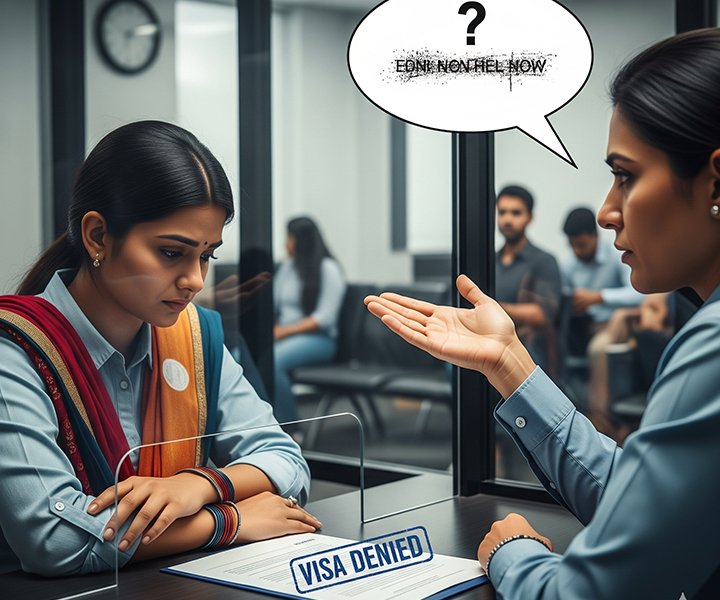
Applying for a US tourist visa is often one of the most stressful steps for Indian travelers planning to visit America. Despite having strong financial records, good jobs, and well-prepared itineraries, many applicants face unexpected refusals at the consulate. The reason? Even the slightest doubt in the mind of the visa officer can lead to rejection.
A recent case shared on Reddit highlights this reality. A 36-year-old Indian professional and his elderly parents, despite being financially secure and well-prepared, were denied tourist visas at the US Embassy in New Delhi—and the reason may surprise you. Their refusal came after the officer raised doubts about the mother’s English fluency, even though a translator had been arranged.
This incident serves as a reminder of how strict and unpredictable US visa interviews can be. Let’s break down their story, understand why Section 214(b) matters, and explore what Indian applicants should do to avoid similar pitfalls.
The Family’s Case: Well-Prepared Yet Rejected
The applicant, a senior operations head at an IT company, earns around ₹15 lakh per year. He reported savings and investments worth over ₹20 lakh. His parents, both in their seventies, were still working as client managers at a publishing firm, with annual incomes of ₹8 lakh and ₹7.5 lakh respectively.
In total, the family demonstrated savings of over ₹50 lakh, along with property ownership. Their profile checked all the typical boxes: stable income, financial security, and strong ties to India.
They had carefully planned a two-week Christmas holiday across New York, Los Angeles, and San Francisco. Hotel reservations were made, and a detailed itinerary was ready.
But during the visa interview, things took a turn.
- The applicant introduced himself and mentioned that his parents were not fluent in English.
- A Hindi translator was arranged by the embassy.
- However, partway through the interview, the consular officer remarked: “You said your parents don’t know English, and your mother is speaking fine.”
Soon after, the interview was cut short. All three applicants were handed refusal slips citing Section 214(b) of the Immigration and Nationality Act.
Why Section 214(b) Is the Most Common Visa Refusal Ground
Section 214(b) is the most frequently used reason for rejecting US visa applications. In simple terms, it means that the applicant failed to prove strong enough ties to their home country and therefore could be at risk of overstaying in the United States.
The US Department of State repeatedly emphasizes that:
- A visa is a privilege, not a guaranteed right.
- The burden of proof lies on the applicant to demonstrate they will return to their country after the trip.
- Consular officers have wide discretion, and decisions are often based on a few minutes of interaction.
Even minor contradictions or perceived dishonesty—such as the confusion about the mother’s English ability in this case—can cast doubt on the applicant’s credibility. Once that doubt exists, refusal under 214(b) is almost automatic.
Understanding the US B2 Tourist Visa
The B2 visa is the primary non-immigrant visa for tourism. According to the US Bureau of Consular Affairs, it covers:
- Vacation or holiday travel
- Visiting friends or family
- Attending social events hosted by organizations
- Receiving medical treatment
- Participation in unpaid cultural, musical, or sports events
- Enrollment in short recreational courses (like cooking classes, but not degree programs)
To qualify, applicants must demonstrate:
- Financial stability – Adequate funds to cover the trip.
- Strong home-country ties – Employment, property, or family obligations that ensure return.
- Clear intent – A genuine plan to visit temporarily, not settle.
Interviews are typically short—often just a few minutes—and decisions are made on the spot. There is no formal appeal process for Section 214(b) refusals. However, applicants may reapply with new information or stronger documentation.
What Went Wrong in This Case?
Looking at this family’s story, their financial background and travel plans seemed solid. So why were they refused?
The key issue likely boiled down to credibility. By stating initially that the parents were not fluent in English and then having the mother answer in English, even minimally, the officer may have perceived a contradiction.
While this might sound harsh, consular officers are trained to look for inconsistencies or red flags. Any sign of misrepresentation—even if unintentional—can cast doubt on the whole application.
It’s important to note:
- Visa officers don’t just assess documents—they judge body language, tone, and responses.
- Even small details, like how confidently you answer, can influence the decision.
- If officers feel applicants are withholding or misrepresenting information, they often default to refusal under 214(b).
Why Section 214(b) Is Hard for Indians
India consistently ranks among the top countries for US tourist visa applications, but also sees high refusal rates under Section 214(b).
The reasons include:
- Concerns over overstays – Many Indians have friends or family in the US, raising officer suspicion about intent.
- Economic migration fears – Officers may assume applicants might use a tourist visa as a path to long-term stay.
- Short interviews – With decisions made quickly, even well-qualified applicants may fail to convince officers in time.
How Indians Can Avoid Tourist Visa Rejection
While there’s no guaranteed formula for success, certain strategies can improve your chances:
1. Be 100% Honest
- Never exaggerate or hide details.
- If your parent knows basic English, state that clearly instead of saying “not fluent at all.”
2. Prepare a Clear Story
- Your answers should align with your documents.
- If traveling with family, ensure everyone understands the itinerary, purpose of visit, and length of stay.
3. Show Strong Ties to India
- Highlight ongoing employment, property ownership, or dependent family members.
- Carry financial proofs like bank statements, tax returns, and salary slips.
4. Stay Calm in the Interview
- Short answers work best—officers don’t like long, nervous explanations.
- Maintain eye contact and answer confidently.
5. Have Realistic Travel Plans
- Avoid overcomplicated itineraries.
- Book refundable tickets and hotels, but avoid overspending before the visa is approved.
What to Do if Your Visa Is Denied
A refusal under Section 214(b) is not permanent. Applicants can:
- Reapply after 6–12 months with stronger evidence of ties.
- Apply sooner only if there’s significant new information (e.g., new job, better financials, marriage, etc.).
- Review the refusal slip and prepare to address the officer’s concerns in the next interview.
It’s also important not to panic. A single refusal doesn’t harm future applications, as long as you improve your profile and remain truthful.
Key Lessons From This Case
The story of the Indian family denied US tourist visas over an English fluency doubt carries valuable lessons:
- Small inconsistencies can cost big – Officers are trained to spot contradictions quickly.
- Financial stability alone isn’t enough – Strong home ties and credibility are equally important.
- Prepare your entire family – When applying as a group, ensure everyone’s answers are consistent.
- Honesty matters more than perfection – Even if your parent knows only basic English, state it clearly rather than downplaying.
- Don’t take refusal personally – It often reflects officer judgment, not necessarily your worthiness.
Final Thoughts
Applying for a US tourist visa (B2 visa) can be a nerve-wracking experience, even for financially stable and well-prepared Indian applicants. The case of the family denied visas over an English fluency misunderstanding is a stark reminder that the US visa process is about more than just money or documents—it’s about credibility and intent.
For Indians planning a US trip, the message is clear: be transparent, prepare carefully, and show strong ties to India. Avoid even small contradictions, remain calm during the interview, and ensure your story is consistent.
While Section 214(b) refusals are common, they are not permanent. With improved preparation and clarity, reapplication can still lead to success.
So, if you’re dreaming of Times Square, the Golden Gate Bridge, or the beaches of California—prepare well, stay honest, and your US visa journey may just have a happier ending than this unfortunate case.