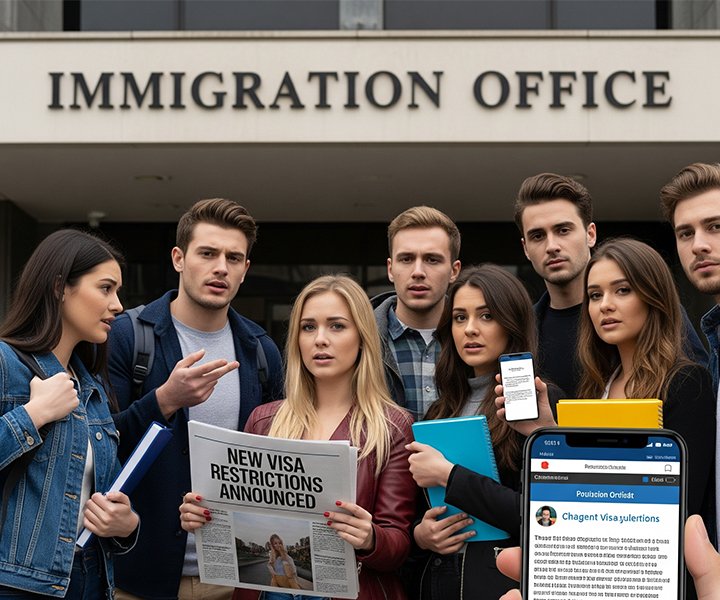
If you’re an international student, researcher, or media professional planning to study or work in the United States, there’s a major update you need to know. The Department of Homeland Security (DHS) has introduced a new proposed rule that could dramatically change how long F-1 students, J-1 exchange visitors, and I-1 media representatives are allowed to stay in the country.
For decades, the US has followed the “duration of status” (D/S) policy, meaning that international students and exchange visitors could remain in the United States as long as they maintained their academic program, without a fixed end date. But under the new proposal, this policy would be eliminated. Instead, DHS wants to give these nonimmigrant categories a fixed period of admission tied to their program length, with stricter requirements for extensions.
What Exactly is Being Proposed?
The key change revolves around eliminating “duration of status.” Here’s what the proposed rule means in practice:
- Fixed Stay Limit: Instead of being admitted for the length of the course with no defined end date, students and exchange visitors would be admitted for a maximum of four years.
- Extensions Needed: If your academic program is longer or if you change schools or programs, you will be required to apply for an extension through USCIS.
- Stricter Program Changes: Graduate students may no longer be allowed to switch programs mid-study. For example, moving from one degree track to another could be restricted.
- Second Master’s Programs Banned: F-1 students who have already completed one master’s degree may be barred from enrolling in another master’s program.
This represents a big shift from the flexibility international students used to have under the duration of status system.
How Will the Rule Affect F-1 Students?
F-1 student visas are one of the most common ways international students gain admission to study in the United States. If the new DHS rule takes effect, here’s what will change:
- Set Timeframe: Admission will be capped at four years maximum or less if the degree program is shorter.
- Tighter Transfers: Students transferring from one university to another could face stricter requirements and reviews.
- Graduate Restrictions: Those pursuing advanced studies may not be able to switch to a different program after beginning coursework.
- Limit on Repeat Studies: Completing a second master’s degree inside the US may become impossible under these rules.
- Biometric Submissions: Applicants may also be required to provide biometric information (fingerprints, photos, etc.) for additional background checks.
Implications for J-1 Exchange Visitors
The new rule also targets J-1 visas, which are typically used by exchange visitors, researchers, and scholars. Under the proposal:
- J-1 visa holders would face the same four-year limit on admission.
- Any extension beyond this period would require formal approval from USCIS.
This added step may increase processing times and paperwork for exchange visitors who need more time in the US to complete their programs.
Changes for I-1 Media Representatives
The proposed rule also affects I-1 visas, issued to international journalists and media personnel:
- The stay period would be limited to 240 days (roughly 8 months).
- Extensions would only be granted for the specific length of the journalist’s assignment—no more open-ended arrangements.
This means media professionals will need to carefully plan assignments and possibly apply for multiple extensions if their work in the US stretches beyond the initial approval.
How Should International Students and Visa Holders Prepare?
Right now, this rule is still proposed, meaning it has not gone into effect yet. However, if implemented, it could create significant obstacles for international students and professionals hoping to extend their stay in the United States.
Here’s how you can prepare now:
- Stay Updated on Immigration News – Follow official DHS/USCIS announcements and trusted immigration law firms for accurate information.
- Consult with an Immigration Attorney – A legal expert can help you understand whether the new rule could affect your studies or professional stay.
- Plan Your Academic Path Carefully – Choose academic programs strategically, since switching programs or pursuing multiple advanced degrees may not be possible.
- Prepare Documentation Early – Keep records of enrollment, progress reports, and visa-related paperwork ready in case extensions are required.
- File Extensions on Time – If the rule is finalized, delays in requesting extensions could jeopardize legal status.
Final Thoughts
The DHS’s proposed rule to overhaul F-1, J-1, and I-1 visas marks one of the most significant potential changes to international student and exchange visitor policies in years. By eliminating “duration of status” and introducing fixed stays, the rule could limit flexibility, create new application burdens, and impact the education and careers of thousands of foreign nationals each year.
For now, the rule is not yet implemented, but experts expect strong debate and likely legal challenges. If you are an international student or visa holder, the best move is to stay informed, consult with a qualified immigration attorney, and plan ahead for possible changes.
VisaNation and other immigration law resources will continue providing updates as DHS decides the next steps.