Introduction
The United States has long been the dream destination for international students, especially Indians seeking world-class education, research opportunities, and global exposure. But as new visa reforms roll in, studying in America is no longer as straightforward as it once was.
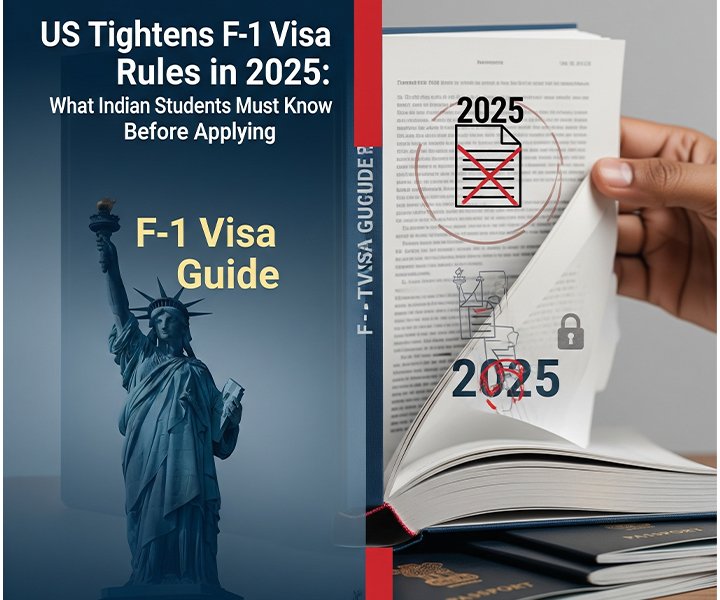
In 2025, the US Department of Homeland Security (DHS) has proposed major changes to the F-1 student visa program that directly affect new applicants. These rules introduce tighter restrictions on changing courses, transferring universities, and post-study work opportunities. At the same time, the system has become stricter with background checks and visa approval criteria, making the application journey tougher.
If you’re planning to study in the US, or you’re a parent preparing your child for Fall 2025 admissions, this blog breaks down everything you need to know about the new visa framework — eligibility, restrictions, OPT (Optional Practical Training) changes, and practical tips to strengthen your chances of success.
Why Are These Changes Happening?
The tightening of F-1 visa rules reflects the US government’s broader policy of stricter immigration control. Officials argue that the reforms will:
- Prevent misuse of student visas for purposes other than education.
- Ensure that students stay committed to the programs they initially applied for.
- Strengthen national security by conducting deeper background checks.
- Reduce cases where students switch courses frequently or prolong their stay unnecessarily.
For Indian students, who represent one of the largest groups of international applicants in the US, this means adjusting to a more controlled and less flexible system.
Key Changes to the F-1 Visa in 2025
1. No University Transfers in the First Year
Previously, international students could transfer to another university or college shortly after arrival in the US. The new rules eliminate this flexibility.
- What’s new? Students must complete at least one full year at the institution they first enrolled in before applying for a transfer.
- Who is affected? All newly arriving students beginning Fall 2025 onward.
- Why it matters: This restriction reduces flexibility for students who might want to switch schools for better academic opportunities, scholarships, or location preferences.
2. Limits on Changing Majors or Programs
- Undergraduate students: Cannot change their program or major during the first academic year. Only rare exceptions will be allowed.
- Graduate students: Face an even stricter rule — once admitted, they cannot switch their program or field of study at all.
- Impact: Many students who arrive in the US and later discover new interests or career paths will find their options significantly limited.
3. Restrictions on Pursuing Multiple Degrees
- Students who finish a program at one level (for example, a bachelor’s degree) cannot immediately pursue another program at the same or lower level (like another bachelor’s or a diploma) under the same visa.
- Those wishing to study further must apply for a fresh F-1 visa from their home country.
This is a big shift from the current system, where students could often transition between programs without leaving the US.
4. Fixed-Term Visas Replace Program-Based Duration
Previously, the length of the F-1 visa depended on the academic program. A student’s stay was tied to the duration of their study, often extended through OPT or CPT.
- Now: Students will be issued fixed-term visas, based on their level of education (undergraduate, master’s, PhD).
- Why it matters: This creates less flexibility in adjusting to extended programs, research delays, or switching institutions.
5. OPT (Optional Practical Training) Grace Period Shortened
OPT has long been one of the biggest attractions for Indian students — allowing them to work in the US after graduation.
- Earlier system: Students enjoyed a generous grace period to remain in the US after completing OPT.
- New rules: The grace period has been shortened, meaning students will have less time to seek jobs, prepare for H-1B sponsorship, or transition into full-time employment.
This change could particularly affect those in STEM fields, where job searches may take longer.
6. Heightened Scrutiny in Visa Applications
DHS has issued new directives to visa officers for F-1 student interviews:
- Officers must evaluate the applicant’s academic conduct, past immigration history, family ties, and associations.
- Applications will be screened for any support or endorsement of anti-American, anti-Semitic, or extremist ideologies.
- Discretionary analysis will be applied, meaning officers can weigh both positive and negative factors before making a decision.
This means that visa approvals will be more subjective and thorough — applicants must prepare to demonstrate strong academic intent, ties to home country, and clear financial backing.
Who Will Be Affected Most?
- Indian students applying for Fall 2025 admissions (undergraduate and graduate levels).
- Students considering a transfer after reaching the US.
- Graduates hoping to extend their stay under OPT.
- Applicants with weak financial documentation or unclear academic goals.
- Families with a history of visa overstays or prior immigration issues.
Impact on Indian Students
For decades, the US has been the top choice for Indian students seeking higher education. According to recent reports, India sends over 300,000 students annually to the US, forming one of the largest foreign student populations.
Here’s how the new rules may affect Indian aspirants:
- Reduced Flexibility: Indian students often switch universities after their first semester due to cost or program preferences. This option is no longer available immediately.
- Increased Costs: Those who wish to pursue another degree must travel back to India and apply for a new visa, adding expense and uncertainty.
- Job Search Pressure: Shorter OPT grace periods mean Indian graduates must find employment much faster, which could increase stress in an already competitive job market.
- Tighter Screening: With stricter background checks, students must be extra cautious about their application details, online presence, and financial documentation.
How to Prepare for the New Rules
If you’re planning to apply for an F-1 visa in 2025, here are some practical strategies to increase your chances of success:
1. Choose Your University Wisely
Since transfers in the first year are not allowed, research thoroughly before committing. Consider:
- Course curriculum
- Tuition and scholarship options
- Campus location and safety
- Alumni success and placement support
2. Select Your Major Carefully
Think long-term about your career path. Changing majors midstream won’t be possible in most cases, especially for graduate students.
3. Strengthen Financial Proofs
Visa officers look closely at whether students can afford their studies. Keep bank statements, scholarship letters, and sponsor affidavits organized and up to date.
4. Maintain a Strong Academic Record
Performance in your current studies (school or undergraduate program) will be scrutinized. Strong grades and achievements show intent and seriousness.
5. Be Ready for Tough Interviews
Prepare to answer questions clearly about:
- Why you chose your university and program
- How you plan to fund your education
- What your career goals are after returning home
- Why you will not misuse your visa
6. Job Planning for OPT
Start networking and applying early. Use campus career services, LinkedIn, and alumni groups to find employers familiar with hiring international students.
SEO Perspective: Keywords to Focus On
If you’re writing or posting about these developments, here are high-impact keywords to use:
- US F-1 visa rules 2025
- New F-1 visa restrictions
- Can Indian students transfer universities in the US?
- OPT grace period changes 2025
- How to apply for F-1 visa 2025
- US student visa requirements
Conclusion
The new F-1 visa rules in 2025 mark one of the biggest overhauls of the US student immigration system in years. By restricting university transfers, limiting program changes, shortening OPT grace periods, and tightening background checks, the US government is making it clear that it wants international students to follow stricter guidelines.
For Indian students, the path to studying in America remains open but demands more careful planning, stronger preparation, and disciplined academic focus.
While these rules may feel restrictive, those who plan ahead, demonstrate genuine intent, and prepare strong applications will still find the US to be a land of opportunity.